SD02-530 SD02-530 |
Machine Learning for Microbiome Statistics |
| |
Yinglin Xia/ 9781041005247/ Price:GBP 171.99
|
| |
|
|
|
|
| |
|
| SD02-530 |
Advances in Statistical Inference for Processes Driven by Fractional Processes: Inference for Fractional Processes |
| |
B L S Prakasa Rao/ 9789819810789/ Price:US$ 168.00
|
| |
|
|
|
|
| |
|
| SD02-530 |
Gibbs Measures in Machine Learning |
| |
Laziz U Abdullaev/ 9789819814565/ Price:US$ 138.00
|
| |
|
|
|
|
| |
|
| SD02-530 |
Mathematical Statistics |
| |
Lawrence M Leemis/ 9789819833252/ Price:US$ 58.00
|
| |
|
|
|
|
| |
|
| SD02-530 |
Probability |
| |
Lawrence M Leemis/ 9789819820474/ Price:US$ 78.00
|
| |
|
|
|
|
| |
|
| SD02-530 |
Probability and Stochastic Processes: Work Examples |
| |
Odile Pons/ 9789819827930/ Price:US$ 68.00
|
| |
|
|
|
|
| |
|
| SD02-530 |
R for Healthcare Research, Volume I: Basic Statistical Methods |
| |
Jason L Oke/ 9781800617186/ Price:US$ 98.00
|
| |
|
|
|
|
| |
|
| SD02-530 |
Discrete Mathematics for Data Science |
| |
Jack Pope/ 9781032687735/ Price:GBP 55.99
|
| |
|
|
|
|
| |
|
| SD02-530 |
Longitudinal Regression Models for Population Dynamics |
| |
Taylan Akay/ 9781032986616/ Price:GBP 54.99
|
| |
|
|
|
|
| |
|
| SD02-530 |
A Comprehensive Summary of the Benford's Law Phenomenon: On the Unequal Spread of Digits Within Scientific and Typical Data |
| |
Alex Ely Kossovsky/ 9789819801282/ Price:US$ 88.00
|
| |
|
|
|
|
| |
|
| SD02-523 |
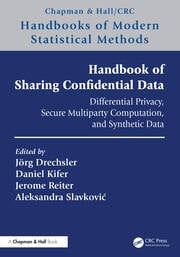
Handbook of Sharing Confidential Data: Differential Privacy, Secure Multiparty Computation, and Synthetic Data |
| |
Jorg Drechsler/ 9781032028033/ Price:GBP 171.99
|
| |
|
|
|
| |
|
| SD02-523 |
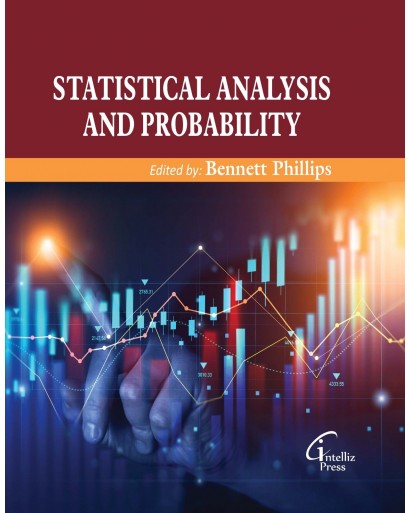
Statistical Analysis and Probability |
| |
Bennett Phillips/ 9781682511466/ Price:US$ 130.00
|
| |
|
|
Statistical analysis and probability are essential tools for data interpretation, enabling professionals to make informed decisions based on data trends and patterns. This book offers a thorough introduction to the principles of statistics and probability, covering topics such as descriptive statistics, inferential statistics, probability distributions, and hypothesis testing. Aimed at students and professionals in various fields, This book provides clear explanations, real-world examples, and step-by-step methods for performing statistical analyses. It serves as a comprehensive guide to understanding and applying statistical concepts in research, business, and everyday decision-making. |
| |
|
| SD02-522 |
Handbook of Statistical Methods for Precision Medicine |
| |
Eric Laber/ 9781032106151/ Price:GBP 210.00
|
| |
|
|
|
| |
|
| SD02-517 |
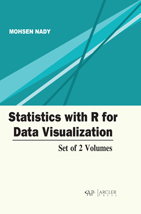
Statistics with R for Data Visualization, 2-Vols/Set |
| |
Mohsen Nady/ 9781774699584/ Price:US$ 380.00
|
| |
|
|
This book covers the use of R programming language for data visualization. The large real-world datasets can be quickly visualized to gain several insights from it using R. Whether the data is already clean or needs some preliminary steps before data visualization like data cleaning and wrangling, all these can be done using R to produce elegant, publication-ready, and exciting plots. This book covers different plot types from simple ones like univariate and bivariate plots (histograms, box plots, violin plots, scatter plots, density plots, bar graphs, pie charts, tree maps, beeswarm plots, Cleveland dot charts, line plots, etc) to more complex ones like mapping and visualizing patterns of missing data (upset plots, different Stamen map types with different zoom levels). All these were shown using free real-world data sets to illustrate the diverse capability of R for data visualization. |
| |
|
| SD02-517 |
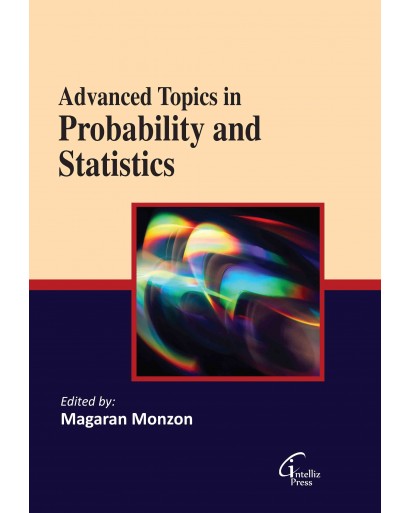
Advanced Topics in Probability and Statistics |
| |
Magaran Monzon/ 9781682519950/ Price:US$ 165.00
|
| |
|
|
Probability and statistics deals with complex areas such as stochastic processes, Bayesian inference, and multivariate analysis. These topics allow for a deeper understanding of random phenomena, uncertainty modeling, and the development of sophisticated statistical models that capture intricate relationships within data. This book focuses on advanced concepts and theories in probability and statistics, covering topics beyond the basics. |
| |
|
| SD02-517 |
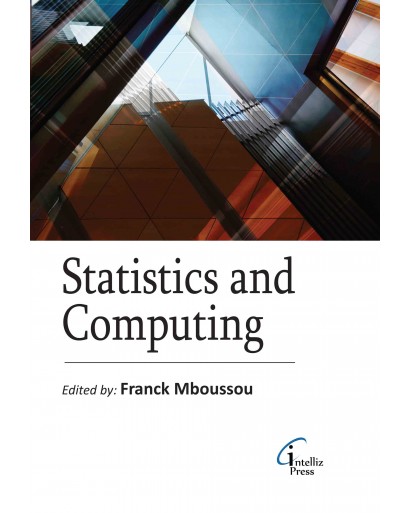
Statistics and Computing |
| |
Franck Mboussou/ 9781682519936/ Price:US$ 165.00
|
| |
|
|
The intersection of statistics and computing has led to significant advancements in data analysis and inference. With the advent of powerful computational tools and algorithms, statisticians can tackle complex problems, perform simulations, and conduct large-scale data analyses, enabling the extraction of meaningful patterns, correlations, and statistical models. This book discusses the intersection of statistical methods and computational tools for data analysis and inference. |
| |
|
| SD02-517 |
Introduction to Statistics |
| |
Allan Ngetich/ 9781774697528/ Price:US$ 110.00
|
| |
|
|
|
Introduction to Statistics is a comprehensive textbook that provides a foundational understanding of statistics. It covers topics such as data collection, descriptive statistics, probability, statistical inference, and regression analysis. The book is designed to help students develop the skills and knowledge needed to analyze and interpret data, and to make informed decisions based on statistical analysis. This book is an essential resource for anyone seeking to understand the fundamental principles of statistics. |
| |
|
| SD02-517 |
Illustrated Dictionary of Statistics |
| |
Bart Masters/ 9781984688293/ Price:US$ 65.00
|
| |
|
|
The Dictionary of Statistics is a comprehensive reference guide that provides definitions, explanations, and examples of statistical terms and concepts.
It covers a wide range of statistical topics, including probability theory, hypothesis testing, regression analysis, data visualization, and sampling techniques.
Third edition of this dictionary incorporates many new definitions and a thorough revision of previous entries and an ideal resource for learners at all levels. |
| |
|
| SD02-510 |
Statistics and Probability (Book with DVD) |
| |
3G Editorial Board/ 9781984680365/ Price:US$ 95.00
|
| |
|
|
This fully revised edition introduces the historical and mathematical basis of statistics and probability as well as their application to everyday situations.
Fully updated throughout, some new chapters covering current topics are also added in this revised edition.
This edition is thoroughly updated with new chapters and the latest coverage of the topics. |
| |
|
| SD02-510 |
Advanced Techniques for Collecting Statistical Data |
| |
Olga Moreira/ 9781774694978/ Price:US$ 190.00
|
| |
|
|
"Advanced Techniques for Collecting Statistical Data" is an edited book consisting of 17 contemporaneous open-access articles focused on data collection methods, from qualitative research techniques to automated data collection systems. The first chapters include a practical guide to designing, sampling, and collecting qualitative research data. The second part of the book is devoted to data mining of information collected from clinical and social studies surveys, as well as from social media. The final chapters reflect on current efforts to optimize and automate data collection procedures. This book also includes new methodologies based on automatic data collection and analysis systems based on smartphone technology and artificial intelligence, as well as their application in clinical research, sociology, stock market prediction and other fields. This book is intended to reach an academic audience ranging from undergraduate students to junior researchers. |
| |
|
| SD02-504 |
Statistical Theory |
| |
3G Editorial Board/ 9781984659750/ Price:US$ 95.00
|
| |
|
|
This edition has become more comprehensive with the inclusion of several new topics.
The aim of this book is to discuss the fundamental ideas which lie behind the statistical theory of learning and generalization.
Discusses as well the criteria of success and failure in statistical situations. |
| |
|
| SD02-503 |
Fundamental of Statistics |
| |
Manoj Nauhwar/ 9781774690703/ Price:US$ 170.00
|
| |
|
|
Statistics is a crucial process behind how we make discoveries in science, make decisions based on data, and make predictions. This book has been prepared for students that they have acquired or gain fair knowledge of statistics and easy presentation of simple language has written for proper understand each and every topic. The chapters have been so arranged to give a sequential knowledge of the introduction of statistics, etc., in this book with practical approaches. This book would serve not only for undergraduate but post-graduate students of biotechnology, MSc, BSc in Environment, Bioinformatics, and Agriculture, all life science students, BCom, MCom, B.A, M.A, MPhil, and also research scholar of various universities. |
| |
|
| SD02-503 |
Statistical Mechanics and Entropy |
| |
Olga Moreira/ 9781774691786/ Price:US$ 170.00
|
| |
|
|
tatistical Mechanics and Entropy? is an edited book consisting of 16 contemporaneous open-access articles that highlight different aspects of the definition of entropy in statistical mechanics and other fields. The book includes a reflection on the real physical meaning of thermodynamic entropy, and several misconceptions regarding the violation of the second law of thermodynamics by perpetual motion machines, Maxwell?s demon, vortex tube, etc. It overviews the concept of generalized Boltzmann-Gibbs entropy in dynamical systems (e.g. Kolmogorov?Sinai entropy), information theory (e.g. R?nyi and Shannon entropies), and statistical physics (e.g. Tsallis entropy). It includes quantum modifications and extensions of equilibrium statistical mechanics. Fundamental laws of nature and thermodynamics are expanded from classical simple systems to quantum systems, as well as to more complex systems in biology, cosmology, economy and communication networks. Reading this book requires some knowledge in thermodynamics, calculus and differential equations. This book is intended to reach an academic audience ranging from undergraduate students to experienced researchers. |
| |
|
| SD02-503 |
Introduction to Biostatistics using R |
| |
Mohsen Nady/ 9781774690406/ Price:US$ 170.00
|
| |
|
|
his book covers some introductory steps in biostatistics using R programming language. Biostatistics is the branch of statistics that applies statistical methods to medical and biological problems. Biostatistics has become more important recently for studying the great amount of data that is produced from census data, genome sequencing, gene expression data, medical bioinformatics, and medical imaging data. With the help of R programming, statistical analysis, data cleaning, data visualization, and machine learning has become a relatively easy tasks for these huge datasets. R is now considered the centerpiece language for doing all these data science skills because it has many useful packages that not only can perform all these tasks, but also, has additional packages that were specifically designed for several statistical tasks related to biology and medical data. In addition, many scientific journals require the data analysis R scripts to ensure reproducibility of the submitted results. |
| |
|
| SD02-503 |
Stochastic Statistics and Modeling |
| |
Ben Gray/ 9781682518342/ Price:US$ 160.00
|
| |
|
|
Just as the probability theory is regarded as the study of mathematical models of random phenomena, the theory of stochastic processes plays an important role in the investigation of random phenomena depending on time. This book deals with an overview of the latest advances and trends in the areas of mathematical statistics and applied probability, and their applications to high-dimensional statistics, econometrics and time series analysis, statistics for stochastic processes, statistical machine learning. |
| |
|
| SD02-503 |
Computational Statistics in Industry and Business |
| |
Tamzen Doyle/ 9781682518335/ Price:US$ 160.00
|
| |
|
|
Computer statistics is what the statisticians do with the computer. Statistics is a particularly useful branch of mathematics, which is not only theoretically studied by advanced mathematicians, but is also used by research in many fields to organize analyses and summarized data. Statistical methods and analyses are also used to interact research findings and to promote hypotheses and to make conclusions reliable. This book describes techniques used in computational statistics and considers some of the areas of Computational Statistics. |
| |
|
| SD02-498 |
Illustrated Dictionary of Statistics |
| |
3G Editorial Board/ 9781984645838/ Price:US$ 55.00
|
| |
|
|
The 2nd edition of this dictionary is an updated compilation of the definitions and explanations of statistical terms together with state-of-the-art scientific and practical terms, presented in an easy-to-use, A-Z order with pictures and figures as well as examples are given to clarify the terms.
Packed with special full-page features on this subject and developed in close consultation with team of experts, this is the ultimate reference tool for Higher Secondary to Undergraduate students. |
| |
|
| SD02-490 |
Fundamental of Research Methodology And Statistics |
| |
Nick Monck/ 9781682516669/ Price:US$ 160.00
|
| |
|
|
Research methodology is used a base to explain statistical reasoning. The role of statistics in research is to function as a tool in designing research, analysing its data and drawing conclusions therefrom. Designing research methods requires knowledge about various methods and understanding data. This book will provide an opportunity for participants to establish or advance their understanding of research through critical exploration of research language, ethics, and approaches. Statistical methods covered include analysis of variance and multiple linear regression. |
| |
|
| SD02-490 |
Descriptive Statistics |
| |
3G Editorial Board/ 9781984636966/ Price:US$ 85.00
|
| |
|
|
The aim of this book is to summarize and present numerical information in a manner that is illuminating and useful.
Statistics is the collection, presentation, and summary of numerical information in such a way that the data can be easily interpreted.
This book will cover graphical as well as numerical summaries of data. |
| |
|
| SD02-490 |
Mathematical Statistics |
| |
3G Editorial Board/ 9781984637079/ Price:US$ 85.00
|
| |
|
|
A wide-ranging, extensive overview of modern mathematical statistics, this work reflects the current state of the field while being succinct and easy to grasp.
Covers mathematical theory of sampling; normal populations and distributions; chi-square, t, and F distributions; hypothesis testing; estimation; confidence intervals; sequential analysis; correlation, regression; analysis of variance. |
| |
|
| SD02-490 |
Probability |
| |
3G Editorial Board/ 9781984637390/ Price:US$ 85.00
|
| |
|

|
Covers the basic principles of the theory of probability and its applications.
Provides a wide-ranging and entertaining introduction to probability and random processes and many of their practical applications, including basic combinatorics, random variables, probability distributions, Bayesian inference, hypothesis testing, confidence intervals, and linear regression. |
| |
|
| SD02-487 |
Optimization Methods and their Application in Statistics |
| |
C. V. Goodey/ 9781682516102/ Price:US$ 160.00
|
| |
|
|
Optimization methods are of great importance in practice, particularly in engineering design, scientific experiments, and business decision making. This book attempts to give a brief introduction to optimization methods and their use in several important areas of statistics. The book deals with variational methods, regression analysis, mathematical programming, and optimum seeking methods, stochastic control, optimum design of experiments, optimum spacings, and order statistics. It is hoped that the book will be of helpful to students on applied statistics courses and to researchers needing to use optimization techniques in a statistical context. |
| |
|
| SD02-485 |
Game-Theoretic Foundations for Probability and Finance |
| |
Glenn Shafer/ 9780470903056/ Price:US$ 122.95
|
| |
|
|
|
| |
|
| SD02-479 |
Bayesian Inference for Stochastic Processes |
| |
Michael Davim/ 9781682515785/ Price:US$ 155.00
|
| |
|
|
Bayesian inferences are different interpretations of probability, and also different approaches depend on those interpretations.This book takes a look at both theoretical foundations of Bayesian inference and practical implementations in stochastic processes. A reference guide for the application of Bayesian inference in the field of stochastic processes, as well as a source document of fundamentals for intermediate Bayesian readers. |
| |
|
| SD02-477 |
Multifractional Stochastic Fields: Wavelet Strategies in Multifractional Frameworks |
| |
Ayache Antoine/ 9789814525657/ Price:US$ 118.00
|
| |
|
|
|
| |
|
| SD02-475 |
Introduction to Queueing Systems and Applications |
| |
J. Medhi/ 9781781831175/ Price:GBP 40.00
|
| |
|
|
The book aims at the level of those involved in the study of queueing systems for the first time, those in areas such as management, economics and other social sciences, physical sciences as well as professionals in diverse areas (those not exposed to advanced mathematical areas, such as advanced calculus and stochastic processes). Numerical computation is also indicated. A large number of worked examples, including some with numerical computations, are provided along with the theoretical treatment. A list of exercises is included. The list of references (of more than 200 citations) include up to date and application oriented works. The book is intended as a textbook for a introductory level course in Queueing Theory/ Operations Research in the disciplines indicated. |
| |
|
| SD02-475 |
Modern Probability Theory |
| |
B.R. Bhat/ 9781781831151/ Price:GBP 40.00
|
| |
|
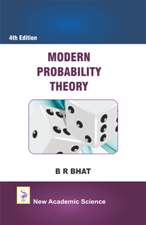
|
The book covers a basic course on Probability Theory. The rigorous axiomatic approach continues to be followed. For those who plan to apply probability models in their chosen areas, the book will provide the necessary foundation. For those who want to proceed to work in the area of Stochastic Processes, the present work will provide the necessary preliminary background. It can be used by probabilists, statisticians and mathematicians.
In the present edition many concepts have been elaborated. Clarifications are given for a number of steps in the proofs of results derived. Additional examples and problems are given at the end of different chapters. An additional preliminary chapter has been added so that students can recapitulate the topics normally covered in the undergraduate courses. It also forms the foundation for topics covered in the remaining chapters. The fourth edition incorporates the suggestions for improvements received by the author when the earlier editions were in circulation. With the additional features and most of the errors weeded out, the book is hoped to become more useful in the hands of students and teachers. |
| |
|
| SD02-472 |
Illustrated Dictionary of Statistics. |
| |
/ 9781984600882/ Price:US$ 95.00
|
| |
|
|
This illustrated dictionary provides concise definitions and explanations of statistical terms together with state-of-the-art scientific and practical terms, presented in an easy-to-use, A-Z order with pictures and figures as well as examples are given to clarify the terms.
Packed with special full-page features on this subject and developed in close consultation with team of experts, this is the ultimate reference tool for Higher Secondary to Undergraduate students. |
| |
|
| SD02-470 |
Statistics and Probability. (With DVD) |
| |
3G Editorial Board/ 9781680947106/ Price:US$ 125.00
|
| |
|
|
Introduces the historical and mathematical basis of statistics and probability as well as their application to everyday situations.
From predicting an event to conducting surveys and analyzing test scores, this book for students understand how these concepts are applied in real-world scenarios |
| |
|
| SD02-470 |
Theory, Practice and Techniques in Statistics. |
| |
3G Editorial Board/ 9781680949018/ Price:US$ 75.00
|
| |
|
|
Covers a much wider range of topics than a typical introductory text on mathematical statistics.
Suitable for students in statistics, computer science, data mining and machine learning.
Emphasizes the applications of statistics and probability to finance. |
| |
|
| SD02-470 |
Theory, Practice and Techniques in Probability Theory. |
| |
3G Editorial Board/ 9781680949049/ Price:US$ 75.00
|
| |
|
|
This text is geared toward readers who wish to learn the basics of probability theory, as well as those who wish to attain a thorough knowledge in the field.
This comprehensive book tackles the principal problems and advanced questions of probability theory, which are presented in logical order, but are also easy to deal with individually.
This is a graduate level text on measure theory and probability theory. |
| |
|
| SD02-470 |
Probability Theory and Examples. |
| |
Claire Montemar/ 9781773613154/ Price:US$ 160.00
|
| |
|
|
Presenting a clear, comprehensive and systematic account of various probability theories and to explain how they relate to one another. This text is written for an introductory probability course at the university level for undergraduates in mathematics, the physical and social sciences, engineering, and computer science. Well known for the clear, inductive nature of its exposition, this book is an excellent introduction to mathematical probability theory with examples. |
| |
|
| SD02-470 |
Theory and Applications of Stochastic Processes. |
| |
I.N Qureshi/ 9781682513125/ Price:US$ 150.00
|
| |
|
|
Stochastic processes have played a significant role in various engineering disciplines like power systems, robotics, automotive technology, signal processing, manufacturing systems, semiconductor manufacturing, communication networks, wireless networks etc. This work brings together research on the theory and applications of stochastic processes. This book is designed as an introduction to the ideas and methods used to formulate mathematical models of physical processes in terms of random functions. It is concerned with concepts and techniques, and is oriented towards a broad spectrum of mathematical, scientific and engineering interests. |
| |
|
| SD02-466 |
Handbook of Methods for Designing, Monitoring, and Analyzing Dose-Finding Trials. |
| |
O'Quigley, John/ 9781498746106/ Price:GBP 210.00
|
| |
|
|
|
|
| |
|
| SD02-463 |
Essentials of Statistics. |
| |
Borres, Maria C. C./ 9781680945850/ Price:US$ 145.00
|
| |
|
|
In making predictions, Statistics uses the companion subject of Probability, which models chance mathematically and enables calculations of chance in complicated cases. Today, statistics has become an important tool in the work of many academic disciplines such as medicine, psychology, education, sociology, engineering and physics, just to name a few. Statistics is also important in many aspects of society such as business, industry and government. Because of the increasing use of statistics in so many areas of our lives, it has become very desirable to understand and practise statistical thinking. This is important even if you do not use statistical methods directly. |
| |
|
| SD02-463 |
Probability: Theory and Examples. |
| |
Borres, Maria C. C./ 9781680945874/ Price:US$ 145.00
|
| |
|
|
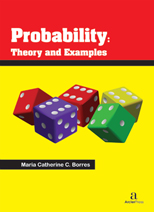
The probability of an event refers to the likelihood that the event will occur. Nearly every day you use probability to plan around the weather. Meteorologists can’t predict exactly what the weather will be, so they use tools and instruments to determine the likelihood that it will rain, snow or hail. This book provides an introduction to probability that is both mathematical, in the sense that the underlying theory is developed from axioms, and practical, in the sense that applications to real-world problems are discussed. It is essential that we grasp the difference between theory and reality. Theories are ideas proposed to explain phenomena in the real world. As such they are approximations or models of reality. |
| |
|
| SD02-460 |
Statistical Theory. |
| |
Fit, Georg/ 9781682503997/ Price:US$ 155.00
|
| |
|
|
The theory of statistics provides a basis for the whole range of techniques, in both study design and data analysis, that are used within applications of statistics. The theory covers approaches to statistical-decision problems and to statistical inference, and the actions and deductions that satisfy the basic principles stated for these different approaches. This book explains the underlying ideas and principles of major statistical concepts, including parameter estimation, confidence intervals, hypothesis testing, asymptotic analysis, Bayesian inference, and elements of decision theory. |
| |
|
| SD02-457 |
The Elements of Statistics and Dynamics: Statics Part-I. |
| |
Loney, S. L./ 9781781830352/ Price:GBP 30.00
|
| |
|
|
This book represents a simple text on statistics for the use of undergraduate students. It is a complete book as far as it goes. It contains a large number of easy type examples except those of chapters on Friction and the Miscellaneous examples at the end of the volume. It is advised to omit things marked with asterisk on the first reading. Answers are given at the end of the book. |
| |
|
| SD02-456 |
Statistical Computing. |
| |
Patsias, Kyriakos/ 9781682501115/ Price:US$ 170.00
|
| |
|
|
Computational statistics, or statistical computing, often used interchangeably, is the interface between statistics and computer science. It is the area of computational science specific to the mathematical science of statistics. This area is also developing rapidly, leading to calls that a broader concept of computing should be taught as part of general statistical education. This book covers the interface between the statistical and computing sciences. |
| |
|
| SD02-456 |
Simulation and Monte Carlo Methods. |
| |
Galvao, Antonio F./ 9781682502884/ Price:US$ 170.00
|
| |
|
|
Monte Carlo simulation is a computerized mathematical technique that allows people to account for risk in quantitative analysis and decision making. The technique is used by professionals in such widely disparate fields as finance, project management, energy, manufacturing, engineering, research and development, insurance, oil & gas, transportation, and the environment. Monte Carlo simulation furnishes the decision-maker with a range of possible outcomes and the probabilities they will occur for any choice of action. It shows the extreme possibilities—the outcomes of going for broke and for the most conservative decision—along with all possible consequences for middle-of-the-road decisions. The objective of this book is to introduce recent advances and applications of Monte Carlo Simulations in numerous fields. |
| |
|
| SD02-456 |
Applied Statistics: Fundamentals. |
| |
Adams, Byron/ 9781682500385/ Price:US$ 160.00
|
| |
|
|
In the 21st century and technology age, the data is abundant in every aspects of life. Statistics is not an exception since it deals with data all. Applied statistics is a compendium, an elementary introduction to the growing field of statistics. Applied statisticians apply their knowledge of statistical methods to a variety of subject areas, such as biology, economics, engineering, medicine, public health, psychology, marketing, and education. Many applications cannot occur without use of statistical techniques. This book provides comprehensive and exhaustive fundamentals of statistics applied to numerous fields. |
| |
|
| SD02-456 |
Handbook of Combinatorial Optimization & Probability Theory. |
| |
Montiel, Oscar/ 9781682500651/ Price:US$ 190.00
|
| |
|
|
Combinatorial optimization is a subset of mathematical optimization that is related to operations research, algorithm theory, and computational complexity theory. It has important applications in several fields, including artificial intelligence, machine learning, mathematics, auction theory, and software engineering. Combinatorial optimization is a lively field of applied mathematics combining techniques from combinatorics linear programming and the theory of algorithms to solve optimization problems over discrete structures. This book provides an introduction to the state of the art of the probability theory that is most directly applicable to combinatorial optimization. |
| |
|
| SD02-456 |
Probablity Theory. |
| |
Phillips, William A./ 9781682501047/ Price:US$ 170.00
|
| |
|

|
Probability theory, a branch of mathematics concerned with the analysis of random phenomena. The outcome of a random event cannot be determined before it occurs, but it may be any one of several possible outcomes. The actual outcome is considered to be determined by chance. As a mathematical foundation for statistics, probability theory is essential to many human activities that involve quantitative analysis of large sets of data. Methods of probability theory also apply to descriptions of complex systems given only partial knowledge of their state, as in statistical mechanics. This book is concerned with probability theory and all of its conventional mathematics in a wider context. |
| |
|
| SD02-456 |
Descriptive Statistics. |
| |
Aldous, David J./ 9781682501054/ Price:US$ 160.00
|
| |
|
|
Descriptive statistics refers the analysis of data that helps describe, show or summarize data in a meaningful way. Descriptive statistics do not, however, allow us to make conclusions beyond the data we have analyzed or reach conclusions regarding any hypotheses we might have made. They are simply a way to describe our data. Descriptive statistics are very important because if we simply presented our raw data it would be hard to visualize what the data was showing, especially if there was a lot of it. Descriptive statistics therefore enables us to present the data in a more meaningful way, which allows simpler interpretation of the data. This book allows common types of descriptive statistics and why they are important for understanding psychological research. |
| |
|
| SD02-456 |
Elementary Stochastic Processes. |
| |
Yoshida, Hiroaki/ 9781682501078/ Price:US$ 170.00
|
| |
|
|
In probability theory, a stochastic process, or often random process, is a collection of random variables, representing the evolution of some system of random values over time. This is the probabilistic counterpart to a deterministic process. Instead of describing a process which can only evolve in one way, in a stochastic or random process there is some indeterminacy: even if the initial condition is known, there are several directions in which the process may evolve. This book emphasis on the theory of stochastic processes in an elementary manner. |
| |
|
| SD02-522 |
Categorical and Nonparametric Data Analysis: Choosing the Best Statistical Technique. |
| |
E. Michael Nussbaum/ 9781138787827/ Price:GBP 82.99
|
| |
|
|
|
| |
|
| SD02-464 |
Basic Stochastic Processes. |
| |
Devolder, Pierre/ 9781848218826/ Price:US$ 177.95
|
| |
|
|
|
|
| |
|
| |
Basic Statistics. |
| |
B. L. Agarwal/ 9781848290679/ Price:GBP 45.00
|
| |
|
|
|
The content is divided into 24 chapters, with problems and exercises to be tackled using SPSS. Two chapters – Research Processes and Experimental Research Designs - ensure that the book can be used in its entirety as a course text, but it is equally valuable to academics and students as a reference work to be consulted on a chapter by chapter basis. |
| |
|
| SD02-461 |
Classic Problems of Probability. |
| |
Gorroochurn, Prakash/ 9781118063255/ Price:US$ 75.95
|
| |
|
|
|
|
| |
|
| SD02-408 |
Probability and Statistics for Scientists and Engineers. |
| |
Dukkpiati, Rao V./ 9781906574833/ Price:GBP 35.00
|
| |
|
|
|
Probability and Statistics for Scientists and Engineers is designed as a supplement to an introductory undergraduate or graduate course for mathematics, science and engineering students of all disciplines. The text covers all major aspects of engineering statistics, including descriptive statistics, probability and probability distributions, statistical test and confidence intervals for one and two samples and curve fitting, correlation, regression, chi-square tests, and analysis of variance. The book continues to maintain a student-friendly approach and numerical problem solving orientation. Presentations are limited to very basic topics to serve as an introduction to advance topics in those areas of discipline. The purpose of the book is to present the principles and concepts of Probability and Statistics as relevant to student learning. |
| |
|
| VD02-6 |
Encyclopedia of Research Design, 3-Vols/set. |
| |
Salkind, Neil J./ 9781412961271/ Price:GBP 465.00
|
| |
|
|
|
Research design, with its statistical underpinnings, can be especially daunting for students and novice researchers. At its heart, research design might be described simply as a formalized approach toward problem solving, thinking, and acquiring knowledge, the success of which depends upon clearly defined objectives and appropriate choice of statistical design and analysis to meet those objectives. Our three-volume Encyclopedia of Research Design elucidates how one makes decisions about research design, interprets data and draws valid inferences, undertakes research projects in an ethical manner, and evaluates experimental design strategies and results. From A-to-Z, this work covers the spectrum of research design strategies and topics including, among other things: fundamental research design principles, ethics in the research process, quantitative versus qualitative and mixed-method designs, completely randomized designs, multiple comparison tests, diagnosing agreement between data and models, fundamental assumptions in analysis of variance, factorial treatment designs, complete and incomplete block designs, Latin square and related designs, hierarchical designs, response surface designs, split-plot designs, repeated measures designs, crossover designs, analysis of covariance, statistical software packages, and much more. |
| |
|
| VD02-5 |
Encyclopedia of Statistics in Quality and Reliability, 4-Vols/Set. |
| |
Ruggeri, Fabrizio/ 9780470018613/ Price:US$ 1734.95
|
| |
|
|
|
An essential reference for statisticians, engineers, and quality professionals in industry, academia, and government, Encyclopedia of Statistics in Quality and Reliability offers an essential knowledge source in an area where one is sorely needed. Providing a practical orientation with a large selection of case studies, this multi-volume state-of-the-art publication examines the widespread use of Six Sigma. This popular quality measuring technique is a highly adaptable tool with many wide-reaching applications in a large variety of sectors. |
| |
|
| VD02-4 |
Handbook of Probability. |
| |
Rudas, Tamas/ 9781412927147/ Price:GBP 155.00
|
| |
|
|
|
The Handbook of Probability presents an equal balance of theory and direct applications in a non-technical, yet comprehensive format so that researchers of various backgrounds can use the reference either as a primer for understanding basic probability theory or as a more advanced research tool for specific projects requiring a deeper understanding or application of probability. The wide-ranging applications of probability presented make it useful for researchers who need to make interdisciplinary connections in their work, as well as professors who teach a range of students (social sciences, education, business, behavioral sciences, etc.) and need to bring probability into greater, concrete perspective for these students. |
| |
|
| SD02-516 |
Matrix Algebra From a Statistician's Perspective. |
| |
David A. Harville/ 9780387783567/ Price:EUR 99.99
|
| |
|
|
|
| |
|
| SD02-374 |
Bayesian Statistics and Its Applications. |
| |
Upadhyay, Satyanshu K./ 9781905740000/ Price:GBP 75.00
|
| |
|
|
|
In the last two decades, Bayesian Statistics has acquired immense importance and has penetrated almost every area including those where the application of statistics appeared to be a remote possibility. This volume provides both theoretical and practical insights into the subject with detailed up-to-date material on various aspects. It serves two important objectives – to offer a thorough background material for theoreticians and gives a variety of applications for applied statisticians and practitioners.
Consisting of 33 chapters it covers topics on biostatistics, econometrics, reliability, image analysis, Bayesian computation, neural networks, prior elicitation, objective Bayesian methodologies, role of randomisation in Bayesian analysis, spatial data analysis, nonparametrics and a lot more.
The book will serve as an excellent reference work for updating knowledge and for developing new methodologies in a wide variety of areas. It will become an invaluable tool for statisticians and the practitioners of Bayesian paradigm. |
| |
|
| VD02-3-2 |
Selected Statistical Papers of Sir David Cox, Volume 2, Foundations of Statistical Inference, Theoretical Statistics, Time Series and Stochastic Processes. |
| |
Cox, David/ 9780521849401/ Price:US$ 314.99
|
| |
|
|
|
Sir David Cox is one of the seminal statistical thinkers of the twentieth and twenty-first centuries. In this selection of his work, Professor Cox reviews his most influential and interesting papers published before 1993. Each paper is the subject of a candid commentary written especially for this collection. In these he describes the context in which the papers arose and their subsequent influence. He also identifies avenues for future research. Organized in two volumes and grouped by theme, the papers and commentaries provide excellent coverage of many of the most significant advances in statistics in recent times. |
| |
|
| VD02-3-1 |
Selected Statistical Papers of Sir David Cox, Volume 1, Design of Investigations, Statistical Methods and Applications. |
| |
Cox, David/ 9780521849395/ Price:US$ 314.99
|
| |
|
|
|
Sir David Cox is one of the seminal statistical thinkers of the twentieth and twenty-first centuries. In this selection of his work, Professor Cox reviews his most influential and interesting papers published before 1993. Each paper is the subject of a candid commentary written especially for this collection. In these he describes the context in which the papers arose and their subsequent influence. He also identifies avenues for future research. Organized in two volumes and grouped by theme, the papers and commentaries provide excellent coverage of many of the most significant advances in statistics in recent times. |
| |
|
| VD02-3 |
Selected Statistical Papers of Sir David Cox, 2-Vols/Set. |
| |
Cox, David/ 9780521858168/ Price:US$ 556.00
|
| |
|
|
|
Sir David Cox is one of the seminal statistical thinkers of the twentieth and twenty-first centuries. In this selection of his work, Professor Cox reviews his most influential and interesting papers published before 1993. Each paper is the subject of a candid commentary written especially for this collection. In these he describes the context in which the papers arose and their subsequent influence. He also identifies avenues for future research. Organized in two volumes and grouped by theme, the papers and commentaries provide excellent coverage of many of the most significant advances in statistics in recent times. |
| |
|
| VD02-2 |
Encyclopedia of Measurement and Statistics, 3-Vols/Set. |
| |
Salkind, N./ 9781412916110/ Price:GBP 450.00
|
| |
|
|
|
In fields as varying as education, politics and health care, assessment and the use of measurement and statistics have become an integral part of almost every activity undertaken. These activities require the organization of ideas, the generation of hypotheses, the collection of data and the interpretation, illustration and analysis of data.
No matter where we look, this critical analysis is more important than ever in an age where information - and lots of it - is readily available. The average consumer must know what a `median' is or what the connotations of the term `significant' are when intelligently reading The Times, Science News or a tabloid. Likewise, students, practitioners and researchers must grapple with sophisticated terms and techniques when conducting research, writing proposals and analyzing data. The terms themselves have proven to be anxiety-provoking.
The Encyclopedia of Measurement and Statistics, in two-volumes, presents state-of-the-art information and ready-to-use facts from the fields of measurement and statistics in a non-intimidating and accessible style. The Encyclopedia is specifically written to appeal to undergraduate students as well as practitioners, researchers and consumers of information.
Whilst there are reference works covering statistics and assessment in depth, none provide as comprehensive a resource in as focused and approachable a manner as this encyclopedia. |
| |
|
| VA09-295 |
Encyclopedia of Statistics in Behavioral Science, 4-Vols/Set. |
| |
Everitt, Brian/ 9780470860809/ Price:US$ 2346.95
|
| |
|
|
|
The Encyclopedia of Statistics in Behavioral Sciences encompasses the refined statistical concepts and techniques that are essential to the advancement in psychology and its ever-widening fields of application.
* Providing comprehensive accounts drawn from the huge expansion of statistical methodologies in the behavioral sciences, highlighting new techniques and developments from the past decade.
* Up-to-date coverage of developing fields including neuroscience, behavioral genetics, decision learning and cognitive science.
* Containing over 600 articles and over 400 contributions from eminent psychologists and statisticians world-wide.
* Emphasis on practical, non-technical methods with wide ranging application.
* Extensively cross-referenced to ensure fast and accurate access to available information
Representing an invaluable addition to both the psychological and statistical literature, the Encyclopedia of Statistics in Behavioral Sciences forms an essential reference work for researchers, educators and students in the fields of applied psychology, sociology, market research, consumer behavior, management science, decision making and human resource management. |
| |
|
| SD02-359 |
Basic Business Statistics: Concepts and Applications.(With CD-ROM) |
| |
Berenson, Mark L./ 9780131678316/ Price:US$ 174.67
|
| |
|
|
|
|
| |
|
| SD02-417 |
Generalized Inference in Repeated Measures: Exact Methods in MANOVA and Mixed Models. |
| |
/ 9780471470175/ Price:US$ 137.00
|
| |
|
|
|
|
| |
|
| SD02-380 |
An Introduction to Multivariate Statistical Analysis. |
| |
Anderson, T. W./ 9780471360919/ Price:US$ 225.95
|
| |
|
|
|
|
| |
|
| VM01-42 |
Biostatistical Genetics and Genetic Epidemiology. |
| |
Elston, Robert C./ 9780471486312/ Price:US$ 852.75
|
| |
|
|
|
Human Genetics concerns the study of genetic forces in man. By studying our genetic make-up we are able to understand more about our heritage and evolution. Some of the original, and most significant research in genetics centred around the study of the genetics of complex diseases - genetic epidemiology.
This is the third in a highly successful series of books based on articles from the Encyclopedia of Biostatistics. This volume will be a timely and comprehensive reference, for a subject that has seen a recent explosion of interest following the completion of the first draft of the Human Genome Mapping Project. The editors have updated the articles from the Human Genetics section of the EoB, have adpated other articles to give them a genetic feel, and have included a number of newly commissioned articles to ensure the work is comprehensive and provides a self-contained reference. |
| |
|
| SD02-412 |
Methods of Multivariate Analysis. |
| |
Rencher, Alvin C./ 9780471418894/ Price:NT$ 1540.00
|
| |
|
|
|
|
| |
|
| VE01-10 |
Biostatistics of Clinical Trials. |
| |
Redmond, Carol K./ 9780471822110/ Price:US$ 702.00
|
| |
|
|
|
The second volume in the Wiley reference series in Biostatistics.
Featuring articles from the prestigious Encyclopedia of Biostatistics, many of which have been fully revised and updated to include recent developments, Biostatistics in Clinical Trials also includes up to 25% newly commissioned material reflecting the latest thinking in:
* Bayesian methods
* Benefit/risk assessment
* Cost-effectiveness
* Ethics
* Fraud
With exceptional contributions from leading experts in academia, government and industry, Biostatistics in Clinical Trials has been designed to complement existing texts by providing extensive, up-to-date coverage and introducing the reader to the research literature.
Offering comprehensive coverage of all aspects of clinical trials Biostatistics in Clinical Trials:
* Includes concise definitions and introductions to numerous concepts found in current literature
* Discusses the software and textbooks available
* Uses extensive cross-references helping to facilitate further research and enabling the reader to locate definitions and related concepts
Biostatistics in Clinical Trials offers both academics and practitioners from various disciplines and settings, such as universities, the pharmaceutical industry and clinical research organisations, up-to-date information as well as references to assist professionals involved in the design and conduct of clinical trials. |
| |
|
| SD02-437 |
Statistical Inference. |
| |
Casella, George/ 9780534243128/ Price:US$ 319.95
|
| |
|
|
|
|
| |
|
| VA08-175 |
Introduction Anova and Ancova: AGLM Approach. |
| |
Rutherford, Andrew/ 9780761951605/ Price:GBP 146.00
|
| |
|
|
|
Traditional approaches to ANOVA and ANCOVA are now being replaced by a General Linear Modeling (GLM) approach. This book begins with a brief history of the separate development of ANOVA and regression analyses and demonstrates how both analysis forms are subsumed by the General Linear Model. A simple single independent factor ANOVA is analysed first in conventional terms and then again in GLM terms to illustrate the two approaches.
The text then goes on to cover the main designs, both independent and related ANOVA and ANCOVA, single and multi-factor designs. The conventional statistical assumptions underlying ANOVA and ANCOVA are detailed and given expression in GLM terms.
Alternatives to traditional ANCOVA are also presented when circumstances in which certain assumptions have not been met. The book also covers other important issues in the use of these approaches such as power analysis, optimal experimental designs, normality violations and robust methods, error rate and multiple comparison procedures and the role of omnibus F-tests. |
| |
|
| VA08-172 |
Multiple and Generalized Nonparametric Regression. |
| |
Fox, John/ 9780761921899/ Price:GBP 33.99
|
| |
|
|
|
While regression analysis traces the dependence of the distribution of a response variable to see if it bears a particular (linear) relationship to one or more of the predictors, nonparametric regression analysis makes minimal assumptions about the form of relationship between the average response and the predictors. This makes nonparametric regression a more useful technique for analyzing data in which there are several predictors that may combine additively to influence the response. (An example could be something like birth order//gender//and temperament on achievement motivation).
Unfortunately, researchers have not had accessible information on nonparametric regression analysisuntil now. Beginning with presentation of nonparametric regression based on dividing the data into bins and averaging the response values in each bin, Fox introduces readers to the techniques of kernel estimation, additive nonparametric regression, and the ways nonparametric regression can be employed to select transformations of the data preceding a linear least-squares fit. The book concludes with ways nonparametric regression can be generalized to logit, probit, and Poisson regression. |
| |
|
| VA08-169 |
Introducing LISREL: A Guide for the Uninitiated. |
| |
Diamantopoulos, Adamantios/ 9780761951704/ Price:GBP 161.00
|
| |
|
|
|
Emphasizing substantive issues rather than intricate statistical details, this book provides a comprehensive introduction to LISREL for structural equation modeling (SEM) using a non-technical, user-oriented approach that. The emphasis is on:
- exposing the reader to the major steps associated with the formulation and testing of a model under the LISREL framework
- describing the key decisions associated with each step
- highlighting potential problems and limitations associated with LISREL modeling
- assisting the interpretation of LISREL input and output files.
The overall aim is to provide a critical understanding of what is really involved in LISREL modeling and sensitize the reader against `mechanically' fitting or modifying models.
The entire range of decisions associated with the practical application of the LISREL program is covered in a user-friendly fashion. Concrete examples are used throughout to illustrate issues relating to model conceptualization, specification, identification, estimation, evaluation, modification, and cross-validation and illustrated with actual program output.
The program is made much more accessible by adopting the more user-friendly SIMPLIS command language for preparing input files. Although primarily aimed at beginning users, readers are directed to further reading together with a comprehensive bibliography for the more advanced user. |
| |
|
| VA08-139 |
Nonparametric Simple Regression: Smothing Scatterplots. |
| |
Fox, John/ 9780761915850/ Price:GBP 33.99
|
| |
|
|
|
While regression analysis traces the dependence of the distribution of a response variable to see if it bears a particular (linear) relationship to one or more of the predictors, nonparametric regression analysis makes minimal assumptions about the form of relationship between the average response and the predictors. This makes nonparametric regression a more useful technique for analyzing data in which there are several predictors that may combine additively to influence the response. (An example could be something like birth order//gender//and temperament on achievement motivation).
Unfortunately, researchers have not had accessible information on nonparametric regression analysisuntil now. Beginning with presentation of nonparametric regression based on dividing the data into bins and averaging the response values in each bin, Fox introduces readers to the techniques of kernel estimation, additive nonparametric regression, and the ways nonparametric regression can be employed to select transformations of the data preceding a linear least-squares fit. The book concludes with ways nonparametric regression can be generalized to logit, probit, and Poisson regression. |
| |
|
| SD02-332 |
Statistical yearbook 1996. (CD-ROM) |
| |
/ 9789211614121/ Price:US$ 199.00
|
| |
|
|
|
This CD-ROM makes the full data of the 43rd edition of the United Nations Statistical Yearbook, over 1 million entries, accessible in electronic form. For all countries and areas of the world, it presents an overall comprehensive description of the world economy, its structure, major trends and recent performance. It offers over 140 tables in image form as well as database format; the ability to search and rearrange the data; and the ability to download data for further analysis. The Statistical Yearbook on CD-ROM is invaluable for all librarians, researchers, academicians, statisticians and the corporate world. Recommended PC configuration: IBM PC 386 or higher; 16MB RAM; 8MB, Windows 3.1, 95, 98 or NT |
| |
|
| VC01-5 |
Collected Works of Robert Giffen, The., 6-Vols/Set |
| |
/ 9781855063761/ Price:GBP 675.00
|
| |
|
|
|
Sir Robert Giffen (1837-1910) was a prolific writer on economic, financial and statistical subjects. His main contributions lie in his accurate measurement and prediction of such indicators as wage rates, economic growth, and national product. Primarily a statistician, his keen eye for the pitfalls of prediction enhanced the reputation and encouraged the study of statistics in this country.
Although he tried to avoid political partisanship he delivered a 'most powerful and damaging indictment' of the finances of Gladstone's Home Rule proposals. A strong individualist, Giffen viewed any infraction of the rule of laissez-faire with suspicion, but conceded that a slightr preference to colonial imports might be justified politically. He remains one of the true pioneers of applied economics in its modern sense. |
| |
|
| SD02-100 |
Statistics: A Guide to the Unknown. |
| |
Tanur, Judith M./ 9780534094928/ Price:US$ 21.60
|
| |
|
|
|
|
| |
|