SC01-530 SC01-530 |
Principles of Agricultural Economics |
| |
Andrew Barkley/ 9781041144878/ Price:GBP 93.99
|
| |
|
|
|
|
| |
|
| SC01-530 |
Dollar Dominance: Fundamentals, Nature and Present Structure |
| |
Junji Tokunaga/ 9781041227878/ Price:GBP 67.99
|
| |
|
|
|
|
| |
|
| SC01-530 |
Cultural Economics |
| |
Saket Kushwaha/ 9781834410364/ Price:US$ 165.00
|
| |
|
|
Economic activity is deeply intertwined with cultural identity, creativity, and heritage, giving rise to a growing field that examines how cultural goods generate value. Understanding this relationship bridges economics, sociology, and the arts. Cultural Economics analyzes the production, distribution, and consumption of cultural goods and services. The book explores creative industries, intellectual property, and cultural policy frameworks. It also examines the role of cultural capital and market dynamics in shaping artistic value. By integrating economic theory with realworld examples, it provides readers with a nuanced understanding of how culture contributes to economic growth and social development. |
| |
|
| SC01-530 |
Resource Economics |
| |
Saket Kushwaha/ 9781834410371/ Price:US$ 165.00
|
| |
|
|
Sustainable management of natural resources is fundamental to longterm economic and ecological stability. Balancing economic growth with environmental preservation requires analytical and policyoriented approaches. Resource Economics investigates how scarce natural resources are allocated, utilized, and conserved. The book discusses topics such as renewable and nonrenewable resources, optimal extraction models, and ecosystem services valuation. It also explores environmental policies, carbon pricing, and sustainable development strategies. With clear models and case studies, it bridges economics and environmental science, offering insights for policymakers, researchers, and students focused on managing Earth's finite resources. |
| |
|
| SC01-530 |
Personalization and Digital Social Markets: Disrupting the Capitalist Economy |
| |
Tahir M. Nisar/ 9781350444454/ Price:GBP 28.99
|
| |
|
|
|
|
| |
|
| SC01-529 |
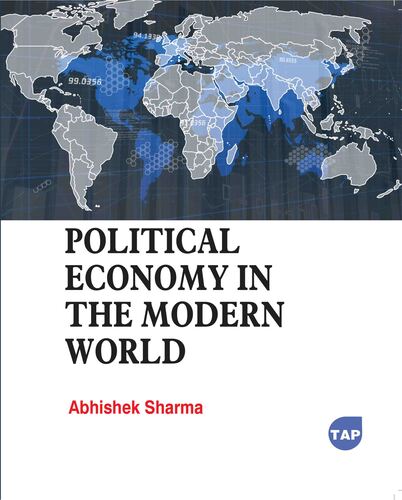
Political Economy in the Modern World |
| |
Abhishek Sharma/ 9781779569349/ Price:US$ 120.00
|
| |
|
|
The study of political economy bridges economics and politics, exploring how power, institutions, and markets shape resource distribution and social welfare. It provides insights into how economic systems evolve under different political structures. Political Economy in the Modern World examines classical and contemporary theories of economic governance and global development. The book discusses capitalism, socialism, globalization, and economic inequality. It also explores the influence of international institutions such as the IMF and WTO on national economies. Combining historical analysis with current debates, it provides a comprehensive understanding of how politics and economics interact in shaping global society. |
| |
|
| SC01-529 |
Development Banks and the Green Transition: Financing the Sustainable Development Convention |
| |
Fernanda Feil/ 9781032701448/ Price:GBP 171.99
|
| |
|
|
|
| |
|
| SC01-529 |
Real Estate Economics: A Point-to-Point Handbook |
| |
Nicholas G. Pirounakis/ 9781032640945/ Price:GBP 71.99
|
| |
|
|
|
|
| |
|
| SC01-529 |
The Evolution of Economic Ideas and Systems: A Pluralist Approach |
| |
Geoffrey Schneider/ 9781032964560/ Price:GBP 65.99
|
| |
|

|
|
| |
|
| SC01-528 |
Tourism and Transport in the Sharing Economy: Strategies for Resource and Service Management |
| |
Monika Ziolko/ 9781041062769/ Price:GBP 171.99
|
| |
|
|
|
| |
|
| SC01-528 |
The Economics of Immigration |
| |
Cynthia Bansak/ 9781032906386/ Price:GBP 62.99
|
| |
|

|
|
| |
|
| SC01-528 |
Social Inequality and Human Security: Case Studies from Asia |
| |
Christian Ploberger/ 9781032895901/ Price:GBP 171.99
|
| |
|
|
|
| |
|
| SC01-528 |
Green Finance and Decarbonization: Advancing Low-Carbon Technologies in East and Southeast Asia |
| |
Han Phoumin/ 9781032970868/ Price:GBP 171.99
|
| |
|
|
|
| |
|
| SC01-528 |
Microeconomics: An Open Introduction |
| |
Richard Friberg/ 9781041034360/ Price:GBP 65.99
|
| |
|

|
|
| |
|
| SC01-528 |
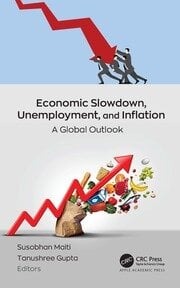
Economic Slowdown, Unemployment, and Inflation: A Global Outlook |
| |
Susobhan Maiti/ 9781779643452/ Price:GBP 150.00
|
| |
|
|
|
| |
|
| SC01-528 |
Free Market and Perfect Competition: Global Data Trends |
| |
Weshah Razzak/ 9781032998374/ Price:GBP 171.99
|
| |
|
|
|
| |
|
| SC01-528 |
From Competition to Coexistence: The Evolution of the Labour Market for College Graduates in the Age of Automation |
| |
Peikang Zhang/ 9781041098171/ Price:GBP 171.99
|
| |
|
|
|
| |
|
| SC01-528 |
Financial Stability, Risks, and Ecological Transition: Addressing Economic Challenges Under Global Uncertainty |
| |
Lyubov Klapkiv/ 9781041121848/ Price:GBP 171.99
|
| |
|
|
|
| |
|
| SC01-528 |
Towards an Elite Theory of Economic Development: An Inquiry into Sustainable Value Creation |
| |
Tomas Casas-Klett/ 9783110738902/ Price:EUR 74.95
|
| |
|
|
|
|
| |
|
| VC01-358 |
Modern Insights in International Trade and Commerce (9798369352946) |
| |
Javier Martinez-Falco/ IGI97952946/ Price:US$ 330.00
|
| |
|

|
Modern insights into international trade and commerce reveal new landscapes shaped by technological advancements, shifting economic power, and complex global trade. As the world becomes interconnected, digital transformation, including e-commerce and blockchain technology, is revolutionizing how goods and services are exchanged across borders, streamlining transactions and enhancing transparency. Rising markets and changing political landscapes are reshaping traditional trade routes and strategies. A nuanced understanding of new trade policies and economic agreements is necessary to leverage data analytics and adapt to evolving consumer preference.
Modern Insights in International Trade and Commerce offers theoretical knowledge and practical insights into international trade and commerce. By integrating case studies, empirical data, and expert analyses, it provides a rich resource for further academic exploration into global business, market entry strategies, and cross-cultural management. This book covers topics such as, and is a useful resource for academicians, researchers, business owners, consultants, strategists, and economists.
Coverage:
The many academic areas covered in this publication include, but are not limited to:
•Commerce
•Corporate Social Responsibility
•Economics and Economic Theory
•Exchange Rates
•Financial Inclusion
•Green Innovation
•Intellectual Capital
•International Trade
•Knowledge Manage
•Sustainable Manufacturing
•Trade Routes |
| |
|
| VC01-357 |
Global Economic Interconnectedness: International Trade and Finance (9798369353042) |
| |
Javier Martinez-Falco/ IGI97953042/ Price:US$ 365.00
|
| |
|

|
International trade and finance are becoming increasingly complicated, which poses many challenges for policymakers, business professionals, and academics. Understanding the intricacies of this global economic landscape is vital to navigating modern business and policy-making complexities. However, the overwhelming amount of information makes comprehending the underlying theories and practices that drive these fields challenging.
Global Economic Interconnectedness: International Trade and Finance provides a comprehensive analysis of the mechanisms of international trade and finance. By unraveling the complexities of these relationships, the book helps readers understand how economic policies are formulated, how global markets are influenced, and how individuals and nations are affected. The book provides a solid foundation for engaging with these critical issues, focusing on these fields' historical evolution and current state.
Coverage:
The many academic areas covered in this publication include, but are not limited to:
•Cross-Border Investment Flows
•Economic Implications
•Emerging Markets
•Financial Crises
•Financial Markets
•Financial Stability
•Global Economic Governance
•Global Trade Systems
•Globalization
•Green Economy
•International Finance
•International Monetary Systems
•International Organizations
•Risk Management
•Sustainable Finance |
| |
|
| SC01-530 |
Safe Assets in the Global Economy: Supply, Demand and Financial Stability |
| |
Joanna Bogolebska/ 9781032453439/ Price:GBP 47.99
|
| |
|
|
|
|
| |
|
| SC01-530 |
Economic Populism and Institutional Reform |
| |
Emre Unal/ 9781032571584/ Price:GBP 47.99
|
| |
|
|
|
|
| |
|
| SC01-530 |
Technological Change and Labor Markets: Productivity, Job Polarization, and Inequality |
| |
Reyna Elizabeth Rodriguez Perez/ 9781032486253/ Price:GBP 47.99
|
| |
|
|
|
|
| |
|
| SC01-528 |
Environmental, Social, and Governance Ratings: Risks, Regulations, and Market Dynamics |
| |
Patrycja Chodnicka-Jaworska/ 9781041098713/ Price:GBP 171.99
|
| |
|
|
|
| |
|
| SC01-528 |
Modern Labor Economics: Theory and Public Policy |
| |
Ronald G. Ehrenberg/ 9781032906126/ Price:GBP 54.99
|
| |
|
|
|
| |
|
| SC01-526 |
Personalization and Digital Social Markets: Disrupting the Capitalist Economy |
| |
Tahir M. Nisar/ 9781350444416/ Price:GBP 85.00
|
| |
|
|
|
| |
|
| SC01-524 |
Development Economics |
| |
Penelope Bailey/ 9781984695871/ Price:US$ 110.00
|
| |
|
|
Explores the field of development economics, focusing on economic growth, poverty reduction, and development strategies in low-income countries.
Discusses topics such as international aid, economic policy, and sustainable development.
Highlights the role of development economics in improving living standards and fostering economic progress. |
| |
|
| SC01-523 |
Introduction to Economics |
| |
Alexandra Broillet/ 9781682509241/ Price:US$ 130.00
|
| |
|
|
Economics is the study of how resources are allocated to meet the needs and wants of individuals and societies. This book provides an introduction to basic economic concepts, including supply and demand, market structures, and economic policies. Designed for students and those new to economics, it offers clear explanations and practical examples to illustrate fundamental principles. The book aims to build a solid foundation for understanding economic behavior and decision-making. |
| |
|
| SC01-523 |
Applied Economic Concepts |
| |
Michael Arnot/ 9781682509159/ Price:US$ 130.00
|
| |
|
|
Economic concepts are theories and models used to analyze and interpret economic activities and policies. This book explores core economic principles such as supply and demand, market equilibrium, and economic policies, applying them to real-world scenarios. It is intended for those seeking to understand how economic theories inform business and policy decisions. The book offers practical examples and clear explanations to bridge the gap between theoretical concepts and practical applications. |
| |
|
| SC01-523 |
Introduction to Health Economics |
| |
Kavita Ramanathan/ 9781779562562/ Price:US$ 190.00
|
| |
|
|
Focused on the economic aspects of healthcare systems and policies, this book introduces key concepts in health economics, including healthcare financing, cost-effectiveness analysis, and healthcare market dynamics. It examines the impact of economic factors on health outcomes and healthcare delivery. The objective is to provide a foundational understanding of health economics principles essential for informed decision-making and policy development in healthcare. |
| |
|
| SC01-523 |
Economic Sustainability and Social Equality in the Technological Era: Proceedings of the 3rd International Conference on Humanities and Social Sciences (ICHSOS 2023), 30-31 August, 2023, |
| |
Dwi Irawan/ 9781032877921/ Price:GBP 235.00
|
| |
|
|
|
| |
|
| SC01-523 |
Gender Inequality in the Global Labor Market: A Feminist Economics Approach |
| |
Reyna Elizabeth/ 9781032568812/ Price:GBP 171.99
|
| |
|
|
|
| |
|
| SC01-523 |
Contract, Labour Law and the Realities of Working Life |
| |
Eugene Schofield-Georgeson/ 9781032453941/ Price:GBP 171.99
|
| |
|
|
|
| |
|
| SC01-521 |
International Economic Policy for the Polycrisis |
| |
Konrad Raczkowski/ 9781032784465/ Price:GBP 171.99
|
| |
|
|
|
| |
|
| SC01-521 |
International Sanctions in Practice: An Interdisciplinary Perspective |
| |
Antonio Bultrini/ 9781032481302/ Price:GBP 171.99
|
| |
|

|
|
| |
|
| SC01-521 |
Hegel on Ethics, the State and Public Policy: Comparisons with Immanuel Kant and Utilitarianism |
| |
Samuel Hollander/ 9781032749419/ Price:GBP 171.99
|
| |
|
|
|
| |
|
| SC01-521 |
Karl Popper and Situational Analysis: Theory and Method for Contemporary Economics and Sociology |
| |
Alfonso Palacio-Vera/ 9780367704810/ Price:GBP 171.99
|
| |
|
|
|
| |
|
| SC01-521 |
Philosophical Foundations of Economic Reality: Anthropological, Ethical and Metaphysical |
| |
Javier Aranzadi/ 9781032603513/ Price:GBP 171.99
|
| |
|
|
|
| |
|
| SC01-521 |
Precarity Activism: Youth and Social Change in Southern Europe |
| |
Maribel Casas-Cortes/ 9781032261126/ Price:GBP 171.99
|
| |
|

|
|
| |
|
| SC01-521 |
The Ideas That Rule Us: How to Understand, Organise and Fight Against Bad Economics |
| |
Chris Grocott/ 9780367753139/ Price:GBP 43.99
|
| |
|

|
|
| |
|
| SC01-521 |
Schumpeter's General Theory of Capitalism |
| |
Tristan Velardo/ 9781032628684/ Price:GBP 171.99
|
| |
|
|
|
| |
|
| VC01-349 |
Strengthening Sustainable Digitalization of Asian Economy and Society (9798369319420) |
| |
Patricia Ordonez de Pablos/ IGI97919420/ Price:US$ 320.00
|
| |
|
|
The book addresses the challenges and opportunities the digital age poses, examining how advanced information technologies, including artificial intelligence, IoT, and machine learning, coupled with practical knowledge management, can catalyze a transformative journey. Strengthening Sustainable Digitalization of Asian Economy and Society unravels how these digital tools and solutions impact the realization of the Sustainable Development Goals (SDGs) by 2030, offering invaluable insights for academics, researchers, industry players, policymakers, and stakeholders. This book emphasizes the ASEAN region, providing an understanding of the regional nuances in the digital transition by presenting comparative regional studies, including Asia, Europe, the USA, Latin America, Africa, and the Gulf Region.
This formidable research book focuses on practicality and is not confined to theoretical discourse. Its emerging topic coverage includes artificial intelligence, circular economy, green economy, climate-neutral economy, and sustainability. The book aligns with the European Commission's Horizon Europe Work Program 2023-2024 objectives, promoting both climate transition and digital transformation. It aims to be a global platform fostering dialogue sharing theories, frameworks, research findings, and case studies to enhance knowledge and scientific collaboration.
Coverage:
The many academic areas covered in this publication include, but are not limited to:
•Artificial Intelligence
•ASEAN Dynamics
•Circular Economy
•Climate-Neutral Transformation
•Comparative Regional Studies
•Digital Connectivity
•Digital Economy Trends
•Energy Transition
•Green Economic Growth
•Inclusive Digital Strategies
•Information Technologies
•Sustainable Development Goals (SDGs)
•Sustainable Digitalization |
| |
|
| VC01-348 |
Green Economy and Renewable Energy Transitions for Sustainable Development (9798369312971) |
| |
Rui Alexandre Castanho/ IGI97912971/ Price:US$ 305.00
|
| |
|
|
|
Drawing on the wisdom of experts in fields ranging from environmental science to policy analysis, this book unveils the multifaceted strategies needed to reduce pollution, conserve biodiversity, and effectively mitigate the relentless march of climate change. Central to sustainability is a green economy—a holistic economic system that transcends profit margins to prioritize social equity, ecological balance, and robust economic growth. Through rigorous exploration and analysis, this volume showcases how sustainable production and consumption practices and judicious investments in renewable energy sources can catalyze a transformative shift towards a more sustainable global economy.
The energy transition, a substantial shift from fossil fuels to renewable energy sources, emerges as the linchpin of our battle against climate change. This book deciphers the intricate dance of policies, technologies, and behavioral changes required to usher in this transition. It reveals how renewable energy sources like solar, wind, and hydropower hold the key to reducing greenhouse gas emissions and staving off the catastrophic consequences of global warming.
Coverage:
The many academic areas covered in this publication include, but are not limited to:
•Biodiversity Preservation
•Climate Change Mitigation
•Curriculum Design
•Energy Transition
•Environmental Conservation
•Green Economy
•Policy Recommendations
•Renewable Energy
•Smart Governance
•Sustainable Development
•Sustainable Development Goals
•Sustainable Education
•Sustainable Production
•Technological Innovation
•Territorial Governance |
| |
|
| VC01-347 |
Governance and Policy Transformations in Central Banking (9798369308356) |
| |
Farhan Ahmed/ IGI97908356/ Price:US$ 305.00
|
| |
|

|
Governance and Policy Transformations in Central Banking is a groundbreaking book that transcends traditional boundaries to offer a comprehensive solution to the complex challenges faced by central banks worldwide. This book not only diagnoses problems, it also presents a meticulously curated collection of new empirical and theoretical chapters that illuminate the path forward. It is an invaluable resource that empowers central banks with the knowledge and tools necessary for development, governance, and policy transformation.
Within these pages, readers will discover the latest trends and strategies in central banking, specifically tailored to address the unique challenges posed by recent global crises. From understanding the nuances of policy transformation within central banks to unraveling the interconnected web of monetary policy, price stability, and financial equilibrium, this book provides actionable insights that will reshape the way central bankers, economists, and policy experts approach their critical roles.
Coverage:
The many academic areas covered in this publication include, but are not limited to:
•Central Bank Governance
•Central Bank Independence
•Economic Resilience
•Economic Strategies
•Empirical Insights
•Financial Stability
•Global Economic Downturn
•Governance Challenges
•Macroeconomic Framework
•Monetary Policy
•Pandemic Aftermath
•Policy Transformation
•Price Stability
•Prudential Regulation
•Research Community |
| |
|
| SC01-530 |
Handbook of Choice Modelling |
| |
Stephane Hess/ 9781800375628/ Price:GBP 311.00
|
| |
|
|
|
|
| |
|
| SC01-522 |
The Cost of Living Crisis: Implications for Economic Theory and Public Policy |
| |
Imad A. Moosa/ 9781035338221/ Price:GBP 94.00
|
| |
|
|
|
| |
|
| SC01-521 |
The Routledge Handbook on Karl Polanyi |
| |
Michele Cangiani/ 9781032373836/ Price:GBP 260.00
|
| |
|

|
|
| |
|
| SC01-521 |
Virtues, Morals and Markets: Why Moral Identity Matters |
| |
Rojhat Avsar/ 9781032300221/ Price:GBP 171.99
|
| |
|
|
|
| |
|
| SC01-521 |
Framing the Economy of the Future: Six Socio-Economic Trends for Sustainability, Circularity and Inclusivity |
| |
Niels Faber/ 9781789900231/ Price:GBP 112.00
|
| |
|
|
|
| |
|
| SC01-521 |
Regional Cooperation and Resilience in East Asia |
| |
Sebastian Bobowski/ 9781032602561/ Price:GBP 171.99
|
| |
|
|
|
| |
|
| SC01-521 |
Rules for Trade in Services 2.0: Adapting the GATS to a Changing Trade Landscape |
| |
Gabriel Gari/ 9781032221977/ Price:GBP 171.99
|
| |
|
|
|
| |
|
| SC01-521 |
East Asian Ethical Life and Socio-Economic Transformation in the Twenty-First Century: The Ethical Sources of the Entrepreneurial Renewal of Companies and Communities |
| |
Carsten Herrmann-Pillath/ 9781032484983/ Price:GBP 171.99
|
| |
|
|
|
| |
|
| SC01-521 |
Economy and Theology: Cusanus's Theory of Value |
| |
Agnieszka Kijewska/ 9781032315157/ Price:GBP 67.99
|
| |
|
|
|
| |
|
| SC01-521 |
Strategizing the Russian Gas Industry: The Far Eastern Vector |
| |
Nikita I. Sasaev/ 9781774919354/ Price:GBP 82.99
|
| |
|

|
|
| |
|
| SC01-521 |
The Economics of Urban Transportation |
| |
Kenneth A. Small/ 9781138069053/ Price:GBP 59.99
|
| |
|
|
|
| |
|
| SC01-521 |
Intangible Assets, Productivity and Economic Growth: Micro, Meso and Macro Perspectives |
| |
Carter Bloch/ 9781032348674/ Price:GBP 171.99
|
| |
|
|
|
| |
|
| SC01-521 |
Unequal Development and Capitalism: Catching Up and Falling Behind in the Global Economy |
| |
Adalmir Antonio Marquetti/ 9781032121642/ Price:GBP 171.99
|
| |
|
|
|
| |
|
| SC01-521 |
Contemporary Critiques of Political Economy: Mapping Alternative Planetary Futures |
| |
Ananta Kumar Giri/ 9781032271293/ Price:GBP 171.99
|
| |
|
|
|
| |
|
| SC01-521 |
Customer Data Sharing Frameworks: Twelve Lessons for the World |
| |
Anton Didenko/ 9781032538983/ Price:GBP 67.99
|
| |
|
|
|
| |
|
| SC01-521 |
Debating a Post-Work Future: Perspectives from Philosophy and the Social Sciences |
| |
Denise Celentano/ 9781032342122/ Price:GBP 171.99
|
| |
|

|
|
| |
|
| SC01-518 |
World Scientific Handbook of Global Migration, 3-Vols/Set. |
| |
Robert M. Sauer/ 9789811247934/ Price:US$ 795.00
|
| |
|

|
|
| |
|
| SC01-517 |
China's Capitalist Transformation: The Rhetoric that Mattered |
| |
Yuan Li/ 9783110773163/ Price:EUR 79.95
|
| |
|
|
|
| |
|
| SC01-517 |
Microeconomics |
| |
Klevisa Kapo/ 9781774697092/ Price:US$ 110.00
|
| |
|
|
|
Microeconomics is a branch of economics that focuses on the study of individual economic agents such as consumers, firms, and markets, and how they make decisions regarding the allocation of scarce resources. This book explores the economic behavior of individuals, firms, and markets in detail. It delves into the theory of supply and demand, market structures, pricing, and production decisions made by businesses. Microeconomics serves as a foundation for understanding economic decision-making at the individual and firm level, and how they impact market outcomes. It is a valuable resource for students of economics, as well as anyone interested in understanding how markets work and how economic decisions are made. |
| |
|
| SC01-517 |
Macroeconomics |
| |
Klevisa Kapo/ 9781774697108/ Price:US$ 110.00
|
| |
|
|
|
Macroeconomics is the branch of economics that studies the behavior and performance of an economy as a whole, focusing on topics such as inflation, unemployment, economic growth, and monetary and fiscal policies. This book provides a comprehensive study of the principles and methods underlying the field of macroeconomics. It covers a wide range of topics, including economic growth, inflation, unemployment, fiscal policy, monetary policy, international trade, and exchange rates. It is an essential textbook for students of economics, as well as a valuable resource for policymakers, business leaders, and anyone interested in understanding the workings of the economy at a national or global level. The book is written in a clear and concise manner, with numerous examples, graphs, and illustrations to aid understanding. |
| |
|
| SC01-517 |
Managerial Economics |
| |
Aboneh Teshome/ 9781774697689/ Price:US$ 110.00
|
| |
|
|
Managerial Economics is a comprehensive textbook to the application of economic principles and concepts in managerial decision-making. It covers topics such as demand analysis, production and cost analysis, market structure, pricing strategies, and risk analysis. This book is specially written to help managers make informed decisions by providing them with a deeper understanding of economic concepts and their application in business. |
| |
|
| SC01-517 |
Illustrated Dictionary of Economics |
| |
Andy Chevigne/ 9781984688200/ Price:US$ 65.00
|
| |
|
|
Combines clear definitions with visually appealing illustrations to help readers understand and navigate the complex concepts and terminology of economics.
Third edition of this dictionary incorporates many new definitions and a thorough revision of previous entries and an ideal resource for learners at all levels. |
| |
|
| SC01-517 |
Innovative Business Models for Circular Economy |
| |
Larry Ross/ 9781682508701/ Price:US$ 160.00
|
| |
|
|
The evolving economy has witnessed the emergence of new business models such as sharing economy, subscription-based models, and platform-based models that have disrupted traditional industries and transformed the way goods and services are consumed and delivered. These innovative business models emphasize collaborative consumption, customization, and the use of technology to create efficient marketplaces, thereby fostering economic growth and market expansion. This book presents a collection of innovative business models that promote a circular economy. It highlights successful case studies from various industries, showcasing how organizations can move away from the traditional linear production model and embrace sustainability. |
| |
|
| SC01-516 |
The Political Economy of Extractivism: Global Perspectives on the Seduction of Rent |
| |
Hannes Warnecke-Berger/ 9781032300580/ Price:GBP 171.99
|
| |
|
|
|
| |
|
| SC01-514 |
COVID-19 and European Banking Performance: Resilience, Recovery and Sustainability |
| |
Paul Wachtel/ 9781032316567/ Price:GBP 171.99
|
| |
|
|
|
| |
|
| GC01-113 |
Economic Growth And Development Potential |
| |
Liu Wei/ 9789814986496/ Price:US$ 150.00
|
| |
|
|
With the advent of a new era for the development of socialism with Chinese characteristics, China is experiencing significant changes in various sectors. The new opportunities and challenges for economic growth have prompted the country to implement a series of new development concepts, kicking off a fundamental shift in its development model. In Economic Growth and Development Potential, the authors probe into an array of hotly debated issues-including sustainable economic growth, potential growth rates, total factor productivity, labor productivity, resource allocation, and structural efficiency-in a statistically grounded analysis of the features and potential of China's economic growth. |
| |
|
| |
Endgame: Economic Nationalism and Global Decline |
| |
Jamie Merchant/ 9781789149142/ Price:GBP 15.95
|
| |
|

|
Globalization as we know it is over. Industrial policies dismissed as obsolete for decades have been embraced by governments worldwide, geopolitical tensions are reminiscent of those at the height of the Cold War, and a resurgent far-right challenges the very foundations of contemporary democracy.
In this book Jamie Merchant examines the roots of this significant shift in the global landscape, reaching further back than the commonly blamed failures post-Cold War. Instead, reviewing the global economy over the entire previous century, he shows that the great political and economic changes of the last decade are due not to a failed ideology of globalization, but to the long-term decay of the modern, market-based economic order. Endgame offers a historical perspective on the period of globalization, illuminating the future path of the global economy and world politics. |
| |
|
| VC01-345 |
Empowering Women Through Microfinance in Developing Countries |
| |
Yahaya Alhassan/ 9781668489802/ Price:US$ 225.00
|
| |
|

|
Empowering Women Through Microfinance in Developing Countries addresses this knowledge gap by examining the influence of microfinance on women's empowerment in developing countries. It offers theoretical and empirical insights from industry experts, experienced researchers, and policymakers on the problems, processes, and prospects of using microfinance as a catalyst for women's empowerment in the developing world.
The book covers a range of topics, including the impact of microfinance interventions on women's empowerment, financial inclusion, microfinance and female entrepreneurship, and poverty reduction among women, and small and medium-sized enterprise (SME) growth. The insights provided in this book will be a valuable resource for researchers, students, microfinance institutions, policymakers, state institutions, managers, non-governmental organizations, and financial institutions looking to expand their product portfolio and outreach. The book also provides policy directions and rethinking of practice in using microfinance as a strategy for eliminating barriers to women's empowerment in developing countries.
Coverage:
The many academic areas covered in this publication include, but are not limited to:
•Decision Making
•Employment Creation
•Female Entrepreneurship
•Financial Inclusion
•Gender
•Income Inequality
•Micro Enterprise Development
•Microfinance
•Millennium Development Goals
•Poverty Reduction
•Role Of Microfinance
•Self-Confidence And Esteem
•Small And Medium Size Enterprise Growth Socio-Economic Decision Making
•Socio-Economic Wellbeing |
| |
|
| VC01-343 |
Sustainable Growth and Global Social Development in Competitive Economies |
| |
Andrei Jean Vasile/ 9781668488119/ Price:US$ 235.00
|
| |
|
|
In the process of transitioning to the New Normal model of society and economy, business models, development patterns, and structural transformations have started to become major instruments in creating the new reality. Creating the basic conditions and promoting the sustainable economic development criteria for contemporary communities needs not only a massive rearrangement of the classical structures but also a rethinking of the old economic paradigm to promote new business models and sustainable entrepreneurship.
Sustainable Growth and Global Social Development in Competitive Economies fulfills a gap between theory and practice in the field of resilient economies, sustainable growth, and global social development in the New Normal. It also provides some holistic approaches regarding business models, development patterns, and transformations in the New Normal paradigm. Covering key topics such as globalization, business process modeling, and resource economics, this premier reference source is ideal for business owners, managers, government officials, policymakers, industry professionals, researchers, academicians, scholars, practitioners, instructors, and students.
Coverage:
The many academic areas covered in this publication include, but are not limited to:
•Business Process Modeling
•Consumption Patterns
•Development
•Digital Transformation
•Globalization
•Hospitality
•Knowledge Management Society
•Resource Economics
•Rural Economy
•Tourism
•Transition Economics
|
| |
|
| VC01-342 |
Multidisciplinary Approaches to Sustainable Human Development |
| |
Vishal Jain/ 9781668482247/ Price:US$ 210.00
|
| |
|

|
Sustainable development helps undo the havoc that has been created by human beings in the last few years in the name of development and growth. It helps to promote a more social, environmental, and economical way of living. There are many ways in which we all can practice sustainable development in our daily lives and further study is required.
Multidisciplinary Approaches to Sustainable Human Development focuses on all agendas of sustainable development goals and offers approaches to develop a transdisciplinary perspective that encompasses the natural, social, and human sciences in the search for a sustainable society. Covering topics such as green economy, social innovation, and climate change, this premier reference work is ideal for environmentalists, government officials, policymakers, researchers, scholars, academicians, practitioners, instructors, and students.
Coverage:
The many academic areas covered in this publication include, but are not limited to:
•Climate Change
•Digital Sustainability
•Economic Sustainability
•Emerging Markets
•Governance
•Green Economy
•Progress
•Social Innovation
•Sustainability
•Sustainable Development |
| |
|
| VC01-337 |
Impact of Disruptive Technologies on the Socio-Economic Development of Emerging Countries |
| |
Fredrick Japhet Mtenzi/ 9781668468746/ Price:US$ 210.00
|
| |
|

|
Global emergencies, such as the COVID-19 pandemic and environmental concerns, have challenged the readiness of societies and forced them to operate in more innovative ways. In response, the world has witnessed new technologies emerge and researchers continually finding better solutions to cope with these situations. It is crucial that these innovations are investigated so that we may better the world during times of crisis.
Impact of Disruptive Technologies on the Socio-Economic Development of Emerging Countries provides relevant case studies, innovative disruptive applications, and the latest empirical research findings in the digital technology space. Additionally, it provides accounts of the design, development, and usage of digital solutions that have an impact on addressing societal problems in emerging economies. Covering topics such as e-social work, social media addiction, and adaptive testing, this premier reference source is an essential resource for government officials, entrepreneurs, politicians, business leaders, students and educators of higher education, sociologists, librarians, researchers, and academicians.
Coverage:
The many academic areas covered in this publication include, but are not limited to:
•Adaptive Testing
•Educational Assessment
•ERP-Based Systems
•E-Social Work
•Learning Resources
•Perception of Social Workers
•Public Health Surveillance
•Social Media Addiction
•Social Media Usage
•Socio-Economic Challenges
•Sustainable Development |
| |
|
| VC01-336 |
Changing World Economic Order in the Post-Pandemic Period |
| |
Sushanta Kumar Mahapatra/ 9781799868972/ Price:US$ 250.00
|
| |
|

|
Changing World Economic Order in the Post-Pandemic Period provides scientific knowledge of the current economic scenarios across the globe with a comprehensive overview of the pandemic and regional initiatives, trends of trade and development, and approaches to overcome obstacles of globalization and the impacts on global trade and economic development in light of the pandemic. The chapters present tangible solutions and attainable perspectives for fighting a battle against the pandemic while keeping the morale of the people and economy high. Highlighted topics include post-pandemic economic development, public policy in emergency situations, socio-economic impacts on enterprises, risk governance, and impacts of COVID-19. This book is ideally intended for university students, researchers, policymakers, economic actors, economists, practitioners, stakeholders, government officials, academicians, and anyone interested in the impact of a pandemic on the global economy and how to deal with such issues in the future.
Coverage:
The many academic areas covered in this publication include, but are not limited to:
•Banking
•Economic Development
•Economic Revivals
•Education
•Global Trade
•Globalization
•Labor Issues
•Micro, Small, and Medium Enterprises (MSMEs)
•Public Policy
•Risk Governance
•Tourism
•World Economic Order |
| |
|
| VC01-334 |
Diversity, Equity, and Inclusion Efforts of Businesses in Rural Areas |
| |
Shashi Bala/ 9781668468791/ Price:US$ 210.00
|
| |
|

|
Equity is the tool to achieve diversity and inclusion that will help eliminate injustice and fairly distribute the benefits of an equitable environment to everyone. Corporate culture around the world has already stated efforts for sustainable development through corporate social responsibility (CSR) initiatives in rural areas. This infrastructure must be strengthened so that the rural community can become an active part of changing the world of work.
Diversity, Equity, and Inclusion Efforts of Businesses in Rural Areas evaluates growth trajectories and educational opportunities in rural areas. It further explores the inclusion efforts of marginalized groups in rural society. Covering topics such as the construction industry, rural populations, and workplace inclusivity, this premier reference source is a valuable resource for policymakers, investors, professionals, business leaders and managers, economists, sociologists, students and educators of higher education, librarians, researchers, and academicians.
Coverage:
The many academic areas covered in this publication include, but are not limited to:
•Business Development
•Climate change
•Construction Industry
•Diversity, Equity, and Inclusion (DEI)
•Rural Livelihoods
•Rural Populations
•Rural Tourism
•Rural Workers
•Workplace Inclusivity
•Workplace Issues |
| |
|
| VC01-333 |
Emerging Insights on the Relationship Between Cryptocurrencies and Decentralized Economic Models |
| |
Dhanapal Kesavan/ 9781668456927/ Price:US$ 235.00
|
| |
|
|
The significance of cryptocurrencies can be understood clearly with their high market penetration in recent times. The central banks, economists, business professionals, and authorities are examining the prospects, impacts, comfortability, and reliability aspects of cryptocurrencies. Many questions are yet to be answered empirically to cover the significance, considerations, negative impacts, policy applications, and acceptance of cryptocurrencies as marketable instruments. Many governments are concerned about the nature and volatility of cryptocurrencies due to their decentralized form.
Emerging Insights on the Relationship Between Cryptocurrencies and Decentralized Economic Models discusses the answers to major queries and concerns regarding cryptocurrencies and the emergence of decentralized economic models. It covers major topics that are highly resourceful for knowledge seekers and is highly useful, containing vital information related to cryptocurrencies. Covering topics such as central bank digital currencies, financial reporting, and public perception, this premier reference source is an essential resource for economists, government officials and agency officials, policymakers, central bank professionals, investors, entrepreneurs, students and educators of higher education, librarians, researchers, and academicians.
Coverage:
The many academic areas covered in this publication include, but are not limited to:
•Central Bank Digital Currency
•Cryptocurrencies
•Economic Instability
•Financial Crime
•Financial Reporting
•Foreign Exchange Markets
•Modeling
•Price Volatility
•Public Perception
•Reliability |
| |
|
| VC01-329 |
Transforming Economies Through Microfinance in Developing Nations |
| |
Yahaya Alhassan/ 9781668456484/ Price:US$ 235.00
|
| |
|
|
Following the positive impact of microfinance on poverty reduction, women empowerment, and microenterprise development in some countries in Asia and Africa, a huge amount of time has been devoted by researchers to understanding how this concept can be used as a catalyst for transforming and sustaining the economies of developing and emerging countries. Though there are a few books on the role of microfinance in reducing poverty in developing countries across world, there is no specific book that explores the role of microfinance in transforming and sustaining economies of developing and emerging countries.
Transforming Economies Through Microfinance in Developing Nations seeks to explore how the provision of microfinance to individuals and groups can contribute to the economic transformation and sustainability of the economies of developing and emerging countries. Covering key topics such as climate change, entrepreneurship, and rural development, this reference work is ideal for government officials, entrepreneurs, policymakers, researchers, academicians, practitioners, scholars, instructors, and students.
Coverage:
The many academic areas covered in this publication include, but are not limited to:
•Climate Change
•Development Goals
•Employment
•Entrepreneurship
•Financial Development
•Income Inequality
•Microfinance
•Poverty Reduction
•Rural Development
•Sustainable Development |
| |
|
| VC01-325 |
Frugal Innovation and Social Transitions in the Digital Era |
| |
Muhammad Nawaz Tunio/ 9781668454183/ Price:US$ 235.00
|
| |
|

|
Frugal innovation is considered a new source of innovation, mainly to meet the needs of low-income customers. Hence, frugal innovation has primarily been explored emphasizing affordability. The concept of frugal and social innovation is a new idea and requires perspectives from academicians, researchers, and organizations to reach its full potential.
Frugal Innovation and Social Transitions in the Digital Era considers the social value of innovation, frugal innovation, and social innovation in society at local, national, and international levels and calls the attention of scholars and researchers around the globe to focus on the social perspectives and social patterns of human life and society. Covering key topics such as emerging technologies, entrepreneurship, and social change, this reference work is ideal for computer scientists, business owners, managers, policymakers, researchers, scholars, practitioners, instructors, and students.
Coverage:
The many academic areas covered in this publication include, but are not limited to:
•Community
•Digital Age
•Emerging Technologies
•Entrepreneurship
•Frugal Innovation
•Innovation
•Markets
•Social Change
•Social Dynamics
•Social Innovation
•Social Learning |
| |
|
| SC01-515 |
Social Coordination and Public Policy: Explorations in Theory and Practice |
| |
Roberta Q. Herzberg/ 9781666918229/ Price:US$ 100.00
|
| |
|

|
|
| |
|
| SC01-515 |
The Evolution of Banking Regulation in the European Union: An Economic Approach |
| |
Nikolay Gertchev/ 9781666937190/ Price:US$ 95.00
|
| |
|

|
|
| |
|
| SC01-514 |
Economic Policy, COVID-19 and Corporations: Perspectives from Central and Eastern Europe |
| |
Katarzyna Mroczek-D?browska/ 9781032384986/ Price:GBP 171.99
|
| |
|
|
|
| |
|
| SC01-514 |
Digital Economy and the Sustainable Development of ASEAN and China |
| |
Yang Yue/ 9789811254475/ Price:US$ 88.00
|
| |
|
|
|
|
| |
|
| SC01-514 |
International Development Cooperation: Theory, Practice, and Evaluation |
| |
Jianzhi Zhao/ 9789811258879/ Price:US$ 108.00
|
| |
|
|
|
| |
|
| SC01-514 |
Hong Kong Professional Services and the Belt and Road Initiative: Challenges for Co-evolving Sustainability |
| |
Linda Chelan Li/ 9780367747367/ Price:GBP 145.99
|
| |
|
|
|
| |
|
| SC01-514 |
The East Asian Model: Transformation and Sustainability |
| |
Hyungkee Kim/ 9781032365763/ Price:GBP 145.99
|
| |
|
|
|
| |
|
| SC01-514 |
Modern Japanese Economic Thought: An Intellectual History to 1950 |
| |
Kiichiro Yagi/ 9780367532949/ Price:GBP 41.99
|
| |
|
|
|
| |
|
| SC01-511 |
State Building and Social Policies in Developing Countries: The Political Economy of Development |
| |
Rashed Al Mahmud Titumir/ 9781032256108/ Price:GBP 171.99
|
| |
|
|
|
| |
|
| SC01-511 |
The Dangers of Economic Imperialism |
| |
Chester Alexis C. Buama/ 9781774694848/ Price:US$ 165.00
|
| |
|
|
|
A basic introduction to the economic imperialism, and impact of economic emperliasm have been illustrated in detail in this book. It further talks about the history, concept and constraints of economic imperialism. This book provides highlights on the the interdisciplinarity challenges of economic imperialism, and the role of international organizations in globalization process. |
| |
|
| SC01-510 |
Economic Empowerment and Sustainable Development |
| |
Sushila Sinha/ 9781774694824/ Price:US$ 165.00
|
| |
|
|
|
The book "Economic empowerment and sustainable development" highlights the concepts and major ways of economic empowerment and sustainable development. The text material of the book has been systemically structured and presented briefly in easy language. Concepts are supported with appropriate figures. This book included various aspects of economic empowerment, viz women empowerment, women economic empowerment, economic empowerment models etc. Sustainable development aspects included an overview of sustainable development with its policies and practices, the Role of Agricultural Economics in sustainable development, etc. Importantly the book help reader to learn concepts of economic empowerment and sustainable development, to policymakers for formulating appropriate policies for the sustainable and economic development of the nation. |
| |
|
| SC01-510 |
Business Economics (Book with DVD) |
| |
3G Editorial Board/ 9781984679864/ Price:US$ 95.00
|
| |
|
|
Introduces economic concepts and principles which are useful in understanding the general economic environment within which businesses and other organizations operate.
Examines how consumers and firms make decisions and how they interact with each other in markets.
In its updated second edition, this book has been extensively revised on a chapter by chapter basis. |
| |
|
| SC01-510 |
Applied Economics (Book with DVD) |
| |
3G Editorial Board/ 9781984680488/ Price:US$ 95.00
|
| |
|
|
Equips student with the skills and knowledge to apply economic analysis to the current economic problems happening in the world today.
In its updated 4th edition, this book has been extensively revised on a chapter by chapter basis.
This updated edition offers students real advice in navigating the ever-changing educational background. |
| |
|
| SC01-510 |
International Financial Markets and Monetary Policy |
| |
Melinda Tansuria/ 9781682508107/ Price:US$ 160.00
|
| |
|
|
|
The new crisis has increased the importance of preserving financial stability through the international cooperation of central banks around the globe. Managing the expectations of market participants plays a crucial role in the context of financial stability. Therefore, the aim of this book is to disseminate important empirical and theoretical questions concerning the connection between monetary policy and international financial markets. |
| |
|
| |
Work and Social Justice: Rethinking Labour in Society and the Economy |
| |
Flora Gill/ 9781447369936/ Price:GBP 80.00
|
| |
|

|
Today’s economics offers us a far too narrow perspective on the role that paid work plays in our lives, as individuals and as a society.
This book examines the urgent workplace challenges we’re facing today, from automation to AI and climate change, with an interdisciplinary and historical analysis that challenges and broadens the scope of existing economic literature. Exploring the current economic proposals to address these issues, it advocates for a more egalitarian and sustainable future that builds workers’ protections into the very fabric of our economic systems.
This is a resounding call for greater economic social justice and equality at work and a valuable resource for social scientists from fields like heterodox economics, business and sociology. |
| |
|
| |
The Return of Inflation: Money and Capital in the 21st Century |
| |
Paul Mattick/ 9781789147919/ Price:GBP 14.95
|
| |
|
|
The last year has seen the return of inflation as a preoccupation of political decision-makers, economists and the general public. After two decades of wondering why inflation was so low, despite vast economic stimulus, economists were surprised by the recent surge of price increases. Despite disagreement about what exactly is happening in the economy, there is unanimity that growth must be slowed in order to control inflation. To focus on inflation’s return, Paul Mattick looks at past and present, placing current events in the context of capitalism’s history. Exploring in novel terms the nature of money itself, he provides a concise, jargon-free understanding of recent inflation, and official efforts to control it, illuminating the state of our contemporary economy. |
| |
|
| |
Research Anthology on Macroeconomics and the Achievement of Global Stability, 4-Vols/Set. |
| |
Information Resources Management Association/ 9781668474600/ Price:US$ 1865.00
|
| |
|

|
The COVID-19 pandemic has shocked economies around the world and created an era of global instability. As the pandemic comes to a close, it is essential to examine global economies in order to achieve and maintain global stability. By maintaining global stability, the world may be prepared for future economic shocks.
The Research Anthology on Macroeconomics and the Achievement of Global Stability discusses the emerging opportunities, challenges, and strategies within the field of macroeconomics. It features advancements in the field that encourage global economic stability. Covering topics such as Islamic banking, international trade, and Econophysics, this major reference work is an ideal resource for economists, government leaders and officials, business leaders and executives, finance professionals, students and educators of higher education, librarians, researchers, and academicians.
Coverage:
The many academic areas covered in this publication include, but are not limited to:
•Economic Theory
•Econophysics
•Global Liquidity
•Institutional Dynamics
•International Trade
•Islamic Banking
•Macroeconomic Sensitivity
•Pandemic Shock
•Personal Income Taxation
•Policy Design
•Public Capital Budgeting
|
| |
|
| |
Handbook of Research on Artificial Intelligence and Knowledge Management in Asia's Digital Economy |
| |
Patricia Ordonez de Pablos/ 9781668458495/ Price:US$ 325.00
|
| |
|

|
Artificial intelligence (AI) and knowledge management can create innovative digital solutions and business opportunities in Asia from circular and green economies to technological disruption, innovation, and smart cities. It is essential to understand the impact and importance of AI and knowledge management within the digital economy for future development and for fostering the best practices within 21st century businesses.
The Handbook of Research on Artificial Intelligence and Knowledge Management in Asia’s Digital Economy offers conceptual frameworks, empirical studies, and case studies that help to understand the latest developments in artificial intelligence and knowledge management, as well as its potential for digital transformation and business opportunities in Asia. Covering topics such as augmented reality. Convolutional neural networks, and digital transformation, this major reference work generates enriching debate on the challenges and opportunities for economic growth and inclusion in the region among business executives and leaders, IT managers, policymakers, government officials, students and educators of higher education, researchers, and academicians.
Coverage:
The many academic areas covered in this publication include, but are not limited to:
•Augmented Reality
•Big Data
•Blockchain
•Convolutional Neural Network
•Digital Tourism
•Digital Transformation
•Eco-Innovation
•Gold Price Prediction
•Industry Development
•Principal Component Analysis
•Robust Analysis
•Smart Healthcare
•Social Network Sentiment |
| |
|
| VC01-323 |
Cases on Circular Economy in Practice |
| |
Pietro De Giovanni/ 9781668450024/ Price:US$ 165.00
|
| |
|

|
In today’s business world, firms and policymakers all utilize circular economy. However, there is a lack of knowledge on how circular economy systems work, which technologies are used, which partners firms should look for, which agreements are required to pursue circular economy, how circular economy interacts with legislation, and what benefits it provides. Additional study on the opportunities and challenges of circular economy is required to ensure business leaders are well informed.
Cases on Circular Economy in Practice considers how circular economy systems are implemented and managed in practice, which strategic alliances firms pursue, and how they are coordinated through negotiation and agreements. The book also considers the technologies that circular economy systems use to achieve circularity and how performances are measured in terms of economic, social, and environmental pillars. Covering topics such as blockchain technology, smart cities, and circular business, this reference work is ideal for managers, business owners, industry professionals, researchers, academicians, scholars, practitioners, instructors, and students.
Coverage:
The many academic areas covered in this publication include, but are not limited to:
•Battery Swapping
•Blockchain Technology
•Business Models
•Circular Business
•Circular Economy
•Circular Models
•Circular Systems
•Metaverse
•Smart Cities
•Sustainability |
| |
|
| VC01-317 |
Opportunities and Challenges for Multinational Enterprises and Foreign Direct Investment in the Belt and Road Initiative |
| |
Miraj Ahmed Bhuiyan/ 9781799880226/ Price:US$ 190.00
|
| |
|
|
The Belt and Road Initiative (BRI) is establishing significant connectivity networks, including a complex network of aviation e-services and trade network systems. It has promoted economic and financial development in regions covered by the BRI in terms of infrastructure construction and interconnection and attracted large foreign direct investment flows. At the bottom of the escalation of the China-US trade dispute is a more fundamental shift where China has become the US’s strategic competitor, and political-economic tensions have continued to climb.
Opportunities and Challenges for Multinational Enterprises and Foreign Direct Investment in the Belt and Road Initiative analyzes the opportunities and challenges of multinational enterprises (MNEs) and cross-border foreign investments transactions. This valuable reference adopts an economic and international business perspective to address these issues and presents novel and state-of-the-art research insights into the role of MNEs and their influence on the Silk Road Economic Belt. Covering topics such as economic determinants, foreign direct investment promotion policies, and trade gravity model, this premier reference source is an excellent resource for business leaders and CEOs, policymakers, geopolitical experts, politicians, government officials, sociologists, libraries, students and educators of higher education, researchers, and academicians.
Coverage:
The many academic areas covered in this publication include, but are not limited to:
•Belt and Road Initiative
•COVID-19 Lockdown
•Cultural and Political Factors
•Economic Determinants
•Foreign Direct Investment
•Foreign Direct Investment Promotion Policies
•International Trade
•Investment Opportunities
•Manufacturing Industries
•Trade Gravity Model
•Trade Status |
| |
|
| VC01-305 |
COVID-19 Pandemic Impact on New Economy Development and Societal Change |
| |
Cristina Raluca Gh. Popescu/ 9781668433751/ Price:US$ 165.00
|
| |
|

|
Globalization and technological advances have the immense power to create a new economy, address sustainability concerns, and facilitate societal changes. In addition, the COVID-19 pandemic has led to notable modifications in the world economy and society that require adjustments to business models, as well as our way of life. It is critical to understand these new models in our changing society for businesses to not only survive, but to thrive.
COVID-19 Pandemic Impact on New Economy Development and Societal Change provides an updated view of the newest trends, novel practices, and latest tendencies concerning the manner of shaping the new economy and accelerating societal change, demonstrating the crucial importance of rethinking the world’s models, priorities, and strategies while seeking a more responsible path for humanity. Covering topics such as tourism and salesmanship skills, this publication is ideal for academicians, researchers, scientists, scholars, practitioners, industry professionals, consultants, instructors, and students.
Coverage:
The many academic areas covered in this publication include, but are not limited to:
•Community Engagement
•Corporate Governance
•Global Tax Rate
•Hotel Industry
•Human Resource Management
•Knowledge Society
•Mindfulness Business Principles
•Organizational Resilience
•Responsible Leadership
•Salesmanship Skills
•Tourism
•Women's Entrepreneurship |
| |
|
| VC01-158 |
Public Borrowing, 4-Vols/Set. |
| |
Tehreem Husain/ 9781138905535/ Price:GBP 950.00
|
| |
|

|
The COVID-19 pandemic, coming on the heels of the Eurozone Debt Crisis, financial crisis and Great Recession, has provoked a renewed interest in the determinants of public borrowing. By nature an interdisciplinary subject, public borrowing draws from fields as diverse as macroeconomics, finance, law, history, politics and sociology. This new four volume collection will systematically survey this vast and disparate literature, gathering together the key writings and research to provide an essential research resource.
Table of Contents
Volume I: The Advent of Modern Public Borrowing
Volume II: The Washington Consensus and its Critics
Volume III: The Role of Fiscal Policy
Volume IV: Market Microstructure, Creditor Action and Contagion |
| |
|
| VC01-154 |
Infrastructure Finance, 4-Vols/Set. |
| |
Roberto Cardinale/ 9781138905603/ Price:GBP 980.00
|
| |
|
|
|
This new four volume collection gathers together the key literature from the field of Infrastructure Finance from the past 20 years. Organized thematically, and drawing on a range of disciplines, the collection will discuss economic principles and policy, explore project financing, public-private partnership policy and finance, and examine infrastructure as an asset class.
Volume I: Economic Principles and Policy
Volume II: Project Financing
Volume III: Public-Private Partnership Policy and Finance
Volume IV: Infrastructure as an Asset Class |
| |
|
| SC01-510 |
Advanced Introduction to Central Banks and Monetary Policy |
| |
Jakob de Haan/ 9781839104886/ Price:GBP 19.95
|
| |
|
|
|
| |
|
| SC01-510 |
Post-Keynesian Economics: New Foundations |
| |
Marc Lavoie/ 9781839109638/ Price:GBP 55.95
|
| |
|

|
|
| |
|
| SC01-510 |
Anti-Blanchard Macroeconomics: A Comparative Approach |
| |
Emiliano Brancaccio/ 9781035301836/ Price:GBP 29.95
|
| |
|

|
|
| |
|
| SC01-507 |
Law of Value and Theories of Value: Symmetrical Critique of Classical and Neoclassical Political Economy |
| |
Tiago Camarinha Lopes/ 9789004504219/ Price:EUR 155.00
|
| |
|

|
In Law of Value and Theories of Value, Tiago Camarinha Lopes presents the genesis of Karl Marx’s understanding of the law of value by showing that the labor theory of value of utopian socialists and the utility theory of value of the Marginalist Revolution are equally hit by Marx’s Critique of Political Economy.
Following Marx’s distinction between classical and vulgar economy, Camarinha explains the difference between a reactionary and a progressive strand in the world of non-Marxian economics. Commonly portrayed as a dated work targeting the general framework of economic thought of the 19th century, Das Kapital appears here as the blueprint for the ongoing construction of economic science of the working class in any period of History. |
| |
|
| SC01-503 |
Key Concepts in Economics |
| |
Sushila Sinha/ 9781774691519/ Price:US$ 155.00
|
| |
|
|
The book ?Key Concepts in Economics? highlights the key terms related with economics. The text material of the book has been structured and presented briefly in simple language and supported with appropriate figures. This book includes more than 650 important concepts of microeconomics, macro economics, production economics, behavioural economics, international trade, financial management, marketing, business management. Importantly the book helps reader to learn concepts and theories and can relate it to practice. This book is helpful for the UG, PG students, research scholars and faculties to acquaint with the key concepts in economics. |
| |
|
| SC01-503 |
Impact of Disease Epidemics on the Economy: Key Considerations for Planners and Responders |
| |
Raghu Subramaniam/ 9781774690574/ Price:US$ 155.00
|
| |
|

|
We live in a world which is complexly interconnected and an ever burgeoning population means that the risks of outbreaks occurring are significant. The book charts the various typologies and examples of disease outbreaks, including ones that affect animals. It highlights the impact of the epidemics on the world economy as well as the range of options that might be considered while responding to the crisis. The book is relevant to undergraduates studying a range of disciplines, including medicine, economics, social work, psychology, politics, public administration, and international affairs. |
| |
|
| SC01-503 |
Economics: An Introduction (Book with DVD) |
| |
3G Editorial Board/ 9781984658418/ Price:US$ 90.00
|
| |
|
|
Students will learn about basic tools of micro- and macroeconomic analysis and, by applying them, you will understand the behavior of households, firms and government.
Students will learn how the decisions made by economic agents are represented in the market as demand and supply of commodities. |
| |
|
| GC01-5-4 |
Encyclopedia of Business and Finance, 2-Vols/Set. |
| |
/ 9780028678313/ Price:US$ 905.00
|
| |
|
|
The fourth edition of Encyclopedia of Business and Finance (EOBF) consists of 2 volumes featuring more than 330 detailed essays specifically designed for the non-specialist. EOBF covers complex business topics in a clear and concise manner. Provides information in key areas such as Accounting, Economics, Finance, Information Systems, Management, Marketing, and more. |
| |
|
| GC01-112 |
Economic Reform in the New Era |
| |
Yang Ruilong/ 9789814915113/ Price:US$ 150.00
|
| |
|
|
|
China’s economy has undergone a tremendous transformation in the 40 years since its reform and opening-up was launched in 1978. Today, the nation has embarked on a new era—an era that finds its economy in uncharted waters, tested with new conditions, challenges, and demands. Economic Reform in the New Era dissects the ins and outs of the country’s economic reform in the new era, exploring touchstones such as the new normal of the economy, the shifts in reform methodology, the relationship between the government and the market, the drive to build up innovation capacity, and the upgraded systems and functions of state-owned enterprises. These developments in the world’s second-largest economy will ripple through the global economy and prove to be of worldwide significance. |
| |
|
| GC01-111 |
China's Rural Revival Strategy |
| |
Zheng Fengtian/ 9789814915106/ Price:US$ 150.00
|
| |
|

|
With a large rural population, China is faced with various issues concerning its countryside, farmers, and agriculture. How can the country improve the economy and quality of life in its rural areas? How can it protect the rural environment and ensure food security? These are some of the major questions that the Chinese government has to address. In response to these questions, President Xi Jinping proposed seven approaches to rural revival at the 2017 Central Rural Work Conference. In the following year, he made a call for governments at all levels to revitalize the rural industries, talent, culture, ecology, and grassroots Party organizations. These approaches and the call constitute the core of China's rural revival strategy. In this book, the author offers a rich analysis of the background, implications, and implementation of this strategy for the global audience. |
| |
|
| |
Handbook of Research on Building Inclusive Global Knowledge Societies for Sustainable Development |
| |
Cristina Raluca Gh. Popescu/ 9781668451090/ Price:US$ 295.00
|
| |
|

|
Knowledge and information have significant impacts on individuals’ daily lives and activities, especially when referring to the new economy and the global knowledge societies. However, the COVID-19 pandemic has caused massive disruptions in the creation of the vital inclusive global information society. Due to this change, further study on the current difficulties and best practices of creating global knowledge societies is required in order to ensure communities can continue to advance and information is shared appropriately.
The Handbook of Research on Building Inclusive Global Knowledge Societies for Sustainable Development aims at providing an updated view of the newest trends, novel practices, and latest tendencies concerning building inclusive global knowledge societies for sustainable development while focusing on the benefits and the opportunities derived from the new economy and the global knowledge societies. Covering topics such as smart cities, food security, and climate change, this major reference work is ideal for policymakers, government officials, business owners, managers, academicians, scholars, researchers, practitioners, instructors, and students.
Coverage:
The many academic areas covered in this publication include, but are not limited to:
•Artificial Intelligence
•Business Excellence
•Circular Economies
•Climate Change
•Cybernetics
•Entrepreneurship
•Food Security
•Health Disparities
•Resiliency
•Smart Cities
•Sustainable Development |
| |
|
| |
Handbook of Research on Global Networking Post COVID-19 |
| |
Ana Pego/ 9781799888567/ Price:US$ 295.00
|
| |
|

|
Management methodology and its applicability in society has changed drastically during the COVID-19 pandemic. Organizations have had to adopt new forms of resilience based on the needs of a different consumer. The COVID-19 market is a challenge for both producers and consumers as it meets new needs and a new capacity of merchandising.
The Handbook of Research on Global Networking Post-COVID-19 fully unleashes the broad potential of entrepreneurial activity by exploring and highlighting new businesses and, as a result, the well-being of millions of people globally throughout the COVID-19 pandemic and prospects for the future. Delving into topics such as student empowerment, economic sectors, and personal finance, this book is an essential resource for managers, CEOs, consultants, faculty of higher education, students, researchers, policymakers, and academicians.
Coverage:
The many academic areas covered in this publication include, but are not limited to:
•Agro-Sector
•Business Strategy
•Digital Teaching Method
•Economic Sectors
•Empowering Students
•Global Challenges
•Human Mobility
•Personal Finance
•Supply Chain Performance
•Sustainability Post Pandemic
•Tourism Sector
|
| |
|
| |
Handbook of Research on Building Greener Economics and Adopting Digital Tools in the Era of Climate Change |
| |
Patricia Ordonez de Pablos/ 9781668446102/ Price:US$ 350.00
|
| |
|

|
Cities, economies, and societies around the world must address the urgent global challenges such as climate change or the transition towards a greener and digital economy. It is important that economies are transformed into resource-efficient, competitive, and resilient ones. In the context of rapid change, transformative technologies like artificial intelligence (AI), blockchain, or the internet of things (IoT) play a key role in this digital transition across a wide range of areas.
The Handbook of Research on Building Greener Economics and Adopting Digital Tools in the Era of Climate Change discusses global challenges like the transition towards a circular, greener, and digital economy. It proposes actions to advance the agenda towards climate-friendly businesses and economies. The book fosters cooperation among researchers, companies, and policymakers to share national initiatives and disseminate relevant knowledge. Covering topics such as cross-cultural communication, green product consumption, and organization performance strategies, this major reference work is an essential resource for business leaders and managers, entrepreneurs, government officials, politicians, policymakers, environmentalist organizations, students and faculty of higher education, researchers, and academicians.
Coverage:
The many academic areas covered in this publication include, but are not limited to:
•Circular Economy
•Climate Changing Variables
•Cross-Cultural Communication
•Digital Transformation
•Environmental Resources
•Green Banking Technology
•Green Innovation
•Green Product Consumption
•Islamic Green Financing
•Organizational Performance Strategies
•Renewable Energy
•Road Transport
•Sustainable Development |
| |
|
| |
Handbook of Research on Green, Circular, and Digital Economies as Tools for Recovery and Sustainability |
| |
Patricia Ordonez de Pablos/ 9781799896647/ Price:US$ 325.00
|
| |
|
|
Global society has simultaneously faced several unprecedented health, social, and economic challenges. Countries need to recover economic growth quickly, boost productivity and job creation, invest in smart healthcare systems and services, and work toward a climate-neutral and circular economy.
The Handbook of Research on Green, Circular, and Digital Economies as Tools for Recovery and Sustainability explores new and emerging frameworks, tools, and strategies to support companies and economies toward a green and digital transformation. It analyzes the role of disruptive technologies, innovative green technologies, and emerging practices all over the world. Covering topics such as corporate sustainability, digital banking, and national innovation systems, this major reference work is an essential resource for educational administration, politicians, government officials, global business leaders, managing directors, libraries, researchers, academicians, educators, and students.
Coverage:
The many academic areas covered in this publication include, but are not limited to:
•Business Process Reengineering
•Corporate Sustainability
•Digital Banking
•Digital Learning Ecosystem
•Digitalization
•Economic Development
•Economic Infrastructure
•Electronic Payment Services
•Energy and Material Recovery
•Green Strategy
•National Innovation Systems
•Recycling Behavior |
| |
|
| |
Handbook of Research on Current Trends in Asian Economics, Business, and Administration |
| |
Bulent Akkaya/ 9781799884866/ Price:US$ 325.00
|
| |
|

|
Social sciences have always been an important tool that enables human beings to examine and understand society. Through social sciences, researchers gain understandings of social phenomena and changes by providing commentaries, producing explanations, and attempting to synthesize a diversity of information sets to formulate theories. Since the concept of change has been the hallmark of the new millennium, researchers have witnessed a transformation in every aspect of the modern world at an ever-increasing speed, particularly in the social facet of human life. Ways of thinking that had previously been upheld and taught may, therefore, no longer be appropriate or effective as tools to understand contemporary phenomena and changes.
The Handbook of Research on Current Trends in Asian Economics, Business, and Administration is a critical reference source that examines different aspects of social sciences, management, sociology, and education to better understand today’s society and social life in the Asian context. The book identifies trends, impacts, and implications of disruptive technologies for business and socio-economic development as well as strategic advantage on different levels of business and administration. Covering topics that include e-commerce, green management, information technology, economic growth, and distance learning, this book is essential for economists, academicians, government officials, policymakers, social scientists, managers, leaders, behavioral scientists, academicians, researchers, and students.
Coverage:
The many academic areas covered in this publication include, but are not limited to:
•Artificial Intelligence
•Digital Currency
•Distance Learning
•Downsizing
•E-Commerce
•E-Government
•Economic Growth
•Green Management
•Information Technology
•Marketing
•Organizational Justice
•Strategic Management
•Women Leaders
|
| |
|
| |
Handbook of Research on Challenges in Public Economics in the Era of Globalization |
| |
Sahin Akkaya/ 9781799890836/ Price:US$ 325.00
|
| |
|

|
Over time, public goods, services, and policies have been developed for the welfare of people all over the world, and public finance in particular focuses on challenging issues that are significantly important for the common good of humanity. It is a plausible argument that public economics should be focused on dealing with new challenging issues such as global health crises, global warming, and internet architecture.
The Handbook of Research on Challenges in Public Economics in the Era of Globalization evaluates a variety of new challenging issues that have directly affected the world economy in terms of the economic units, institutions, and social life. Covering topics such as democratic decentralization, economic instability, and global health issues, this major reference work is a valuable resource for economists, international business leaders, government officials, sociologists, libraries, researchers, academicians, educators, and students.
Coverage:
The many academic areas covered in this publication include, but are not limited to:
•Cryptocurrency Mining
•Democratic Decentralization
•Digital Marketplace
•Economic Instability
•Fiscal Policies
•Global Health Issues
•Green Bonds
•Green Economy Policies
•Green New Deal
•Human Rights
•Politicization
•Social Enterprises |
| |
|
| |
Handbook of Research on Energy and Environmental Finance 4.0 |
| |
Abdul Rafay/ 9781799882107/ Price:US$ 325.00
|
| |
|
|
Energy and environmental finance (EEF) is an emerging global phenomenon. During the last few decades, many countries started monitoring EEF practices. Major components of these practices include costs, fraud, scandals, and more. Among several problems, the most prevalent is the lack of awareness about the issues of EEF among various stakeholders.
The Handbook of Research on Energy and Environmental Finance 4.0 is an international reference that provides understanding and lessons learned in all aspects of EEF in individual, organizational, and societal experiences. This book examines research in the shape of experience, implementation, and application. Covering topics such as clean power, energy poverty, and environmental degradation, this book is a dynamic resource for academicians, researchers, professionals who work within the domains of EEF, EEF regulators, scholars of EEF, managers involved in EEF organizations, law practitioners involved in EEF regulations, auditors involved in audit and control systems of EEF, university professors, and students pursuing studies and research in EEF.
Coverage:
The many academic areas covered in this publication include, but are not limited to:
•Clean Power
•Energy Consumption
•Energy Finance
•Energy Poverty
•Energy Subsidy Reduction
•Environmental Degradation
•Environmental Finance
•Environmental Pollution
•Financial Merket
•Global Oil Prices
•Macroeconomic Performance
•Sustainability |
| |
|
| |
Handbook of Research on SDGs for Economic Development, Social Development, and Environmental Protection |
| |
Cristina Raluca Gh. Popescu/ 9781668451137/ Price:US$ 325.00
|
| |
|

|
Today’s context of sustainability and its challenges have shifted dramatically in the post-COVID-19 era. Economic development, social development, and environmental protection are vital concerns for sustainability and sustainable development, especially as a result of the COVID-19 pandemic and the COVID-19 crisis. It is essential to address the necessary issues and opportunities in order to be able to understand the importance of sustainability and sustainable development.
The Handbook of Research on SDGs for Economic Development, Social Development, and Environmental Protection provides an updated view of the newest trends, novel practices, and latest tendencies concerning the manner of supporting and ensuring sustainability and the challenges of the post-COVID-19 era, while focusing on economic development, social development, and environmental protection. It also discusses the ways in which global nations are expected to realize successful partnerships in order to support sustainability and sustainable development while targeting sensible issues. Covering topics such as organizational green culture implications, global economy, and urban energy efficiency, this major reference work is an essential resource for scientists, economists, students and educators of higher education, sociologists, environmental scientists, executives, managers, government officials, entrepreneurs, researchers, and academicians.
Coverage:
The many academic areas covered in this publication include, but are not limited to:
•Global Economy
•Governance Quality
•Green Human Resources
•Green Organizational Social Responsibility
•Green Product Consumption
•Impacts of Pollutants
•Organizational Green Culture Implications
•Organizational Green Productivity
•Organizational Performance Strategies
•Organizational Resilience
•Public Health
•Sustainability-Oriented Innovations
•Sustainable Development Growth
•Urban Energy Efficiency Assessment |
| |
|
| |
Handbook of Research on Developing Circular, Digital, and Green Economies in Asia |
| |
Patricia Ordonez de Pablos/ 9781799886785/ Price:US$ 250.00
|
| |
|
|
The COVID-19 pandemic has caused extraordinary disruptions in societies, companies, and nations across the globe. In response to this global devastation, companies need to develop business and management practices to answer new and emerging challenges and speed the recovery of economies, the creation of new jobs and prosperity, and achieve sustainable growth. The transition to digital and greener economies offers important challenges and opportunities for people, companies, cities, and governments.
The Handbook of Research on Developing Circular, Digital, and Green Economies in Asia explores new and emerging business and management practices to support companies and economies in the digital transformation in Asia with special emphasis on success and failure experiences. This book will analyze the role of digital skills and competences, green issues, and technological disruptors in these emerging practices in Asia and how they can contribute to the creation of new business opportunities, more jobs, and growth for the recovery of Asian economies after the pandemic. Covering topics including consumption values, psychological capital, and tourist culture, this book is essential for academicians, economists, managers, students, politicians, policymakers, corporate heads of firms, senior general managers, managing directors, information technology directors and managers, libraries, and researchers.
Coverage:
The many academic areas covered in this publication include, but are not limited to:
˙Business Development Strategy
˙Circular Economy
˙Consumption Values
˙Digital Economy
˙Digital Leadership
˙Employee Performance
˙Globalization
˙Green Consumerism
˙Industry 4.0
˙Management Systems
˙Organizational Learning
˙Psychological Capital
˙Purchasing Behavior
˙Safety Management
˙Smart Tourism
˙Strategic Human Resource Management
˙Sustainable Organizational Performance
˙Technology Gap
˙Tourist Culture
˙User Satisfaction |
| |
|
| VC01-297 |
The SAGE Handbook of Marxism, 3-Vols/Set. |
| |
Beverley Skeggs/ 9781473974234/ Price:GBP 400.00
|
| |
|

|
The past decade has witnessed a resurgence of interest in Marxism both within and without the academy. Marxian frameworks, concepts and categories continue to be narratively relevant to the features and events of contemporary capitalism. Most crucially, an attention to shifting cultural conditions has lead contemporary researchers to re-confront some classical and essential Marxist concepts, as well as elaborating new critical frameworks for the analysis of capitalism today.
The SAGE Handbook of Marxism showcases this cutting-edge of today’s Marxism. It advances the debate with essays that rigorously map and renew the concepts that have provided the groundwork and main currents for Marxist theory, and showcases interventions that set the agenda for Marxist research in the 21st century. A rigorous and challenging collection of scholarship, this book contains a stunning range of contributions from contemporary academics, writers and theorists from around the world and across disciplines, invaluable to scholars and graduate students alike.
Part 1: Reworking the critique of political economy
Part 2: Forms of domination, subjects of struggle
Part 3: Political perspectives
Part 4: Philosophical dimensions
Part 5: Land and existence
Part 6: Domains
Part 7: Inquiries and debates
|
| |
|
| VC01-292 |
Theory of Shocks, COVID-19, and Normative Fundamentals for Policy Responses |
| |
Olga Ivanovna Pilipenko/ 9781799843092/ Price:US$ 215.00
|
| |
|
|
The phenomenon of shocks is often mentioned in relation to economic crises but rarely studied. This gap in research has resulted in shocks being poorly understood, with no fundamental explanation of their inciting conditions. It is a system-forming problem that cannot be investigated without dynamic ideas about the economy, but an incomplete understanding of this event leaves economic systems vulnerable to collapse.
Theory of Shocks, COVID-19, and Normative Fundamentals for Policy Responses is an essential publication that explores the factors that cause economic shocks and the mechanisms of their implementation. The book serves as a resource for the development of policy-oriented frameworks for achieving and maintaining national and international strategies to properly manage future global shocks. Featuring coverage of a wide range of topics including dialectics, self-evolvement, and structural relationships, this book is ideally designed for economists, executives, managers, entrepreneurs, academicians, students, and researchers in the areas of finance, macroeconomics, economic theory, and risk assessment.
Topics Covered
The many academic areas covered in this publication include, but are not limited to:
•Causative Conditionality
•Complex Economic Systems
•Dialectics
•Economic Dynamics
•Exchange Destruction
•Formal Institutions
•Manifestation of Shocks
•Price Discrepancies
•Self-Evolvement
•Self-Organization
•Shock Vulnerability
•Structural Relationships |
| |
|
| VC01-291 |
Examining the Intersection of Circular Economy, Forestry, and International Trade |
| |
Badri Narayanan Gopalakrishnan/ 9781799849902/ Price:US$ 215.00
|
| |
|

|
Examining the Intersection of Circular Economy, Forestry, and International Trade explores the link between the circular economy and various aspects of the business and environment to understand the usage and viability of adapting the circular economy from a business perspective. The chapters highlight the transition to the circular economy, its implementation across society, its intersection with forestry and international trade, and the solutions and challenges of the circular economy. This book is aimed at researchers in the field of business management, economics, and environmental studies along with practitioners, stakeholders, researchers, academicians, and students looking for more information on the various fields impacting the circular economy as well as the implementation, usage, and viability of a widespread adoption of a circular economy.
Topics Covered
The many academic areas covered in this publication include, but are not limited to:
•Anti-Waste Politics
•Artificial Intelligence
•Business Models
•Circular Economy
•Climate Change
•Consumer Behavior
•E-Waste Management
•Economic Sustainability
•Green Human Resources
•International Trade
•Sustainable Development |
| |
|
| VC01-290 |
Applied Doughnut Economics and Neuroeconomic Psychology for Business and Politics |
| |
Torben Larsen/ 9781799864240/ Price:US$ 215.00
|
| |
|

|
Psychological and ecological research has eroded the foundation of mainstream economics, and a new approach is needed rather than an adaptation of existing theory. The most promising new approach is doughnut economics (DE), version 2.0 of the discipline of economics for the 21st century that presents economics as an embedded discipline between the social foundation and the ecosystem with a focus on the disciplinary boundaries. The study of neuroeconomics, such as doughnut economics, still holds a gap between “laboratory” findings on homo neuroeconomics and the issues in contemporary behavioral economics. To understand a positivist application of doughnut economics within the new economic frameworks of the 21st century, further research must be discussed.
Applied Doughnut Economics and Neuroeconomic Psychology for Business and Politics follows the economic history from the Stone Age to that of the modern creative man and then provides a specific focus on doughnut economics and 21st century neuroeconomics. This new type of behavioral economics will be linked to neuroeconomic psychology and behavioral science with a focus in areas such as cognitive training, economic ecology, the new welfare economy, and globalized markets. This book is ideal for health economists, economists, leaders in politics and business, psychologists, economic theorists, practitioners, researchers, academicians, and students interested in doughnut economics and the psychology behind it.
Topics Covered
The many academic areas covered in this publication include, but are not limited to:
•Behavioral Economics
•Circular Economy
•Cognitive Training
•Doughnut Economics
•Economic Ecology
•Economics
•Entrepreneurship
•Environmental Science
•Neuroeconomic Psychology
•Politics
•Welfare Economy |
| |
|
| VC01-287 |
Handbook of Research on Islamic Social Finance and Economic Recovery After a Global Health Crisis |
| |
Salina Kassim/ 9781799868118/ Price:US$ 325.00
|
| |
|

|
The Handbook of Research on Islamic Social Finance and Economic Recovery After a Global Health Crisis provides insights on the role of Islamic social finance in supporting and facilitating economic recovery in the post-COVID-19 era as well as reducing poverty and addressing the challenges of socio-economic problems such as education, unemployment, malnutrition, and health issues. This book is ideally intended for practitioners, stakeholders, researchers, academicians, and students who are interested in improving their understanding on the role of Islamic social finance theoretically and empirically in solving the issue of poverty and developing excellent funds management to achieve economic empowerment with better environmental sustainability.
Topics Covered
The many academic areas covered in this publication include, but are not limited to:
•Cash Waqf
•Economic Recovery
•Financial Inclusion
•Financial Literacy
•Islamic Banks
•Islamic Microfinance
•Islamic Social Finance
•Poverty
•Social Responsibility
•Sustainable Development |
| |
|
| VC01-286 |
Handbook of Research on Nurturing Industrial Economy for Africa's Development |
| |
Frederick Muyia Nafukho/ 9781799864714/ Price:US$ 270.00
|
| |
|

|
The Handbook of Research on Nurturing Industrial Economy for Africa’s Development examines various innovations necessary for Africa’s economic development including drivers of the manufacturing economy such as education, agriculture, human capital, science and technological innovations, language, politics, and business environments. The book explores strategies to increase Africa’s economic diversity, complexity, productivity, and ultimately competitiveness, and for the continent to realize its manufacturing/industrial potential. Further, chapters focus on African countries’ industrial economies in the African context and facilitating the fulfillment of the Sustainable Development Goals (SDGs) and the African Union’s Agenda 2063. This book is a valuable reference tool for government officials, economists, industrialists, practitioners, stakeholders, researchers, academicians, and students interested in the industrial economic development of Africa.
Topics Covered
The many academic areas covered in this publication include, but are not limited to:
•African Agenda 2063
•Artificial Intelligence
•Career Guidance and Counseling
•Commercialization of Innovations
•Decentralization
•Economic Development
•Education and Industrial Development
•Enterprise Education
•Global Marketing
•High Speed Broadband Connection
•Local Government
•Sustainable Development
•Work Performance and Job Management |
| |
|
| VC01-283 |
Handbook of Research on Institution Development for Sustainable and Inclusive Economic Growth in Africa |
| |
Evans S. Osabuohien/ 9781799848172/ Price:US$ 260.00
|
| |
|
|
African countries are pursuing a number of development agendas toward achieving economic growth that is inclusive, pro-poor, and sustainable, particularly the type that can unleash the potential of women and booming youthful populations. However, available evidence shows that many African countries have experienced economic hardships and have performed more poorly than other developing and emerging countries in the global south.
The Handbook of Research on Institution Development for Sustainable and Inclusive Economic Growth in Africa is an essential research publication that provides comprehensive research on the processes of building viable institutions in Africa that will serve as the fulcrum for utilizing and managing resources as well as promoting economic growth that is inclusive and sustainable. Featuring topics such as climate change, financial development, and poverty, this book is ideal for researchers, policymakers, developers, economic professionals, academicians, government officials, business professionals, and students.
Topics Covered
The many academic areas covered in this publication include, but are not limited to:
•Climate Change
•Corruption
•Economic Cycle
•Financial Development
•Higher Education
•Neoliberal Reform
•Poverty
•Rural Economy
•Sustainable Development
•Women Entrepreneurs |
| |
|
| VC01-282 |
Digital Solutions and the Case for Africa's Sustainable Development |
| |
Albert Ong'uti Maake/ 9781799829676/ Price:US$ 215.00
|
| |
|

|
African economies can benefit tremendously from the new wave of digital innovation and information technology by using it to build and maintain sustainable systems. However, the gap in the theory and practice of providing these solutions remains poorly understood and difficult to fill. Only by addressing this gap head-on can it be traversed to the greater benefit of African citizens.
Digital Solutions and the Case for Africa’s Sustainable Development is a pivotal reference source that presents existing technologies and their relevant solutions and further inspires inventions and innovation to provide sustainable solutions to African problems. Highlighting a wide range of topics including artificial intelligence, cryptocurrency, and digital identity, this book is ideally designed for government officials, public officials, computer engineers, economists, IT specialists, entrepreneurs, researchers, academicians, and students.
Topics Covered
The many academic areas covered in this publication include, but are not limited to:
•Agenda 2063
•Agricultural Innovation
•Artificial Intelligence
•Block-Chain Technology
•Cryptocurrency
•Digital Identity
•Digital Infrastructure
•Economic Development
•FinTech
•Health Technology
•Indigenous Knowledge
•Security
•Smart Cities
•Urban Development |
| |
|
| VC01-281 |
Handbook of Research on Institutional, Economic, and Social Impacts of Globalization and Liberalization, 2-Vols/Set. |
| |
Yilmaz Bayar/ 9781799844594/ Price:US$ 490.00
|
| |
|

|
Globalization is a multi-dimensional concept reflecting the increased economic, social, cultural, and political integration of countries. There has been no pinpointed consensus on the history of globalization; however, the globalization process has gained significant speed as of the 1980s in combination with liberalization. Many countries have removed or loosened barriers over the international flows of goods, services, and production factors. In this context, both liberalization and globalization have led to considerable institutional, economic, social, cultural, and political changes in the world. The liberalization and globalization processes have affected economic units, institutions, cultures, social lives, and national and international politics.
The Handbook of Research on Institutional, Economic, and Social Impacts of Globalization and Liberalization provides a comprehensive evaluation of the institutional, economic, and social impacts of globalization and liberalization processes across the world. While highlighting topics like economics, finance, business, and public administration, this book is ideally intended for government officials, policymakers, practitioners, stakeholders, researchers, and academicians interested in the international impacts of globalization and liberalization across a variety of different domains.
Topics Covered
The many academic areas covered in this publication include, but are not limited to:
•Economic Growth
•Globalization
•Higher Education
•Income Inequality
•Institutional Development
•International Relations
•Liberalization
•Poverty
•Public Administration
•Public Finance |
| |
|
| VC01-280 |
Influence of FinTech on Management Transformation |
| |
Amira Sghari/ 9781799871101/ Price:US$ 240.00
|
| |
|

|
Digital financial services are starting to become increasingly popular with consumers, thereby fostering a favorable climate for digital entrepreneurship: mobile payment, Blockchain, etc. Research trying to understand and explain this phenomenon focuses on FinTech. Some scholars regard “FinTech” as financial innovations that upset the market while others view them as startups, based on financial innovations, that have changed the ecosystem. There are many open-ended questions about FinTech’s business models, how it relates to blockchain, and whether this is a collaborative relationship between traditional financial players or a competitive relationship. Noting the lack of research work on these themes, this book attempts to shed light on this area to bridge the gap between the discourse of practitioners and the literature.
Influence of FinTech on Management Transformation is an innovative reference book that defines FinTech and its ecosystem as well as concepts in relation to management transformations caused by FinTech and shares new theoretical and empirical frameworks, useful experiences, and best practices to deal with new technological changes. The chapters are divided into three interrelated sections: “Insights From the Blockchain Technology”; “Managerial and Cultural Transformations in the Era of FinTech”; and “Empirical Experiences and Applications.” This book is a valuable reference tool for financial planners/advisors, managers, accountants, financial analysts, compliance experts, practitioners, researchers, academicians, and students interested in the influence of FinTech on management transformation.
Topics Covered
The many academic areas covered in this publication include, but are not limited to:
•Big Data Management
•Blockchain Technology
•Digital Financial Services
•Ecosystem Analysis
•FinTech
•FinTech Culture
•Global Commodity Trading
•Managerial Challenges with FinTech
•Online Banking
•Payments Industry |
| |
|
| VC01-279 |
Perspectives on ICT4D and Socio-Economic Growth Opportunities in Developing Countries |
| |
Patrick Ndayizigamiye/ 9781799829836/ Price:US$ 215.00
|
| |
|
|
Technology has been hailed as one of the catalysts toward economic and human development. In the current economic era of the Fourth Industrial Revolution, information acquisition, transformation, and dissemination processes are posed to be the key enablers of development. However, in the context of developing countries, there is a need for more evidence on the impact that ICT has on addressing developmental issues. Such evidence is needed to make a case for investments in ICT-led interventions to improve people’s lives in developing countries.
Perspectives on ICT4D and Socio-Economic Growth Opportunities in Developing Countries is a collection of innovative research on current trends that portray the ICT and development nexus (ICT4D) from economic and human development perspectives within developing countries. While highlighting topics including mobile money, poverty alleviation, and consumer behavior, this book is ideally designed for economists, government officials, policymakers, ICT specialists, business professionals, researchers, academicians, students, and entrepreneurs.
Topics Covered
The many academic areas covered in this publication include, but are not limited to:
•Consumer Behavior
•Digital Advertising
•Digital Technology
•E-Commerce
•E-Health
•Economic Development
•Mobile Money
•Poverty Alleviation
•Small and Medium Enterprises
•Stakeholder Analysis |
| |
|
| VC01-276 |
Emerging Business and Trade Opportunities Between Oceania and Asia |
| |
Angus Hooke/ 9781799841265/ Price:US$ 215.00
|
| |
|
|
Emerging Business and Trade Opportunities Between Oceania and Asia is a comprehensive reference that comprises research on the latest business ventures and developments that are being forged between countries that include Australia, China, and India. This book provides insight into general knowledge about the trade and investment policies and patterns of the two areas and specific knowledge about more targeted trade and investment opportunities. Covering a plethora of topics such as economic development, knowledge management, and start-ups across a wide range of industries that include tourism and hospitality, elderly care services, and information technology sectors, it is ideal for existing and new business entrepreneurs in Oceania and Asia; economic and political commentators; and researchers, academics, and students working in the fields of economics and business-oriented disciplines. Additionally, business professionals and financial investors can use the book to gain a deeper understanding of investment opportunities in areas such as health and tourism, and business consultants can utilize it to develop road maps for their clients of future business opportunities in what will continue to be the largest and most rapidly growing part of the world economy.
Topics Covered
The many academic areas covered in this publication include, but are not limited to:
•Aged Care Services
•Business Development
•Disruptive Innovation
•Economic Development
•Knowledge Management
•Management Control System
•Medical Tourism
•Start-Ups
•Tourism
•Trade Opportunities |
| |
|
| VC01-275 |
Bridging Microeconomics and Macroeconomics and the Effects on Economic Development and Growth |
| |
Pantelis C. Kostis/ 9781799849339/ Price:US$ 215.00
|
| |
|

|
In recent decades, the mainstream microeconomic and macroeconomic analysis was proven to be insufficient for exploring the dynamic and complex interactions among humans, institutions, and nature in our real economy. On the one side, microeconomics is filled with black-box models that fail to study the actual contractual relations between firms and markets, while on the other side macroeconomics were proven useless because they mistook the beauty of theoretical models for truth. Thus, questions have arisen about using new theoretical and empirical structures that would better describe our economic systems.
Bridging Microeconomics and Macroeconomics and the Effects on Economic Development and Growth is an essential reference source that analyzes the hypotheses that govern the relationships of aggregate structures (macroeconomic analysis) that may be compatible with the assumptions that govern the behavior of individuals, households, and firms (micro analysis), and vice versa, in trying to achieve sustainable economic development and growth. Moreover, modern evolutionary growth thinking is used in trying to bridge the inconsistencies between microeconomics and macroeconomics and confront their failures in order to better describe the economic reality. While highlighting a broad range of topics including globalization, economic systems, and the role of institutions, this book is aimed toward economic analysts, financial advisors, policymakers, researchers, academicians, and students.
Topics Covered
The many academic areas covered in this publication include, but are not limited to:
•Economic Analysis
•Economic Systems
•Financial Crises
•Firms and Sectors
•Frameworks
•Future Outcomes
•Globalization
•Microfounded Factors
•Reductionism and Aggregation
•Role of Institutions
•Theoretical Constructs |
| |
|
| VC01-273 |
Impact of Zakat on Sustainable Economic Development |
| |
Adel Sarea/ 9781799834526/ Price:US$ 215.00
|
| |
|

|
Zakat, a religious obligation in the form of almsgiving, is highly important both in Islam and in the Islamic economy. As Muslim communities face financial hardships around the world, Zakat has emerged as a vital component within these communities and could play a major role in sustainable economic development by helping society to alleviate poverty and promote social equality.
Impact of Zakat on Sustainable Economic Development is a pivotal reference source that contributes practical solutions and knowledge production in alleviating poverty in Muslim countries by adopting Islamic approaches to contemporary socio-economics and the importance of Zakat in sustaining development and supporting the welfare of society. Featuring coverage on a wide range of topics such as corporate governance, ethics, and sustainable economic development, this book is ideally designed for economists, government officials, regulators, entrepreneurs, financial professionals, religious authorities, researchers, academicians, and students at the postgraduate level.
Topics Covered
The many academic areas covered in this publication include, but are not limited to:
•Accounting
•Banking
•Charity
•Corporate Governance
•Economics and Finance
•Education
•Ethics
•FinTech Innovations
•Microeconomic Institutions
•Social Services
•Sustainable Economic Development |
| |
|
| SC01-500 |
Growth and Change in Neoliberal Capitalism: Essays on the Political Economy of Late Development |
| |
Alfredo Saad-Filho/ 9789004349810/ Price:EUR 229.00
|
| |
|
|
|
| |
|
| SC01-498 |
Illustrated Handbook of Trade and Global Market |
| |
3G Editorial Board/ 9781984647849/ Price:US$ 160.00
|
| |
|

|
Global marketing uses and builds upon the primary concepts studied previously in principles of marketing and will enable you to practice applying those concepts to a global environment.
Familiarizes students with theories and policies that guide domestic and international trade.
Students will learn how trade effects production, profit and the economy. |
| |
|
| SC01-498 |
Illustrated Dictionary of Economics |
| |
3G Editorial Board/ 9781984645678/ Price:US$ 55.00
|
| |
|
|
The 2nd edition of the dictionary is an updated compilation of the definitions and explanations of economics terminology together with state-of-the-art scientific and practical terms, presented in an easy-to-use, A-Z order with pictures and figures as well as examples are given to clarify the terms.
Packed with special full-page features on this subject and developed in close consultation with team of experts, this is the ultimate reference tool for students. |
| |
|
| SC01-497 |
The Law and Economics of Globalisation: New Challenges |
| |
Xiaoyuan Fan/ 9781682507216/ Price:US$ 150.00
|
| |
|
|
|
Globalization is changing the economic environment in a manner that shifts the balance of power away from national governments and labor toward business, and makes the conduct of autonomous national economic policy more difficult. Economic globalization includes flows of goods and services across borders, international capital flows, reduction in tariffs and trade barriers, immigration, and the spread of technology, and knowledge beyond borders. It is source of much debate and conflict like any source of great power. This book examines the globalization of independent economic systems, as integration of the world continues, widening and intensifying international linkages in economic, political and social relations. The book focuses on economic growth and economic development in the era of globalization. |
| |
|
| SC01-497 |
Introduction to the Sustainable Development Goals and Objectives |
| |
Sushila Sinha/ 9781774076750/ Price:US$ 155.00
|
| |
|
|
|
The book 'Introduction to the Sustainable Development Goals and Objectives' takes the readers through the various goals and objectives that have been set by the United Nations to achieve the goals of sustainability in the coming future. The goals target various areas such as Poverty, education, employment, food, environment and more, so as to ensure overall sustainability to the people around the globe. Achieving these goals will promote healthy and progressive living. This book elaborates each goal under this category, for the readers to better understand them. |
| |
|
| SC01-497 |
Income Disparity: A Global Perspective |
| |
P.M. Ananth/ 9781774076903/ Price:US$ 155.00
|
| |
|
|
|
There are many disparities among the people around the world. The disparities cannot be quantified in any way. However, one major factor on which the disparities exist is that of income of the people. The book 'Income Disparity: A Global perspective' explains the readers the manner in which the income of the people creates disparities among them and what are the outcomes of such disparities. The book also explains the causes of such income disparities and suggests ways in which the gap can be bridged in the long term while also quoting the challenges that may arise while doing so. |
| |
|
| GC01-110 |
Socialist Economy with Chinese Characteristics |
| |
/ 9789814915083/ Price:US$ 150.00
|
| |
|
|
After 40 years of rapid development driven by reform and opening-up, the Chinese economy has entered a new normal with a fundamental shift in its development model from pursuing speed to seeking quality. It was against this background that Xi Jinping Thought on socialist economy was born, aiming to provide both theoretical and practical guidance for understanding and responding to the new normal. Socialist Economy with Chinese Characteristics examines the theoretical origins of the Thought and associated concepts and strategies such as supply-side structural reform, socialist market economy reform, a new macro-control framework, and further opening-up, and discusses how they help China achieve its goal of becoming a great, modern socialist country. This book provides a good primer for readers worldwide to understand the Chinese economy as its importance and influence continues burgeoning in the 21st century. |
| |
|
| |
Financial Inclusion: Critique and Alternatives |
| |
Rajiv Prabhakar/ 9781447355939/ Price:GBP 26.99
|
| |
|
|
Decisions about money are a part of our everyday lives. Supporters promote financial inclusion as a way of helping people navigate decisions about money. However, critics fear these policies promote the financialisation of the welfare state and turn citizens into consumers.
Presenting a nuanced, critical analysis of financial inclusion, Rajiv Prabhakar brings together the supportive and critical literatures which have, until now, developed in parallel. Addressing key issues including the poverty premium, financial capability and housing, this essential dialogue advances crucial public, academic and policy debates and proposes alternative paths forward. |
| |
|
| |
Handbook of Research on Novel Practices and Current Successes in Achieving the Sustainable Development Goals |
| |
Cristina Raluca Gh. Popescu/ 9781799884262/ Price:US$ 325.00
|
| |
|

|
The Handbook of Research on Novel Practices and Current Successes in Achieving the Sustainable Development Goals provides valuable insights, challenges, and practices to highlight the key determinants in achieving the Sustainable Development Goals. This book presents a complex and thorough theoretical infrastructure concerning the Sustainable Development Goals, challenges and practices, as well as an important set of empirical results that will make a tremendous contribution to the analysis of the key determinants specific to the Sustainable Development Goals. Covering topics such as alternative consumption models, non-profit organizations, and sustainable communities, this is an essential text for academicians, scientists, researchers, students, PhD scholars, post-doctoral students, specialists, practitioners, governmental institutions, and policymakers worldwide.
Coverage:
The many academic areas covered in this publication include, but are not limited to:
•Alternative Consumption Models
•Climate Refugees
•Developing Countries
•Employee Welfare
•Family Firms
•Gender-Based Violence
•Municipal Solid Waste Management
•Non-Profit Organizations
•Online College
•Religion
•Service Only Supply Chain
•Socio-Intercultural Entrepreneurship
•Strategic Organizational Sustainability
•Sustainable Communities
•Sustainable Development
•Sustainable Practices |
| |
|
| VC01-272 |
Applied Econometric Analysis: Emerging Research and Opportunities |
| |
Brian W. Sloboda/ 9781799810933/ Price:US$ 215.00
|
| |
|

|
Professionals are constantly searching for competitive solutions to help determine current and future economic tendencies. Econometrics uses statistical methods and real-world data to predict and establish specific trends within business and finance. This analytical method sustains limitless potential, but the necessary research for professionals to understand and implement this approach is lacking.
Applied Econometric Analysis: Emerging Research and Opportunities explores the theoretical and practical aspects of detailed econometric theories and applications within economics, political science, public policy, business, and finance. Featuring coverage on a broad range of topics such as cointegration, machine learning, and time series analysis, this book is ideally designed for economists, policymakers, financial analysts, marketers, researchers, academicians, and graduate students seeking research on the various techniques of econometric concepts.
Topics Covered
The many academic areas covered in this publication include, but are not limited to:
•Cointegration
•Cross-Sectional Regression
•Dynamic Factor Models
•Limited Dependent Variables
•Machine Learning
•Microeconomics
•Panel Regressions
•Program Evaluation
•Time Series Analysis
•Vector Models |
| |
|
| VC01-271 |
Mapping, Managing, and Crafting Sustainable Business Strategies for the Circular Economy |
| |
Susana Serrano Rodrigues/ 9781522598855/ Price:US$ 215.00
|
| |
|
|
As the planet’s natural resources continue to be depleted, society’s environmental awareness has grown. Businesses especially are being coerced into incorporating more sustainable approaches to carrying out their activities. Organizations that develop sustainable business strategies that deliver enhanced value by radically reducing material inputs and engaging consumers on circular economy will be well-positioned for success.
Mapping, Managing, and Crafting Sustainable Business Strategies for the Circular Economy is an essential reference source that discusses implementing sustainable business strategies as well as economic policies for the modern business era. Featuring research on topics such as global business, urban innovation, and cost management, this book is ideally designed for managers, operators, manufacturers, academics, practitioners, policymakers, researchers, business professionals, and students seeking coverage on utilizing natural resources in the most sustainable way.
Topics Covered
The many academic areas covered in this publication include, but are not limited to:
•Business Management
•Business Performance
•Circular Tourism
•Cost Management
•Economics
•Global Business
•Institutional Design
•Organizational Culture
•Sustainability
•Urban Innovation |
| |
|
| VC01-265 |
Economic, Educational, and Touristic Development in Asia |
| |
Bryan Christiansen/ 9781799822394/ Price:US$ 240.00
|
| |
|
|
The progression of the independent states that were created after the collapse of the Soviet Union has become a prevalent area of research as these countries continue to make infrastructural strides. These regions possess vastly desirable natural resources including oil, gas, and minerals, causing this section of the world to have rising global importance as they continue to improve their economy, educational systems, and tourism industries.
Economic, Educational, and Touristic Development in Asia is a pivotal reference source that provides a thorough examination of the contemporary progression of several recently formed countries within Central Asia. While highlighting topics such as hospitality marketing, anti-corruption reform, and entrepreneurship, this publication explores the technological, educational, and security enhancements being made in these areas, as well as how this region can strengthen its prosperity by strategically utilizing their globally-coveted natural resources. This book is ideally designed for economists, higher education faculty, provosts, chancellors, scholars, practitioners, policymakers, business professionals, marketers, restaurateurs, hotel managers, tour developers, travel agencies, government officials, strategists, educators, researchers, and graduate students.
Topics Covered
The many academic areas covered in this publication include, but are not limited to:
•Anti-Corruption Reform
•Cultural Change
•Ecotourism
•Entrepreneurship
•Hospitality Marketing
•Human Resource Management
•Infrastructure Challenges
•International Business
•Military Alliances
•Securitization
•Transportation |
| |
|
| VC01-264 |
Regional Trade and Development Strategies in the Era of Globalization |
| |
Akhilesh Chandra Prabhakar/ 9781799817307/ Price:US$ 250.00
|
| |
|

|
Despite three decades of continuous globalization, transitional economies in many countries remain marginalized. In order to maximize the positive growth of employment creation opportunities in various sectors, including agriculture, existing patterns of long-run sustainable equilibrium relationships, technology transfers, and trade to promote export-led economic growth must be examined and identified.
Regional Trade and Development Strategies in the Era of Globalization provides a comprehensive overview of globalization and regional initiative trends of trade and development through the examination of theoretical and practical experiences of their underpinning principles through approaches to overcome the obstacles of globalization and its positive and negative impacts on global trade and economic development. The content within this publication examines economic integration, foreign investment, and financial risk. It is designed for trade specialists, government officials, students, researchers, policymakers, business professionals, academicians, and economists.
Topics Covered
The many academic areas covered in this publication include, but are not limited to:
•Blue Economics
•Economic Development
•Economic Integration
•Financial Imperialism
•Financial Risk
•Foreign Investment
•Global Business
•Global Market
•Investment Cooperation
•Sustainability |
| |
|
| VC01-263 |
African Perspectives on Reshaping Rural Development |
| |
Mavhungu Abel Mafukata/ 9781799823063/ Price:US$ 215.00
|
| |
|

|
Development studies in developing regions such as Southern Africa rely heavily on materials developed by Europeans with a European context. European dominance in development studies emanates from the fact that the discipline was first developed by Europeans. Some argue that this has led to distortions in theory and practice of development in Southern Africa. This book wishes to begin Africa’s expedition to develop proper material to de-Westernize while Africanizing the context of the scholarship of rural development.
African Perspectives on Reshaping Rural Development is an essential reference source that repositions the context of rural development studies from the Western-centric knowledge system into an African context in order to solve African-centered problems. Featuring research on topics such as food security, poverty reduction, and community engagement, this book is ideally designed for planners, researchers, practitioners, policymakers, government officials, academicians, and students seeking clarity on theory and practice of development in Africa.
Topics Covered
The many academic areas covered in this publication include, but are not limited to:
•Community Engagement
•Entrepreneurship
•Food Security
•Governance Affairs
•Indigenous Knowledge
•Poverty Reduction
•Revenue Enhancement
•Rural Economics
•Sustainable Development
•Urbanization |
| |
|
| VC01-262 |
Growth and Emerging Prospects of International Islamic Banking |
| |
Abdul Rafay/ 9781799816119/ Price:US$ 240.00
|
| |
|

|
As an ever-growing international business, Islamic banking has changed the face of economics in recent years. As more and more industries embrace Islamic principles, the industry will unquestionably influence modern economic practices and techniques across the globe.
Growth and Emerging Prospects of International Islamic Banking is a collection of innovative research on the methods and applications of Islamic banking interests on a global economic scale. While highlighting topics including asset diversification, profit sharing, and financial reporting, this book is ideally designed for bankers, banking analysts, international business managers, financiers, industry professionals, economists, government officials, academicians, students, and researchers seeking current research on Islamic banking perspectives and approaches to finances.
Topics Covered
The many academic areas covered in this publication include, but are not limited to:
•Asset Diversification
•Banking Governance
•Financial Reporting
•Global Business
•Islamic Law
•Limited Purpose Banking
•Ownership Risk
•Profit Sharing
•Return Rate
•Risk Management |
| |
|
| VC01-261 |
Foreign Direct Investments: Concepts, Methodologies, Tools, and Applications, 4-Vols/Set. |
| |
Information Resources Management Association/ 9781799824480/ Price:US$ 1095.00
|
| |
|

|
Globalization, accelerated by information technologies, has increased the speed of business transactions and has reduced the distances between international businesses. This growth has transformed the realm of foreign investment in countries around the world, calling for a methodological approach to planning feasible capital investment proposals in general and foreign direct investment projects.
Foreign Direct Investments: Concepts, Methodologies, Tools, and Applications is a vital reference source that explores the importance of global stocks to economic structures and explores the effects that these holdings have on the financial status of nations. It also provides a systems approach to investment projects in a globalized and open society. Highlighting a range of topics such as foreign direct investors, risk analysis, and sourcing strategies, this multi-volume book is ideally designed for business managers, executives, international companies, entrepreneurs, researchers, academicians, graduate students, policymakers, investors, and project managers.
Topics Covered
The many academic areas covered in this publication include, but are not limited to:
•Corporate Social Responsibility
•Developing Economies
•Economic Transformation
•Foreign Direct Investors
•Global Business
•International Companies
•International Investments
•Investible Resources and Capital Formation
•Risk Analysis
•Sourcing Strategies |
| |
|
| VC01-259 |
Comparative Approaches to Old and New Institutional Economics |
| |
Ilkben Akansel/ 9781799803331/ Price:US$ 265.00
|
| |
|

|
As today’s world develops and evolves, so does its economics. New economic approaches have begun to emerge, but traditional methods are still being implemented. As both systems provide different solutions to society’s economic issues, thoughtful research and analysis is required regarding the tactics and strategies that both theories utilize.
Comparative Approaches to Old and New Institutional Economics is an essential reference source that discusses the sequential history of these two economic theories as well as their application to global fiscal disputes. Featuring research on topics such as international relations, business management, and institutionalism, this book is ideally designed for economists, analysts, managers, researchers, practitioners, academicians, and students seeking coverage on the parallel methods of these economic philosophies.
Topics Covered
The many academic areas covered in this publication include, but are not limited to:
•Bounded Rationality
•Business Management
•Institutionalism
•International Relations
•Neoliberalism
•Philosophy of Economics
•Public Administration
•Technological Partnerships
•Technology
•Transaction Costs |
| |
|
| VC01-258 |
Handbook of Research on Theory and Practice of Global Islamic Finance, 2-Vols/Set. |
| |
Abdul Rafay/ 9781799802181/ Price:US$ 490.00
|
| |
|
|
As an emerging global phenomenon, Islamic economics and the financial system has expanded exponentially in recent decades. Many components of the industry are still unknown, but hopefully, the lack of awareness will soon be stilled.
The Handbook of Research on Theory and Practice of Global Islamic Finance provides emerging research on the latest global Islamic economic practices. The content within this publication examines risk management, economic justice, and stock market analysis. It is designed for financiers, banking professionals, economists, policymakers, researchers, academicians, and students interested in ideas centered on the development and practice of Islamic finance.
Topics Covered
The many academic areas covered in this publication include, but are not limited to:
•Capital Market
•Crowdfunding
•Economic Justice
•Financial Reporting
•Financial Sustainability
•Islamic Banking
•Microfinancing
•Risk Management
•Stock Market Analysis
•Waqf |
| |
|
| VC01-257 |
Economics, Business, and Islamic Finance in ASEAN Economics Community |
| |
Patricia Ordonez de Pablos/ 9781799822578/ Price:US$ 240.00
|
| |
|
|
The economic integration of Southeast Asia or ASEAN Economic Community (AEC) offers enormous opportunities for its members to develop and collectively collaborate with other economies. Combining the culture of the region with global business in an expanding digital atmosphere, however, has caused numerous challenges on an international scale. Due to the importance of this economic player in Asia, research on key topics including Islamic economics, Islamic finance, technology, and cultural issues in doing business are essential to understand the ASEAN competitive landscape and its relations with other countries.
Economics, Business, and Islamic Finance in ASEAN Economics Community is a pivotal reference source that explores key issues and enhances understanding of business and economics in the ASEAN community and explores the collaboration between this community and Islamic finance and technology. While highlighting topics such as global business, smart manufacturing, and human resource management, this publication explores sustainable development practices as well as the methods of cultural appreciation in economics. This book is ideally designed for deans, heads of department, directors, politicians, policymakers, economists, corporate heads, senior general managers, managing directors, information technology directors and managers, libraries, academicians, researchers, and students.
Topics Covered
The many academic areas covered in this publication include, but are not limited to:
•Crowdfunding
•Digital Marketplace
•Economic Growth
•Entrepreneurship Training
•Global Business
•Human Resource Management
•Inclusive Economies
•Smart Manufacturing
•SMEs
•Social Media |
| |
|
| VC01-256 |
Regional Integration and Future Cooperation Initiatives in the Eurasian Economic Union |
| |
Maria Lagutina/ 9781799819509/ Price:US$ 270.00
|
| |
|

|
The integration of the Eurasian Economic Union has been under constant development as officials try to successfully implement new economic policies within its various regions. Introducing a new policy such as this creates the formation of new markets, the improvement of cooperation initiatives, as well as a new legislative base and supplementations. These continual alterations require updated analysis and research for political leaders to follow regarding provincial incorporation methods.
Regional Integration and Future Cooperation Initiatives in the Eurasian Economic Union is an essential reference source that discusses the conceptual and empirical frameworks of the current phase of Eurasian integration as well as its economic impact. Featuring research on topics such as multilateral cooperation, free trade, and international views, this book is ideally designed for politicians, economists, strategists, public relations specialists, research scholars, policymakers, students, and academicians seeking coverage on regional integration issues in modern Eurasia.
Topics Covered
The many academic areas covered in this publication include, but are not limited to:
•Classical Eurasianism
•Economic Conjugation
•Foreign Investment
•Free Trade
•Integration Development
•International Views
•Macroeconomics
•Multilateral Cooperation
•Pragmatic Eurasianism
•Russian Initiatives |
| |
|
| VC01-255 |
Challenges and Impacts of Religious Endowments on Global Economics and Finance |
| |
Buerhan Saiti/ 9781799812456/ Price:US$ 250.00
|
| |
|

|
Poverty is one of the top problems the Muslim community faces today. A scholastic approach towards a solution based on the values and cultural contexts of the Muslim community holds great importance and significance to the Islamic civilizations and modern economic and cultural applications in the world.
Challenges and Impacts of Religious Endowments on Global Economics and Finance is a pivotal reference source that examines the role of waqf and similar endowments in Islamic financial systems and how these religious endowments impact global economics and finance. While highlighting topics such as Islamic finance, risk management, and economic development, this publication explores adopting Islamic approaches to contemporary socio-economic issues and the methods of content analysis and meta-analysis methods. This book is ideally designed for professionals, economist regulators, financial analysts, academics, researchers, and postgraduate students seeking current research on modernized Islamic economic models in order to tackle the problem of fiscal deficiency.
Topics Covered
The many academic areas covered in this publication include, but are not limited to:
•Business Education
•Corporate Governance
•Economic Development
•Economic Theory
•Islamic Finance
•Poverty Alleviation
•Risk Management
•Sustainable Development
•Waqf
•Wealth Management |
| |
|
| VC01-254 |
Handbook of Research on Social and Economic Development in the European Union |
| |
Yilmaz Bayar/ 9781799811886/ Price:US$ 325.00
|
| |
|

|
The EU has experienced serious economic and political crises such as the sovereign debt crisis and Brexit in the past few years. However, despite these issues, the EU has implemented considerable institutional, fiscal, and collective improvements during the unification process to continue as a significant actor in the global economy.
The Handbook of Research on Social and Economic Development in the European Union provides a multidisciplinary evaluation of the institutional, economic, and social development of the European Union and makes inferences for the future dynamics and collaborations of the EU, the global economy, and other countries. Featuring coverage on a broad range of topics such as energy security, gender discrimination, and global economics, this book is ideally designed for government officials, policymakers, world leaders, politicians, diplomats, international relations officers, economists, business professionals, historians, market analysts, academicians, researchers, and students concerned about the multifaceted integration processes surrounding the EU.
Topics Covered
The many academic areas covered in this publication include, but are not limited to:
•Business Management
•Cultural Adaptation
•Economics
•Energy Security
•Environmental Sustainability
•European Identity
•Gender Discrimination
•Global Economy
•Income Inequality
•International Relations |
| |
|
| VC01-253 |
Monetary Policies and Independence of the Central Banks in E7 Countries |
| |
Hasan Dincer/ 9781799816430/ Price:US$ 215.00
|
| |
|

|
Central banking independence is a crucial factor for sustainable economic development of multiple countries. The multiple components for such systems, however, makes it difficult to evaluate how the success of such a system may be determined.
Monetary Policies and Independence of the Central Banks in E7 Countries is an essential reference source that evaluates the effectiveness of monetary policies and the independence of central banks to contribute to economic development within seven emerging economies (E7): Brazil, China, India, Indonesia, Mexico, Russia, and Turkey. Featuring research on topics such as global economics, independent banking, and foreign investing, this book is ideally designed for financial analysts, economists, government officials, policymakers, researchers, academicians, industry professionals, and students seeking coverage on improved econometric methods for effective financial systems.
Topics Covered
The many academic areas covered in this publication include, but are not limited to:
•Business Analytics
•Central Banking
•Economic Growth
•Financial Systems
•Foreign Investing
•Fuzzy Logic
•Global Economics
•Independent Banking
•Open Market
•Rate of Inflation |
| |
|
| VC01-252 |
Examining the Relationship Between Economics and Philosophy |
| |
Ilkben Akansel/ 9781799810377/ Price:US$ 230.00
|
| |
|

|
In today’s data-driven world, certain infrastructures of society have begun to lose their anthropological traits. Economics, specifically, has started placing importance on quantity over quality, excluding its philosophical perspective. Scientists and associates of economics need to be reacquainted with the psychological aspect of commerce and its significance to humanity.
Examining the Relationship Between Economics and Philosophy is an essential reference source that discusses the psychological view of economics as well as its philosophical background. Featuring research on topics such as cognitive science, neoliberalism, and neuroeconomics, this book is ideally designed for scientists, economists, managers, executives, academicians, researchers, and students seeking coverage on the philosophy of the financial system and its impact on competitive markets.
Topics Covered
The many academic areas covered in this publication include, but are not limited to:
•Behavioral Economics
•Cognitive Science
•Culture and Philosophy
•Economic Development
•History of Economics
•Institutional Economics
•Neoliberalism
•Neuroeconomics
•Philosophy of Science
•Sociology
|
| |
|
| VC01-251 |
Handbook of Research on Creating Sustainable Value in the Global Economy |
| |
Ulas Akkucuk/ 9781799811961/ Price:US$ 325.00
|
| |
|
|
During the first decade of the 21st century, the world has witnessed a plethora of corporate scandals, global economic crises, and rising environmental concerns. As a result of these developments, pressure has been mounting on businesses to pay more attention to the environmental and resource consequences of the products they produce and services they deliver.
The Handbook of Research on Creating Sustainable Value in the Global Economy contains a collection of pioneering research on the integration of issues of sustainability within the traditional areas of management. While highlighting topics including green marketing, circular economy, and sustainable business, this book is ideally designed for managers, executives, environmentalists, economists, business professionals, researchers, academicians, and students in disciplines including marketing, economics, finance, operations management, communication science, and information technology.
Topics Covered
The many academic areas covered in this publication include, but are not limited to:
•Circular Economy
•Clean Energy
•Economic Recovery
•Ethics in Management
•Green Marketing
•Renewable Resources
•Smart Technology
•Sustainability
•Sustainable Business
•Waste Management |
| |
|
| VC01-250 |
Wealth Creation and Poverty Reduction: Breakthroughs in Research and Practice, 2-Vols/Set. |
| |
Information Resources Management Association./ 9781799812074/ Price:US$ 545.00
|
| |
|

|
One of the major tools of attaining proper development all around the world is creating wealth and economic inclusion, such that all classes of people can secure their lifestyles through access to financial services from formal sectors. Expanding access to resources and increasing self-employment opportunities help reduce poverty and improve social development.
Wealth Creation and Poverty Reduction: Breakthroughs in Research and Practice examines trends, challenges, issues, and strategies related to the creation of livelihood options through the redistribution of resources, foreign aid, private sector activities, and other methods. Highlighting a range of topics such as microfinance, poverty alleviation, and socio-economic development, this publication is an ideal reference source for government officials, policymakers, executives, economists, analysts, researchers, academicians, professionals, and students interested in wealth creation in areas of extreme poverty.
Topics Covered
The many academic areas covered in this publication include, but are not limited to:
•Capital Markets
•Corporate Social Responsibility
•Domestic and International Labor Migration
•Entrepreneurship
•Foreign Direct Investment
•Microfinance
•Multinational Enterprises
•Poverty Alleviation
•Private Sector
•Socio-Economic Development |
| |
|
| VC01-248 |
Migration and Urbanization: Local Solutions for Global Economic Challenges |
| |
Denis Ushakov/ 9781799801115/ Price:US$ 270.00
|
| |
|
|
International migration and urbanization as economic processes can provide great opportunities to solve local and regional economic and social problems and lead to the leveling of global economic unfairness and multi-complexity. However, uncontrolled migration and urbanization can easily destroy market stability and create many new social and economic problems both in developed (due to migration) and developing (due to urbanization) countries.
Migration and Urbanization: Local Solutions for Global Economic Challenges is a collection of innovative research that sets basic rules and patterns for state regulation of urbanization and international migration and for increasing the economic efficiency of developed and developing countries. Additionally, the book evaluates the economic impact of urbanization and international migration at the global, national, and regional levels. While highlighting topics including economic security, modern mechanisms, and migration policy, this book is ideally designed for government officials, economists, educators, policymakers, industry leaders, business managers, academicians, researchers, and students.
Topics Covered
The many academic areas covered in this publication include, but are not limited to:
•Cultural Problems
•Economic Effects
•Economic Security
•Educational Migration
•Globalization
•International Movement
•Migration Policy
•Modern Mechanisms
•Sustainable Development
•Urbanization |
| |
|
| VC01-247 |
Avatar-Based Models, Tools, and Innovation in the Digital Economy |
| |
Vardan Mkrttchian/ 9781799811046/ Price:US$ 215.00
|
| |
|
|
Fierce competition in today's global market offers a powerful motivation for developing even more sophisticated and multi-functional technology tools. Implementing these specific techniques and strategies benefits global economics and contributes to the harmonization of economic interests at the micro- and macro-levels.
Avatar-Based Models, Tools, and Innovation in the Digital Economy is an essential reference source that provides a critical analysis of avatar-based models, tools, and neuro natural platforms and features developments in terms of the application of these theories and methodologies to the communication and socio-economic sphere. Featuring research on topics such as digital communications, economic development, and consumer management, this book is ideally designed for students, researchers, industry professionals, and academicians seeking coverage on combining the use of intelligence artificial and natural approaches to a variety of communication technologies.
Topics Covered
The many academic areas covered in this publication include, but are not limited to:
•Artificial Intelligence
•Blockchain Technology
•Consumer Management
•Cryptography
•Digital Communications
•Economic Development
•Economic Interests
•Innovation Management
•Political Conflict
•Virtual Communities
|
| |
|
| VC01-246 |
Social, Economic, and Environmental Impacts Between Sustainable Financial Systems and Financial Markets |
| |
Magdalena Ziolo/ 9781799810339/ Price:US$ 270.00
|
| |
|
|
Sustainable development is necessary to counteract and mitigate the impact of socially harmful forces in a globalized world. However, sustainable development and its organizations must ensure the effective management of their funds and beneficial financial frameworks in order to best realize their sustainable goals. There is a need for studies that seek to understand how to connect sustainable development and the financial world in order to maximize the economic and environmental wellbeing of the world.
Social, Economic, and Environmental Impacts Between Sustainable Financial Systems and Financial Markets is a pivotal reference source that examines the funding and monetary utilization of environmental and socially-responsible entities. Featuring research on topics such as green taxes, intergenerational equity, and shadow economy, this book is ideally designed for government officials, policymakers, economists, financial managers, sustainability developers, and academicians seeking current research on the relationship between new sustainable financial phenomena and negative global externalities.
Topics Covered
The many academic areas covered in this publication include, but are not limited to:
•Company Value
•Cost Calculation
•Efficiency Assessment
•Green Taxes
•Inclusion
•Intergenerational Equity
•Investment Theory
•National Infrastructure
•Risk Management
•Shadow Economy |
| |
|
| VC01-244 |
Sharing Economy and the Impact of Collaborative Consumption |
| |
Iviane Ramos de Luna/ 9781522599289/ Price:US$ 270.00
|
| |
|
|
The introduction of new technology and technological services worldwide has ushered in a new wave of peer-to-peer and access-driven companies that are disrupting the most established business categories. The emergence of these new business models has upset the flow in contemporary society and transformed people's behavior towards sharing-based economies. Companies and entrepreneurs can see this significant change in people’s behavior as both an opportunity and a threat.
Sharing Economy and the Impact of Collaborative Consumption provides emerging research on the impact that the sharing services are having on society as well as the importance of the sharing economy development in the coming years, dealing with relevant issues such as regulations, the technological aspects involved in these platforms, the impact in the tourism sector, and consumer behavior in relation to these services. Multidisciplinary in nature, this publication establishes links between economics, finance, marketing, consumer behavior, and IT, and covers topics that include e-commerce, consumer behavior, and peer economy. It is ideally designed for researchers, students, business professionals, and entrepreneurs seeking current research on the impact that this industry has on various economic, marketing, and societal aspects of different countries.
Topics Covered
The many academic areas covered in this publication include, but are not limited to:
•Collaborative Finance
•Consumer Behavior
•Digital Economics
•Digital Tourism
•E-Commerce
•Entrepreneurship
•Peer Economy
•SMEs
•Social Media
•Sustainable Business |
| |
|
| VC01-243 |
Entrepreneurial Innovation and Economic Development in Dubai and Comparisons to Its Sister Cities |
| |
Heather C. Webb/ 9781522593775/ Price:US$ 235.00
|
| |
|
|
Since the turn of the century, the world has been in pursuit of more established economic cities. Differences in governmental policy has pushed researchers to discover how the differing governments are implementing these changes and compare the process and structure to cities with an already established economy.
Entrepreneurial Innovation and Economic Development in Dubai and Comparisons to Its Sister Cities provides innovative insights on entrepreneurship opportunities in Dubai, the influence of foreigner start-ups and their strategy for development, and models of entrepreneurship and how they compare to other cities. The implications will be two-fold: (1) to examine the issues in entrepreneurial activity as well as what level innovation is being developed; (2) to explore the changes that need to be conducted at national or regional levels in regard to innovation and economic development. Highlighting a range of topics including global business, quality management, and cluster branding, this publication is intended for business professionals, executives, economists, government officials, students, researchers, and policymakers.
Topics Covered
The many academic areas covered in this publication include, but are not limited to:
•Business Administration
•Cluster Branding
•Global Business
•Green Economy
•Knowledge Production
•Quality Culture
•Quality Management
•Risk Management
•Small and Medium Enterprises
•Sustainable Development |
| |
|
| SC01-516 |
Economic Empowerment of Women in the Islamic World: Theory and Practice |
| |
Toseef Azid/ 9789811212147/ Price:US$ 178.00
|
| |
|
|
|
| |
|
| SC01-516 |
Learning And Intertemporal Incentives. |
| |
Dirk Bergemann/ 9789811214417/ Price:US$ 178.00
|
| |
|
|
|
| |
|
| SC01-516 |
TARP and other Bank Bailouts and Bail-Ins around the World. |
| |
Allen N. Berger/ 9780128138649/ Price:US$ 99.95
|
| |
|

|
|
| |
|
| SC01-512 |
The Economics of Education: A Comprehensive Overview |
| |
Steve Bradley/ 9780128153918/ Price:US$ 125.00
|
| |
|
|
|
| |
|
| SC01-490 |
Engineering Economics |
| |
3G Editorial Board/ 9781984637475/ Price:US$ 85.00
|
| |
|
|
Aims to provide sound and comprehensive coverage of the concepts of engineering economics, including the practical concerns of engineering economics.
Discusses the fundamentals of statistics and economic analysis and explains methods for evaluating engineering alternatives in terms of cost and worth.
Emphasizes the systematic evaluation of the costs and benefits associated with proposed technical projects. |
| |
|
| SC01-487 |
Industrial Policy and Economic Development |
| |
A P Chow/ 9781682506097/ Price:US$ 150.00
|
| |
|
|
The main objective of any industrial policy is to augment the industrial production and thereby enhance the industrial growth which leads to economic growth by optimum utilization of resources; modernization; balanced industrial development; balanced regional development. This book reveals the role of industrial policy in the industrialisation and rapid economic growth to the set of actions and strategies used to favor the more dynamic sectors of the economy. The book deals with the importance of industrialization and the development of manufacturing in the economic development process. |
| |
|
| SC01-487 |
Techniques in Economic Value Management |
| |
R.S. Huang/ 9781682506103/ Price:US$ 150.00
|
| |
|
|
Economic value added (EVA) is a measure of a company's financial performance based on the residual wealth calculated by deducting its cost of capital from its operating profit, adjusted for taxes on a cash basis. EVA can also be referred to as economic profit, as it attempts to capture the true economic profit of a company. The book provides quantitative ways of determining whether a company's decision has added to its value with an understandable, practical and implementation-friendly approach to the subject. The book guides the reader through detailed information, and assists readers make important decisions on a wide range of financial management issues relevant to the business environment. |
| |
|
| SC01-487 |
Innovation Strategies for a Global Economy |
| |
I L Kotler/ 9781682506110/ Price:US$ 150.00
|
| |
|
|
Covering innovation strategies for a global economy, their development, implementation, measurement and management, this book provides a critical assessment of innovation policy development, monitoring and evaluation, and considers innovation strategies, their components and management. The world faces a confluence of changes and technological advances that are fundamentally altering the relationship between individuals, economies, and society. This book highlights the innovative strategies for a global economy, their growth, implementation, measurement and organization. |
| |
|
| SC01-487 |
Economic Systems: A Comparative Systems |
| |
R S Gregory/ 9781682506127/ Price:US$ 150.00
|
| |
|
|
An economic system is a means by which governments organize and distribute available resources, services, and goods across a geographic region or country. Economic Systems are used to control the five factors of production, including: labor, capital, entrepreneurs, physical resources and information resources. This book discovers the dynamic processes in economic systems, focused on the extraction and use of the natural resources mandatory to meet economic needs. The book also explores different economic systems and the options societies must face in defining which economic systems best suit their needs. |
| |
|
| GC01-109 |
40 Years of China's Opening-up |
| |
/ 9789814866859/ Price:US$ 150.00
|
| |
|

|
This book aims to present a comprehensive account of the history, major policies, and outstanding achievements of China’s opening up to the outside world over the past four decades. Focusing on China’s grand program of opening-up launched in 1978 and based on an in-depth analysis of a huge amount of firsthand data, the author summarizes the historical experience and practical implications of China’s opening-up in six key areas: regional opening-up, international trade, utilization of foreign capital, overseas investment, financial opening-up, and participation in global governance. The author also proposes new strategies, tasks, and initiatives for promoting comprehensive opening-up in the new era. At the threshold of a new era, China will ride on the trends of globalization to open wider to the rest of the world. |
| |
|
| GC01-108-4 |
Chinese Scholars on the Chinese Economy: The New Normal of Chinese Economy |
| |
Liu Wei/ 9789814853408/ Price:US$ 150.00
|
| |
|
|
The authors of this book first compare the patterns of economic development in China and other countries, and then examine the impact of Chinese reform and government macro measures on the economic growth and the upgrading of industrial structure in China, aiming to explore a development path appropriate to the Chinese economy. On top of this, based on an extensive analysis of macroeconomic data using the theories of political economy, the authors proceed to conduct an in-depth study of China’s macroeconomic growth in the New Normal to tease out its patterns, thus contributing to the theories on economic growth with Chinese characteristics. |
| |
|
| GC01-108-3 |
Chinese Scholars on the Chinese Economy: The Future of Chinese Agriculture |
| |
Zhu Xinka/ 9789814853415/ Price:US$ 150.00
|
| |
|

|
Agriculture is an industry that epitomizes a country’s technology, economy, politics, and national security. In recent years, the gaps in food and grain security have been highlighted through their adverse consequences and the resultant wider coverage by the media. China’s policy making and national strategy for development places a central focus on issues related to agriculture, rural areas, and farmers. In The Future of Chinese Agriculture, the authors conduct in-depth reviews and analyses of China’s agricultural development, regional disparities, trends of various modern agricultural agents, as well as factors essential to the future of Chinese agriculture, such as institutional environment and development mode. |
| |
|
| GC01-108-2 |
Chinese Scholars on the Chinese Economy: Chinese Political Economy |
| |
Zhang Yu/ 9789814853422/ Price:US$ 150.00
|
| |
|
|
In this book, the author focuses on socialist political economy with Chinese characteristics (SPECC) as an approach for understanding the Chinese economic phenomena of the last 40 years. First, he analyzes the nature, features, core problems of, and historical reasons for this approach. He then goes on to examine the theory and practice of the socialist market economy, the relationship between the government and market, the reasons for China’s sustained and rapid economic development, and other issues that define the “Chinese Characteristics.” The author argues that while the reform and opening-up has brought an optimistic outlook to China, it did not happen without a hitch. The book summarizes these very triumphs and perils, tracing the winding course of institutional innovations and leaping development as China pursues the market economy while at the same time seeking the guidance of Marxist political economy. |
| |
|
| GC01-108-1 |
Chinese Scholars on the Chinese Economy: China's Supply-side Reform |
| |
Fang Fuqian/ 9789814853392/ Price:US$ 150.00
|
| |
|
|
At the start of the 21st century, the Chinese economy began slowing down after decades of double-digit growth. Ironically, the cause was not a shortage of economic output, but rather, a surfeit of it. In China’s Supply-side Reform, the author offers a historical survey that elucidates the economic conditions that contributed to excess capacity. He also discusses the economic theories that have informed policy direction, presents the scholarly debate between demand-side and supply-side approaches, and explains the reasons for choosing supply-side reform. Last, he recommends a three-step strategy to conduct supply-side reform. As the world continues to expect greater things from China, this book offers an illuminating account of its economic exigencies and future development. |
| |
|
| GC01-108 |
Chinese Scholars on Chinese Economy Series, 4-Vols/Set. |
| |
/ 9789814888103/ Price:US$ 600.00
|
| |
|
|
|
Written by a group of renowned Chinese scholars from Renmin University of China, this four-volume series examines various aspects of the Chinese Economy in the new era, such as the new normal, supply-side reform, and agriculture. The series should be essential reading for researchers, academics, undergraduate and postgraduate students seeking for a deeper understanding of the Chinese economy, its unique characteristics, its history, and its future. |
| |
|
| |
Remaking the Real Economy: Escaping Destruction by Organised Money |
| |
Gordon Pearson/ 9781447356592/ Price:GBP 24.99
|
| |
|
|
|
Debunking the myths around the current economic belief systems, this book reveals how mainstream perspectives work for the benefit of the organised money establishment, while causing all manner of destructions, inequalities and frauds, all conspiring against the common good.
Focused on the realities of organisational systems, Pearson offers a practical alternative to economic dogma.
Written from a distinctive perspective that combines practitioner and academic expertise, this book is structured as a simple model of business strategy and identifies necessary systems change in order to achieve a truly sustainable future. |
| |
|
| VC01-241 |
Modernization and Accountability in the Social Economy Sector |
| |
Augusta Ferreira/ 9781522584827/ Price:US$ 215.00
|
| |
|
|
The social economy sector (SES) faces pressures for greater accountability to their funders, users, and citizens, and a growing need to report good practices in the social, economic, and financial impact that they have on the community. However, these entities often face difficulties related to the lack of an accounting framework that allows them to properly disseminate the results of their activities. Thus, practices that involve financial reporting and an assessment of their social, economic, and financial impact are needed to improve their accountability, sustainability, and operational performance.
Modernization and Accountability in the Social Economy Sector is an essential reference source that discusses future avenues of development for the management of SES entities, accounting, control in SES management, and measures of performance in the SES. Featuring research on topics such as online communication, social accounting, and value reporting, this book is ideal for managers, financial consultants, academicians, researchers, and students interested in accounting, management, internal control, auditing, and technology use in the SES.
Topics Covered
The many academic areas covered in this publication include, but are not limited to:
•Circular Economy
•Corporate Responsibility
•Economic Theory
•Economics
•Nonprofit
•Online Communication
•Private Institutions
•Public Management
•Social Accounting
•Value Reporting |
| |
|
| VC01-238 |
Emerging Research on Monetary Policy, Banking, and Financial Markets |
| |
Cristi Spulbar/ 9781522592693/ Price:US$ 195.00
|
| |
|
|
As more and more emerging markets seek to compete in an ever-growing pool of global competitors, rapidly growing economies are consistently running into issues relating to the proper understanding of fiscal markets. The future of global economics depends on the wellbeing of sustainable economic growth and the expansion of banking systems.
Emerging Research on Monetary Policy, Banking, and Financial Markets is an essential reference source that discusses the complex nature of financial markets and the growth of developing economies. Featuring research on topics such as international markets, transition economies, and financial instability, this book is ideally designed for academicians, students, researchers, policymakers, professionals, financial analysts, and economists interested in the future of reformed worldwide banking systems.
Topics Covered
The many academic areas covered in this publication include, but are not limited to:
•Capital Markets
•Efficient Banking
•Financial Crisis
•Financial Instability
•Inflation
•International Market
•Long-Term Volatility
•Market Economy
•Stock Exchange
•Transition Economies |
| |
|
| VC01-237 |
Handbook of Research on Economic and Political Implications of Green Trading and Energy Use |
| |
Ramesh Chandra Das/ 9781522585473/ Price:US$ 225.00
|
| |
|
|
Industrial houses have, in recent years, begun to favor green products and financial institutions are funneling investible funds to environmentally friendly industries as a priority. Implementation of green policy to support these changes requires economic as well as political support from various influential countries. Success of green policies will inevitably benefit biodiversity and global environmental health.
The Handbook of Research on Economic and Political Implications of Green Trading and Energy Use is a scholarly research publication that presents global perspectives on the impact of green financing and accounting on the health of the environment while highlighting issues related to carbon trading, carbon credit, energy use, and energy efficiency and their impact on economic outputs. This reference features a range of topics including environmental policies and sustainable development and is essential for academicians, environmental scientists, policymakers, political scientists, students, and researchers.
Topics Covered
The many academic areas covered in this publication include, but are not limited to:
•Bank Lending
•Carbon Trading
•Commercialization
•Diplomacy
•Economic Growth
•Energy Efficiency
•Environmental Policies
•Green Accounting
•Green Financing
•Management
•Politics
•Sustainable Development |
| |
|
| VC01-236 |
Impacts of Political Instability on Economics in the MENA Region |
| |
Philippe W. Zgheib/ 9781522582472/ Price:US$ 195.00
|
| |
|
|
Political instability can harm economic performance and is likely to shorten policymakers’ horizons, leading to sub-optimal short-term macroeconomic policies. This instability can also lead to a more frequent switch of policies, creating volatility and negatively affecting macroeconomic performance.
Impacts of Political Instability on Economics in the MENA Region explores the results of financing challenges and strategies surrounding political unrest that center around the MENA region, as well as opportunities these challenges create for businesses and governments. Featuring research on topics such as debt, macroeconomics, and economic reform, this book is ideally designed for economists, investors, managers, multinational companies, policymakers, government officials, academicians, researchers, and advanced-level students furthering their research exposure to economic instability in the world today.
Topics Covered
The many academic areas covered in this publication include, but are not limited to:
•Corruption
•Debt
•Economic Reform
•Economic Theory
•Financial Deficit
•National Finances
•Political Influence
•Regional Development
•Sustainable Development
•World Market |
| |
|
| VC01-235 |
Global Campaigning Initiatives for Socio-Economic Development |
| |
Luisa Cagica Carvalho/ 9781522579373/ Price:US$ 195.00
|
| |
|
|
Socio economic development is shaped by social pressures and behavioral interactions of individuals and groups through social capital and social markets. Global campaigns led by various groups are vehicles to bring about awareness and change outlooks for the betterment of society by focusing on the burning issues of a particular region, zone, or area.
Global Campaigning Initiatives for Socio-Economic Development explores unified campaigns and how they can help to make the economy globally competitive and sustainable through their impact on innovation, production, generating revenue, and increasing employability and quality of life. This publication covers a wide array of topics including customer value, digital innovation, and social innovation. It is designed for policymakers, academicians, researchers, technology developers, and government officials.
Topics Covered
The many academic areas covered in this publication include, but are not limited to:
•Business Models
•Corporate Social Responsibility
•Customer Value
•Digital Innovation
•Entrepreneurship
•Marketing
•Social Ecosystems
•Social Innovation
•Socio-Economic Development
•Sustainability
•Value Creation |
| |
|
| VC01-234 |
Foreign Business in China and Opportunities for Technological Innovation and Sustainable Economics |
| |
Anna Visvizi/ 9781522589808/ Price:US$ 195.00
|
| |
|
|
Productivity remains the critical determinant of long-term national growth and prosperity. The effects of today’s globalism on productivity demands the need for business organizations to sustain their competitive advantage and remain profitable over time.
Foreign Business in China and Opportunities for Technological Innovation and Sustainable Economics is a collection of research used to demonstrate state-of-the art approaches of international business and innovation management that shows how new, advanced, international business models and adoptive strategies can expand the sustainability frontiers. This publication serves as a leading reference source on Chinese business, technology, economy, and innovation, and facilitates necessary skills needed to engage with business in or with China. While highlighting topics including e-commerce, foreign trade, and global business, individuals such as students, educators, international business experts, and innovation experts can expand their technical knowledge in the global economy.
Topics Covered
The many academic areas covered in this publication include, but are not limited to:
•Data Analytics
•E-Commerce
•Economic Growth
•Electronic Marketplace
•Foreign Policy
•Foreign Trade
•Global Business
•International Cooperation
•Smart Cities
•Wireless Network |
| |
|
| VC01-233 |
Global Challenges in Public Finance and International Relations |
| |
Deniz Sahin Duran/ 9781522575641/ Price:US$ 225.00
|
| |
|

|
Although the concept of international public goods has been established, new international public needs arise by the day. For example, while there are many taxation problems and debates that have not yet been resolved internationally, many new tax-related problems like international transfer pricing, taxation of virtual profits, and taxation of electronic commerce are being added. These issues require studies that will discuss a new agenda and propose solutions for these dilemmas and problems.
Global Challenges in Public Finance and International Relations provides an innovative and systematic examination of the present international financial events and institutions, international financial relations, and fiscal difficulties and dilemmas in order to discuss solutions for potential problems in the postmodern world. Highlighting topics such as international aid, public debt, and corporate governance, this publication is designed for executives, academicians, researchers, and students of public finance.
Topics Covered
The many academic areas covered in this publication include, but are not limited to:
•Corporate Governance
•Cryptocurrency
•Economic Growth
•Financial System
•Fiscal Policies
•International Aid
•Market Economy
•Public Debt
•Public Finance
•Taxation Issues |
| |
|
| VC01-232 |
Behavioral Finance and Decision-Making Models |
| |
Tripti Tripathi/ 9781522573999/ Price:US$ 215.00
|
| |
|

|
Behavioral finance challenges the traditional assumption that individuals are rational by focusing on the cognitive and emotional aspects of finance, which draws on psychology, sociology, and biology to investigate true financial behavior. The financial sector requires sound understanding of market dynamics and strategic issues to meet future challenges in the field.
Behavioral Finance and Decision-Making Models seeks to examine behavioral biases and their impact on investment decisions in order to develop better future plans and strategies in the financial sector. While highlighting topics including behavioral approach, financial regulation, and globalized sector, this book is intended for policymakers, technology developers, managers, government officials, academicians, researchers, and advanced-level students.
Topics Covered
The many academic areas covered in this publication include, but are not limited to:
•Behavioral Approach
•Corporate Finance
•Cultural Differences
•Econometric Modeling
•Finance Theory
•Financial Market
•Financial Regulation
•Globalized Sector
•Investment Issues
•Psychological Concepts |
| |
|
| VC01-228 |
FinTech as a Disruptive Technology for Financial Institutions |
| |
Abdul Rafay/ 9781522578055/ Price:US$ 195.00
|
| |
|

|
Financial institutions are tasked with keeping businesses of all sizes financially sounds while also providing accessible banking options to everyday individuals. Fintech, or financial technology, is an emerging disruptive technology in financial transaction that will change banking behavior for stakeholders and enable better traceability of funds against specific assets.
FinTech as a Disruptive Technology for Financial Institutions is an essential reference source that discusses applications of FinTech in financial institutions in small, medium, and large businesses and through cultural and religious filters. Featuring research on topics such as machine learning, market development, crypto-currency, financial security, blockchain, and financial technology, this book is ideally designed for bankers, business managers, economists, computer scientists, academicians, researchers, financial professionals, and students.
Topics Covered
The many academic areas covered in this publication include, but are not limited to:
•Blockchain
•Crypto-Currency
•Disruptive Technology
•Financial Security
•Financial Services
•Financial Technology
•High-Frequency Finance
•Insurance Sector
•Machine Learning
•Market Development
•Social Responsibility
•Stock Market Behaviors
•Stock Prediction |
| |
|
| VC01-227 |
International Firms' Economic Nationalism and Trade Policies in the Globalization Era |
| |
Harish C. Chandan/ 9781522575610/ Price:US$ 215.00
|
| |
|

|
The current world economy is interconnected; however, due to recent economic crises, trade deficits, and nationalist movements, there is a political trend of economic nationalism that is taking root in countries around the world. As such, global economies around the world are decreasing their international trade and introducing import tariffs and economic protectionism.
International Firms’ Economic Nationalism and Trade Policies in the Globalization Era provides a comprehensive understanding of the recent rise of economic nationalism in the context of the hyper-connected global economy by providing strategies and country-specific solutions for domestic and international firms. Covering how multinational corporations can overcome the protectionist sentiments while reinventing their corporate social responsibility models, it showcases how economic nationalism and globalization can successfully coexist. This publication is ideally designed for business leaders, economists, professionals, policymakers, researchers, and academicians.
Topics Covered
The many academic areas covered in this publication include, but are not limited to:
•BREXIT
•Domestic Manufacturing
•Economic Nationalism
•Exports/Imports
•Foreign Domestic Investment
•Government Regulation
•International Business
•Protectionist Sentiments
•Small and Medium Enterprises
•Transatlantic Trade and Investments |
| |
|
| VC01-226 |
The Circular Economy and Its Implications on Sustainability and the Green Supply Chain |
| |
Ulas Akkucuk/ 9781522581093/ Price:US$ 215.00
|
| |
|
|
In the modern world, solid and liquid waste deposits are mounting due to increasing populations and wealth. Businesses are therefore being put under pressure to pay attention to the environmental and resource consequences of the products they produce and the services they deliver.
The Circular Economy and Its Implications on Sustainability and the Green Supply Chain is a collection of innovative research on methods of extending biological cycles found in nature to technological cycles where goods, when disposed properly, are converted into new products in an environmentally efficient way. It examines current research on how to deal with the waste resulting from human activities, the relationship between environmental and human health, and international legislation on waste management. This book is ideally designed for economists, managers, practitioners, academicians, researchers, and students.
Topics Covered
The many academic areas covered in this publication include, but are not limited to:
•Blue Economy
•Business Recycling
•Circular Supply Chain
•Closed-Loop Supply Chains
•Energy Policies
•Financial Flexibility
•Medical Waste Management
•Reverse Logistics
•Solid Waste Policy
•Sustainability Reporting |
| |
|
| VC01-225 |
Handbook of Research on International Collaboration, Economic Development, and Sustainability in the Arctic |
| |
Vasilii Erokhin/ 9781522569541/ Price:US$ 235.00
|
| |
|

|
Global interest in the exploration of the Arctic has been growing rapidly. As the Arctic becomes a global resource base and trade corridor between the continents, it is crucial to identify the dangers that such a boom of extractive industries and transport routes may bring on the people and the environment.
The Handbook of Research on International Collaboration, Economic Development, and Sustainability in the Arctic discusses the perspectives and major challenges of the investment collaboration and development and commercial use of trade routes in the Arctic. Featuring research on topics such as agricultural production, environmental resources, and investment collaboration, this book is ideally designed for policymakers, business leaders, and environmental researchers seeking coverage on new practices and solutions in the sphere of achieving sustainability in economic exploration of the Artic region.
Topics Covered
The many academic areas covered in this publication include, but are not limited to:
•Agricultural Production
•Biodiversity
•Climate Change
•Environmental Resources
•Fisheries Management
•Food Security
•Indigenous Communities
•Investment Collaboration
•Regional Security
•Tourism
•Trade Routes |
| |
|
| VC01-224 |
Gender Economics: Breakthroughs in Research and Practice, 2-Vols/Set. |
| |
Information Resources Management Association/ 9781522575108/ Price:US$ 550.00
|
| |
|

|
Gender Economics challenges current economic theory, targeting the way gender is often used for economic gain or increased market share. Experts realize that company growth can no longer be achieved by taking a conventional approach, but few follow through with introducing new frameworks that change the way diversity is treated.
Gender Economics: Breakthroughs in Research and Practice features current research that combines the concepts of gender theory, sociology, and economics observing how diversity influences numerous dimensions of business and consumerism. Covering topics including gender empowerment and also bias, economic equality, industrial creativity, leadership, and the impact of social connectedness on life satisfaction, this publication is an ideal reference source for legislators and policymakers, economic developers, corporate practitioners, educational faculties, academicians, researchers, and graduate-level students of all disciplines.
Topics Covered
The many academic areas covered in this publication include, but are not limited to:
•Economic Equality
•Feminist Economies
•Gender Barriers
•Gender Fluidity
•Gender-Based Marketing
•Labor Economics
•Social Connectedness
•Socio-Economic Development
•Wage and Work Gap
•Women’s Empowerment
•Work-Life Balance |
| |
|
| VC01-222 |
Planning and Analyzing Foreign Direct Investment Projects: Emerging Research and Opportunities |
| |
Halil Sariaslan/ 9781522576969/ Price:US$ 215.00
|
| |
|

|
Globalization, accelerated by information technologies, has increased the speed of business transactions and has reduced the distances between international businesses. This growth has transformed the realm of foreign investment in countries around the world, calling for a methodological approach to planning feasible capital investment proposals in general and foreign direct investment projects.
Planning and Analyzing Foreign Direct Investment Projects: Emerging Research and Opportunities is a pivotal reference source that provides a systems approach to investment projects in a globalized and open society. While highlighting topics such as consumer analysis, competitive strategy, and market analysis, this publication explores the profitability and feasibility of international investments, as well as the risks and resources associated with strategic project planning. This book is ideally designed for business managers, entrepreneurs, researchers, academicians, graduate students, policymakers, investors, and project managers seeking current research on planning, analyzing, and evaluating investment projects.
Topics Covered
The many academic areas covered in this publication include, but are not limited to:
•Competitive Strategy
•Consumer Analysis
•Data Requirements
•Global Business
•International Companies
•International Investment
•Market Analysis
•Operational Expenditures
•Risk Analysis
•Target Market |
| |
|
| VC01-221 |
Global Trends of Modernization in Budgeting and Finance |
| |
Denis Ushakov/ 9781522577607/ Price:US$ 215.00
|
| |
|

|
Traditional financial markets are the most important lever of social and economic impact that can effectively regulate markets, industries, national economies, and international economic interactions, and form global and deeply integrated economic systems. Due to the global spread of financial instability and waves of financial crises, the problems of researching effective financial instruments to ensure national competitiveness becomes highly significant.
Global Trends of Modernization in Budgeting and Finance is a pivotal reference source that provides vital research on the impacts of financial globalization in the context of economic digitalization and national financial markets. While highlighting topics such as entrepreneurship, international business, and socio-economic development, this publication explores modern conditions of rapid technological progress and financial market integration, as well as the methods of increasing regional intergovernmental organization efficiency. This book is ideally designed for policymakers, financial analysts, researchers, academicians, graduate-level students, business professionals, entrepreneurs, scholars, and managers seeking current research on new challenges and developments in national financial markets.
Topics Covered
The many academic areas covered in this publication include, but are not limited to:
•Entrepreneurship
•Financial Administration
•Fiscal Policy
•Global Financial Crisis
•Housing Market
•International Business
•Market Economy
•Risk Management
•Socio-Economic Development
•Taxation Systems |
| |
|
| VC01-220 |
Socio-Economic Development: Concepts, Methodologies, Tools, and Applications, 3-Vols/Set. |
| |
Information Resources Management Association/ 9781522573111/ Price:US$ 795.00
|
| |
|
|
The social and economic systems of any country are influenced by a range of factors including income and education. As such, it is vital to examine how these factors are creating opportunities to improve both the economy and the lives of people within these countries.
Socio-Economic Development: Concepts, Methodologies, Tools, and Applications provides a critical look at the process of social and economic transformation based on environmental and cultural factors including income, skills development, employment, and education. Highlighting a range of topics such as economics, social change, and e-governance, this multi-volume book is designed for policymakers, practitioners, city-development planners, academicians, government officials, and graduate-level students interested in emerging perspectives on socio-economic development.
Topics Covered
The many academic areas covered in this publication include, but are not limited to:
•Developing Countries
•E-Governance
•Economic Growth
•Economics
•Poverty
•Regional Development
•Social Change
•Social Policy
•Sustainable development
•Urbanization |
| |
|
| VC01-219 |
Corporate Insolvency Law and Bankruptcy Reforms in the Global Economy |
| |
Amit Kashyap/ 9781522555414/ Price:US$ 185.00
|
| |
|
|
With the increasing interdependence of global economies, international relations are becoming a more complex system. Through this, the growth of any economy is dependent upon the ease of business transactions; however, in recent times, there has been a growing impact of corporate insolvency law.
Corporate Insolvency Law and Bankruptcy Reforms in the Global Economy is an essential reference source that discusses the importance of insolvency laws in the financial architecture of emerging economies, as well as its fundamental issues. Featuring research on topics such as business restructuring, debt recovery, and governance regulations, this book is ideally designed for law students, policymakers, economists, lawyers, and business researchers seeking coverage on the jurisprudence and policy of corporate insolvency law in a globalized context.
Topics Covered
The many academic areas covered in this publication include, but are not limited to:
•Business Restructuring
•Commercial Bankruptcy Laws
•Debt Recovery
•Developing Countries
•Financial Crisis
•Governance Regulations
•International Standards
•Judicial Management
•Legal Reform
•Reciprocal Arrangements |
| |
|
| VC01-218 |
Economic Dynamics of Global Energy Geopolitics |
| |
Ahmet Salih Ikiz/ 9781522542032/ Price:US$ 195.00
|
| |
|

|
The dominant powers in world energy geopolitics have radically changed in last couple of decades due to the increased demand for natural energy resources (i.e., coal and oil). Because of these power shifts, the economics of energy has become much more entangled in international relations.
Economic Dynamics of Global Energy Geopolitics provides emerging research exploring the theoretical and practical aspects of the geo-economics of energy resources and how this affects countries’ economies. It also explores the implementation of energy supply and demand in world markets. Featuring coverage on a broad range of topics such as socio-economics, supply/demand fluctuations, and foreign direct investment, this book is ideally designed for engineers, economists, academicians, researchers, policymakers, and graduate-level students seeking current research on the role of economics and policy in energy geopolitics.
Topics Covered
The many academic areas covered in this publication include, but are not limited to:
•Energy Alternatives
•Energy Economics
•Energy Transportation
•Foreign Direct Investment
•Global Energy Security
•Renewable Energy Sources
•Socio-Economics
•Supply/Demand Fluctuations
|
| |
|
| VC01-217 |
Time Bank as a Complementary Economic System: Emerging Research and Opportunities |
| |
Lukas Valek/ 9781522569749/ Price:US$ 175.00
|
| |
|
|
Contemporary research in the field of time-based currency has generally been unstructured and takes a retrospective point of view. In practice, approaches to this field commonly taken until now have shown that there can be as many points of view as there are researchers.
Time Bank as a Complementary Economic System: Emerging Research and Opportunities provides a systemic study of a soft system called the Time Bank, a reciprocal service exchange that uses units of time as currency. This publication explores the contemporary context of Time Bank and describes the most recent research methodologies and results. Its content represents the work of business exchange, knowledge management, and soft systems, and it is designed for economists, managers, business professionals, social scientists, academicians, and researchers seeking coverage on topics centered on soft systems and their economic influence.
Topics Covered
The many academic areas covered in this publication include, but are not limited to:
•Business Exchange
•Complementary Currencies
•Knowledge Management
•Sharing-Based Economies
•Social Economics
•Soft Systems
•Systems Engineering
•Time Bank |
| |
|
| VC01-216 |
Emerging Economic Models for Global Sustainability and Social Development |
| |
Bryan Christiansen/ 9781522557876/ Price:US$ 225.00
|
| |
|
|
Change is an inevitable aspect of human life. As time goes by, certain processes and ways of doing things become inadequate. When it comes to economic systems, there is a need to review current models and revise them to meet new global demands in both developed and developing nations.
Emerging Economic Models for Global Sustainability and Social Development is an essential reference source that discusses economic, political, and social environments in the modern age, as well as economic development in an era of global hyper-competition, dwindling natural resources, and a growing global skills gap. Featuring research on topics such as monetary policy, economic theory, and rural poverty, this book is ideally designed for business managers, policymakers, government officials, researchers, academicians, and upper-level students seeking coverage on theoretical and empirical models in economic behavior.
Topics Covered
The many academic areas covered in this publication include, but are not limited to:
•Economic Theory
•Educational Development
•Financial Liberalization
•International Trade Models
•Monetary Policy
•National Economies Policies
•Optimization Models
•Rural Poverty
•Unemployment |
| |
|
| VC01-215 |
Handbook of Research on Microfinancial Impacts on Women Empowerment, Poverty, and Inequality |
| |
Ramesh Chandra Das/ 9781522552406/ Price:US$ 275.00
|
| |
|

|
One of the major tools of attaining proper development all around the world is complete financial inclusion, such that all classes of people can secure their lifestyles through access to financial services from formal sectors. Expanding access to resources and increasing self-employment opportunities help reduce poverty and improve social development.
The Handbook of Research on Microfinancial Impacts on Women Empowerment, Poverty, and Inequality is an essential reference source that discusses the role of financial inclusion in gender equality, as well as economic independence and self-employment. Featuring research on topics such as inequality, collaborative economy, and social responsibility, this publication is ideally designed for policy makers, economic researchers, and academicians seeking coverage on social mobilization, capital formation, capacity building, and pro-poor economy designs.
Topics Covered
The many academic areas covered in this publication include, but are not limited to:
•Business Models
•Collaborative Economy
•Financial Inclusion
•Gender Discrimination
•Inequality
•Poverty
•Quality of Life
•Self-Help Groups
•Social Responsibility
|
| |
|
| VC01-214 |
Techno-Social Systems for Modern Economical and Governmental Infrastructures |
| |
Alexander Troussov/ 9781522555865/ Price:US$ 205.00
|
| |
|
|
Applications have transformed the collaboration environment from a mere document collection into a highly interconnected social space. These systems interoperate within a social and organizational context that drives their everyday use and provides a rich context for understanding the role of nodes that represent both people and abstract concepts.
Techno-Social Systems for Modern Economical and Governmental Infrastructures provides emerging research exploring the theoretical and practical aspects of mining technological and social systems for the creation of scalable methods, systems, and applications within economic and government disciplines. Featuring coverage on a broad range of topics such as analysis models, data navigation, and empirical sociology, this book is ideally designed for professionals, researchers, executives, managers, and developers seeking current research on the interconnecting roles of technology and social space.
Topics Covered
The many academic areas covered in this publication include, but are not limited to:
•Analysis Models
•Big Data Engineering
•Data Navigation
•Data Processing
•E-Commerce
•Empirical Sociology
•Machine Learning
•Network Frameworks
•Network Science
•Semantic Web |
| |
|
| VC01-183 |
Neuroeconomics, 4-Vols/Set. |
| |
Jack J Vromen/ 9781138906761/ Price:GBP 1000.00
|
| |
|
|
|
n recent years there has been an astonishing growth in scholarly work at the intersection of economics, neuroscience, and psychology. As neuroeconomics (as this domain is usually known) continues to blossom, this new title from Routledge’s Critical Concepts in the Social Sciences series provides a much-needed compendium of foundational and the very best cutting-edge scholarship. The collection also assembles pioneering manifestos and explicates how—rather than being merely an ‘underlabourer’ of economics or neuroscience—neuroeconomics is becoming a specialized discipline in its own right with distinct research methods, insights, and results.
Neuroeconomics is fully indexed and has a comprehensive introduction, newly written by the editors, which places the collected material in its historical and intellectual context. It is an essential work of reference and is destined to be valued by scholars and students as a vital one-stop research and pedagogic resource. |
| |
|
| VC01-100 |
Evolutionary Economics, 4-Vols/Set. |
| |
Andreas Pyka/ 9780415577168/ Price:GBP 900.00
|
| |
|
|
More than one hundred years after Thorstein Veblen’s famous article ‘Why is Economics Not an Evolutionary Science?’, Evolutionary Economics is now widely recognized as a highly productive approach offering crucial insights for the understanding of socio-economic processes of change and development.
A major feature in the development of Evolutionary Economics is—and has always been—its strong multi-disciplinary character, and this new four-volume collection in the Routledge Major Works series, Critical Concepts in Economics, meets the need for an authoritative, up-to-date, and comprehensive reference work synthesizing this voluminous literature. Indeed, the sheer scale of the research output—and the breadth of the field—makes this collection especially welcome. It answers the need for a comprehensive collection of classic and contemporary contributions to facilitate ready access to the most influential and important scholarship from a wide range of theoretical and practical perspectives.
Evolutionary Economics is edited by Andreas Pyka, a leading scholar in the field. The collection is fully indexed and has a comprehensive, newly written, introduction, which places the material in its intellectual context. It is an essential work of reference and is destined to be valued by scholars and students as a vital one-stop research resource. |
| |
|
| SC01-494 |
Digitalized Finance: Financial Capitalism and Informational Revolution |
| |
Edemilson Parana/ 9789004352421/ Price:EUR 144.00
|
| |
|
|
|
In Digitalized Finance, Edemilson Parana investigates the relationship between the development of Information and Communication Technologies (ICT) and the process of financialization of economies on a global scale, particularly in Brazil. The book explains the influence of ICT in the emergence and consolidation, especially from the 1980s, of new forms of operation and management of the globalized financial system, highly connected, operated in “real time” with intensive use of technological features, and how these advances are related with the economic and social changes in question. It also describes how contemporary capital markets work, where the search for earnings is leveraged by sophisticated mathematical models, robots and automated trading software that seek financial gains in the milliseconds scale. |
| |
|
| SC01-485 |
Rethinking Britain: Policy Ideas for the Many |
| |
Sue Konzelmann/ 9781447352525/ Price:GBP 14.99
|
| |
|
|
What if we had a government prepared to implement the policies that could radically change 21st century Britain and improve people’s lives?
Social and economic policies are rarely communicated clearly to the public, but it’s never been more important for citizens to understand and contribute to the debate around the country’s future.
In everyday language, Rethinking Britain presents a range of ideas from some of the country’s most influential thinkers such as Kate Pickett and Ha-Joon Chang. From inflation to tax, and health to education, each contribution offers solutions which, if implemented, would lead to a fairer society.
Curated by leading economists from the Progressive Economics Group and accompanied by a ‘jargon buster’, this book is an essential aid for citizens who are interested in critiquing inequalities while looking to build a better future. |
| |
|
| SC01-480 |
Essentials of Economics: World Edition |
| |
/ 9781680947854/ Price:US$ 95.00
|
| |
|
|
Provides an introduction to a broad range of economic concepts, theories and analytical techniques.
Examines the wide spread belief that modern economics is irrelevant to the understanding of the real world and offers a provocative account of how economics can be put back on track.
Economics students will find this World Edition very useful. |
| |
|
| SC01-480 |
Corporate Finance: World Edition |
| |
/ 9781680947878/ Price:US$ 95.00
|
| |
|

|
Provides a concise and practical treatment of important topics in corporate finance.
Offers a practical managerial perspective on the subject.
The three themes of value, return and risk are developed and form a unifying thread throughout the book.
Presents insight in regards to the functioning of markets and corporate behavior, as opposed to algebraic derivations from unrealistic assumptions. |
| |
|
| SC01-480 |
Focus on Asia: Economy |
| |
/ 9781680947953/ Price:US$ 100.00
|
| |
|
|
Economic growth continues to transform the economic and political landscape of Asia.
This book explores political participation in Asia and how democracy and authoritarianism function under neoliberal economic relations.
This book offers the newest knowledge related to relevant themes on the Asian economies as well as the latest concepts. |
| |
|
| SC01-480 |
Current Issues: The Wealth Gap |
| |
/ 9781984622990/ Price:US$ 100.00
|
| |
|

|
Current policies favoring the wealthy are simply cementing these wealth disparities.
This book explains how these sources of wealth privilege are systemic features of economy and the basis of rising disparities.
Focuses on the basic principles of inequality measurement, underlining the advantages and shortcomings of alternative measures from a theoretical standpoint and in the context of the study of the distribution of wealth. |
| |
|
| SC01-479 |
3GE Collection on Political Science: Political and Legal Economy |
| |
/ 9781984623355/ Price:US$ 160.00
|
| |
|
|
This work explains why maintaining a core common infrastructure resources is necessary for production and exchange of information throughout the information environment.
Examines some of the more important frameworks for understanding the relation between politics and economics.
This volume covers the theoretical method, macroeconomics, microeconomics, international trade and finance, development, and policy of economic theory. |
| |
|
| SC01-479 |
3GE Collection on Economics: Business Economics |
| |
/ 9781984623379/ Price:US$ 160.00
|
| |
|
|
Business Economics is concerned with the nature, scope & functioning of business enterprises; this book provides a comprehensive account of how economics explains and analyses the functions and operations of firms in a modern industrial society.
Gives readers the foundation in economics needed for an edge in today's competitive business world; this text focuses on introducing students to economics as a framework for understanding business. |
| |
|
| SC01-479 |
3GE Collection on Economics: Economics and Culture |
| |
/ 9781984623386/ Price:US$ 160.00
|
| |
|
|
Highly acclaimed analysis of the links between the two worlds of economics and culture; considers the relationship between economics and culture both as areas of intellectual discourse, and as systems of societal organisation.
This book is an essential guide for understanding the changing relationship between economics and culture and in offering a more satisfactory and stable union between the two. |
| |
|
| SC01-479 |
3GE Collection on Economics: Economics and Sociology |
| |
/ 9781984623393/ Price:US$ 160.00
|
| |
|
|
Social capital is becoming one of the most important and hotly discussed topics of today; this book systematically renovates the origins and new advances in economic sociology from both economic and sociological perspectives.
This book proves that both economics and sociology provide stronger insights into markets and social networks as parallel forms of exchange. |
| |
|
| SC01-479 |
Core Concepts in Business and Management: Microeconomics (Book with DVD) |
| |
/ 9781984620880/ Price:US$ 75.00
|
| |
|

|
This book is intended to be a valuable addition to the existing repository of books on principles of microeconomics.
The book can prove valuable for students of economics with a background of theory with applications, so students will develop a solid understanding of both microeconomics and its appropriate use. |
| |
|
| SC01-479 |
Core Concepts in Business and Management: Macroeconomics (Book with DVD) |
| |
/ 9781984620897/ Price:US$ 75.00
|
| |
|
|
Designed to help readers think independently about real-world situations, by helping them master the basic technical tools that enable them to do this.
Offering a uniquely modern presentation of macroeconomics, this book makes it easy for students to emphasize solid microfoundations, real-business cycle approach. |
| |
|
| SC01-479 |
Creating New Markets in the Digital Economy (Book with DVD) |
| |
/ 9781984624208/ Price:US$ 90.00
|
| |
|
|
The edition is revised and updated with the latest information and new chapters are added.
This updated edition offers students real advice in navigating the ever-changing academic landscape.
The edition assists readers innovate and identify new business models, products and services within the connected digital economy. |
| |
|
| SC01-479 |
Non-Orthodox Economics and their social and environmental drivers |
| |
Gabrielle Harris/ 9781773612935/ Price:US$ 160.00
|
| |
|
|
This handbook presents a comprehensive overview of the latest work on economic theory and policy from a ?pluralistic? heterodox perspective, numerous efforts have been and are being made to discredit if not suppress Post-Keynesian and heterodox economics. This Handbook is highly pertinent for students and scholars of economics, particularly those dedicated to heterodox approaches, as it provides a solid reference for mixed methods not available in mainstream economics, exploring the new economic directions and paradigms that are required to respond to this crisis. |
| |
|
| |
Money: Myths, Truths and Alternatives |
| |
Mary Mellor/ 9781447346272/ Price:GBP 14.99
|
| |
|
|
What does money mean? Where does it come from and how does it work?
In this highly topical book, Mary Mellor, an expert on money, examines money’s social, political and commercial histories to debunk longstanding myths such as money being in short supply and needing to come from somewhere.
Arguing that money’s immense social value means that its creation and circulation should be a matter of democratic choice, she sets out a new finance system, based on green and feminist concerns, to bring radical change for social good. |
| |
|
| |
The Economics of Arrival: Ideas for a Grown-Up Economy |
| |
Katherine Trebeck/ 9781447337263/ Price:GBP 14.99
|
| |
|
|
What do we want from economic growth? What sort of a society are we aiming for?
In everyday economics, there is no such thing as enough, or too much, growth. Yet in the world’s most developed countries, growth has already brought unrivalled prosperity: we have ‘arrived’.
More than that, through debt, inequality, climate change and fractured politics, the fruits of growth may rot before everyone has a chance to enjoy them. It’s high time to ask where progress is taking us, and are we nearly there yet?
In fact, Trebeck and Williams claim in this ground-breaking book, the challenge is now to make ourselves at home with this wealth, to ensure, in the interests of equality, that everyone is included. They explore the possibility of ‘Arrival’, urging us to move from enlarging the economy to improving it, and the benefits this would bring for all. |
| |
|
| |
“I HEREBY RESIGN”: Job Transitioning: How Individuals Properly Prepare, Resign and Move to the Competition, and How Companies Best Manage That Process |
| |
Steven L. Manchel, Esq./ 9781733040846/ Price:US$ 20.00
|
| |
|
|
|
The fundamental purpose of this book is to provide a practical and useful “how to guide” for people who are deciding whether to leave their current employer and join a direct competitor, and for companies involved in the hiring and recruiting process. Many employees are subject to so-called Non-Competition Agreements and, consequently, already understand that there are significant risks, legal and business, when transitioning jobs. However, what most do not appreciate is that there are a host of laws and protocols, having nothing to do with whether an employment contract exists, that govern the way one may properly prepare to leave and the manner in which the hiring company can bring the new hire on board.
Every year millions of people voluntarily leave the company for which they work to join a direct competitor. Additionally, over the course of a typical working career, a person is likely to change jobs upwards of seven times, and of those moves at least four or five will involve joining a direct competitor. Millions more every year consider, perhaps explore, the notion of quitting their jobs in order to join the competition. All such undertakings, even if the decision ultimately is made not to leave, bring great legal and litigation and business risks; risks that can result in large damage awards, injunction orders and general corporate disruption and turmoil. This book offers important guidance and practical tips on how to avoid or minimize those risks. |
| |
|
| VC01-211 |
Globalization and Trade Integration in Developing Countries |
| |
Ahu Coskun Ozer/ 9781522540328/ Price:US$ 205.00
|
| |
|
|
In a rapidly globalizing world, commercial relations and regional trade integrations between countries have improved. Analyzing trade relations both inside and outside countries allows for economic improvement.
Globalization and Trade Integration in Developing Countries provides emerging research on the difficulties and challenges developing countries face in world trade as well as their performance. While highlighting topics such as economic growth, foreign trade policy, and trade competitiveness, this publication explores the trade integrations and commercial trends in advancing countries. This book is a vital resource for policy makers, government agencies, businesses, academicians, researchers, and students seeking current research on the advantages and techniques of improved international markets and trade.
Topics Covered
The many academic areas covered in this publication include, but are not limited to:
•Corporate Expansion
•Economic Growth
•Export and Import
•Foreign Trade Policy
•Market Diversification
•Regional Economic Integration
•Stock Market
•Trade and Growth
•Trade Competitiveness
•Trade Liberalization |
| |
|
| VC01-210 |
Regaining Global Stability After the Financial Crisis |
| |
Sergi, Bruno/ 9781522540267/ Price:US$ 215.00
|
| |
|

|
The prosperity and stability of any economic structure is reliant upon a foundation of secure systems that regulate the movement of money across the globe. These structures have become an integral part of contemporary society by reducing monetary risk and increasing financial security.
Regaining Global Stability After the Financial Crisis is a critical scholarly publication that examines the after-effects of the economic slowdown and the steps that have been taken to overcome the consequences of the slowdown as well as strategies to reduce its impact on economies and societies. Highlighting a wide range of topics including economic convergence, risk management, and public policy for financial stability, this book is geared toward academicians, practitioners, students, managers, and professionals in the financial sector seeking current research on regaining a sense of safety and security after a time of economic crisis.
Topics Covered
The many academic areas covered in this publication include, but are not limited to:
•Economic Convergence
•Financial Crisis Inquiry Commission
•Foreign Direct Investment
•Growth-Oriented Policies
•Portfolio Equity
•Public Policy for Financial Stability
•Risk Management
|
| |
|
| VC01-209 |
Agricultural Finance and Opportunities for Investment and Expansion |
| |
Ejiogu, Augustine Odinakachukwu/ 9781522530596/ Price:US$ 195.00
|
| |
|

|
In the modern globalized economy, it is important for businesses of all sizes to take advantage of the opportunity to enter diverse markets around the world. Through an international presence, organizations can remain competitive.
Agricultural Finance and Opportunities for Investment and Expansion provides emerging research on the sources and profitable uses of funds in agricultural enterprises and sustainable agricultural production. While highlighting topics such as agricultural credit, enterprise expansion, and risk management, this publication explores the theoretical applications of agriculture through a business perspective. This book is an important resource for managers, academics, researchers, scholars, and graduate-level students seeking current research on the implementation of agriculture as a means of improving society and economy.
Topics Covered
The many academic areas covered in this publication include, but are not limited to:
•Agricultural Credit
•Agricultural Production
•Cooperative Societies
•Enterprise Expansion
•Farm Management
•Investment Fund
•Resilient Agriculture
•Risk Management
•Training Imperatives |
| |
|
| VC01-208 |
Fractal Approaches for Modeling Financial Assets and Predicting Crises |
| |
Nekrasova, Inna/ 9781522537670/ Price:US$ 215.00
|
| |
|

|
In an ever-changing economy, market specialists strive to find new ways to evaluate the risks and potential reward of economic ventures. They start by assessing the importance of human reaction during the economic planning process and put together systems to measure financial markets and their longevity.
Fractal Approaches for Modeling Financial Assets and Predicting Crises is a critical scholarly resource that examines the fractal structure and long-term memory of the financial markets in order to predict prices of financial assets and financial crises. Featuring coverage on a broad range of topics, such as computational process models, chaos theory, and game theory, this book is geared towards academicians, researchers, and students seeking current research on pricing and predicting financial crises.
Topics Covered
The many academic areas covered in this publication include, but are not limited to:
•Behavioral Modeling
•Chaos Theory
•Computational Process Models
•Financial Bubble
•Game Theory
•Neurofinance
•Social Valuations |
| |
|
| VC01-207 |
Economic Growth in Latin America and the Impact of the Global Financial Crisis |
| |
Garita, Mauricio/ 9781522549819/ Price:US$ 180.00
|
| |
|
|
As the global financial crisis has touched the entire world, it is important for entrepreneurs, government officials, and researchers to reflect on its long-lasting effects to the economy.
Economic Growth in Latin America and the Impact of the Global Financial Crisis is a pivotal reference source containing the latest academic research on risk, economic growth and information security in the Latin American economy. Including coverage among a variety of applicable viewpoints and subjects such as telecommunication, subprime lending, and public education, this book is an ideal reference source for government officials, researchers, academics, and upper-level students seeking innovative research on entrepreneurship and the European debt crisis.
Topics Covered
The many academic areas covered in this publication include, but are not limited to:
•Entrepreneurship
•European Debt Crisis
•Information Security
•Latin American Economy
•Public Education
•Risk and Economic Growth
•Subprime Lending
•Telecommunication |
| |
|
| VC01-206 |
Foreign Direct Investments (FDIs) and Opportunities for Developing Economies in the World Market |
| |
Malepati, Venkataramanaiah/ 9781522530268/ Price:US$ 215.00
|
| |
|

|
The role of foreign direct investment initiatives is pivotal to effective enterprise development. This is particularly vital to emerging economies that are building their presence in international business markets.
Foreign Direct Investments (FDIs) and Opportunities for Developing Economies in the World Market is a critical scholarly publication that explores the importance of global stocks to new economic structures and explores the effects that these holdings have on the financial status of growing nations. Featuring a broad range of topics, such as economic transformation, investment in production facilities, and foreign direct investors, this publication is geared towards academicians, practitioners, and researchers seeking current and relevant research on the importance of global investment in new and growing financial municipalities.
Topics Covered
The many academic areas covered in this publication include, but are not limited to:
•Economic Transformation
•Foreign Direct Investors
•International Marketing Networks
•Investible Resources and Capital Formation
•Investment Destinations
•Investment in Production Facilities
•Private External Finance
|
| |
|
| VC01-205 |
Crowdfunding and Sustainable Urban Development in Emerging Economies |
| |
Benna, Umar G./ 9781522539520/ Price:US$ 205.00
|
| |
|
|
Economic and societal systems continually evolve as the needs and demands of society change. With the development of new technologies, research, and discoveries, various opportunities emerge for venture development and developing economies.
Crowdfunding and Sustainable Urban Development in Emerging Economies provides innovative research on current issues in the rise of new platforms for digital activities, a collaborative economy, crowdsourcing, crowdfunding, and other activities that are shaping developing countries. Highlighting a range of pertinent topics, such as infrastructure finance, tertiary educational institutions, and urban sustainability, this book is an important resource for academicians, practitioners, researchers, and students.
Topics Covered
The many academic areas covered in this publication include, but are not limited to:
•Crowdsourcing
•Fundraising
•Infrastructure Finance
•Knowledge Networks
•Open Dealing
•Tertiary Educational Institutions
•Urban Sustainability
|
| |
|
| VC01-204 |
Employment Protection Legislation in Emerging Economies |
| |
Amine, Samir/ 9781522541349/ Price:US$ 195.00
|
| |
|
|
New developments in legislation have increased the availability of employment. These advances result in long-term improvement of economic and sustainable development.
Employment Protection Legislation in Emerging Economies is a critical scholarly resource that examines legislation relating to employment protection in developing economies and its impacts on unemployment, job creation, productivity, and the efficiency of the labor market. Featuring coverage on a broad range of topics, such as labor reform, job creation, and the social protection agenda, this book is geared towards academicians, practitioners, and researchers seeking current research on legislation relating to employment protection.
Topics Covered
The many academic areas covered in this publication include, but are not limited to:
•Employment Protection Legislation
•Job Creation
•Labor Market Regulations
•Labor Reform
•Portable Rights
•Self-Employment
•Social Protection Agenda
|
| |
|
| VC01-198 |
Economic Reforms for Global Competitiveness |
| |
Ushakov, Denis/ 9781522538561/ Price:US$ 235.00
|
| |
|
|
Reforms are a necessary part of social and economic regulation. Each year, political pressure for economic reform becomes more prevalent, especially from various international organizations and business associations.
Economic Reforms for Global Competitiveness is an essential reference source for the latest scholarly research on important factors of modern countries’ social and economic dynamics. Featuring coverage on a broad range of topics such as human capital, project management, and fiscal reforms, this book is ideally designed for academicians, researchers, and students seeking the latest material on the role and impact of economic reforms.
Topics Covered
•Agro-Industrial Reforms
•Cross-Regional Interaction
•Fiscal Reforms
•Human Capital
•Immigration Policies
•Project Management |
| |
|
| VC01-197 |
Influence of Public Policy on Small Social Enterprises: Emerging Research and Opportunities |
| |
Maher, Chi/ 9781522527701/ Price:US$ 155.00
|
| |
|
|
Social enterprises boost the economic landscape and benefit causes that are important to society in general. Examining the role of public policy within these small initiatives will produce more effective methods for these two avenues to work together.
Influence of Public Policy on Small Social Enterprises: Emerging Research and Opportunities is a pivotal scholarly resource that provides in-depth discussion on how social enterprises are reshaping global economies. Highlighting relevant topics that include legal funding, government policies, third-sector enterprises, and procurement procedures, this reference publication is ideal for academicians, students, government officials, business managers, and researchers that are interested in staying current on the latest advances in the field of social enterprises.
Topics Covered
•Government Policies
•Legal Framework
•Legal Funding
•Private Sector
•Procurement Procedures
•Public Sector
•Third-Sector Enterprises
|
| |
|
| VC01-196 |
Ranking Economic Performance and Efficiency in the Global Market: Emerging Research and Opportunities |
| |
Gussen, Benjamen Franklen/ 9781522527565/ Price:US$ 195.00
|
| |
|

|
There are numerous determinants that drive and influence economic efficiency in contemporary nations. Critical insights can be gained from developing analytical models to understand the economies of the world.
Ranking Economic Performance and Efficiency in the Global Market: Emerging Research and Opportunities is an innovative source of scholarly information that discusses world rankings of modern national economies. Including a range of topics such as geopolitics, sovereignty, and jurisdictional considerations, this book is ideally designed for academics, researchers, professionals, and students interested in the relevant knowledge that can be extracted from the determinants of economic efficiency.
Topics Covered
•G-20 Countries
•Geopolitics
•Jurisdictional Considerations
•Mathematical Models
•Non-Mathematical Models
•Sovereignty |
| |
|
| VC01-194 |
Evolving Entrepreneurial Strategies for Self-Sustainability in Vulnerable American Communities |
| |
Sanchez-Barrios, Luis Javier/ 9781522528609/ Price:US$ 225.00
|
| |
|

|
Entrepreneurship has significant impacts on a nation’s economic infrastructure. Discovering new ways to promote entrepreneurial growth within undervalued communities can help ensure financial growth, as well as provide a boost to the current economy.
Evolving Entrepreneurial Strategies for Self-Sustainability in Vulnerable American Communities is an essential scholarly resource that identifies initiatives for entrepreneurs in underdeveloped areas to utilize. Featuring pertinent topics that include poverty reduction, informal investment, and social entrepreneurship, this reference publication is ideal for academicians, students, entrepreneurs, business owners, and researchers that are seeking innovative strategies to boost the economy and provide more jobs across the nation.
Topics Covered
•Agriculture
•Beauty and Cosmetics
•Disaster-Affected Communities
•Gender Considerations
•Informal Investment
•Poverty Reduction
•Retail Markets
•Social Entrepreneurship
|
| |
|
| VC01-193 |
Exploring the Global Competitiveness of Agri-Food Sectors and Serbia's Dominant Presence: Emerging Research and Opportunities |
| |
Ignjatijevic, Svetlana/ 9781522527626/ Price:US$ 165.00
|
| |
|

|
The agricultural and food sectors have developed into a prominent industry, impacting economic markets on an international scale. In certain regions, there is a significant potential for creating increased competitive advantage in these business areas.
Exploring the Global Competitiveness of Agri-Food Sectors and Serbia's Dominant Presence: Emerging Research and Opportunities includes academic coverage and perspectives on enhancing the competitiveness of the Serbian food industry in the global marketplace. Highlighting pertinent topics such as exports, international trade, and manufacturing considerations, this book is an ideal resource for academics, researchers, graduate students, and professionals actively involved in the agri-food industry.
Topics Covered
•Beverage Products
•Exports
•Honey Production
•International Trade
•Manufacturing
•Medicinal and Aromatic Plants
•Processed Food Products |
| |
|
| VC01-192 |
Establishing Food Security and Alternatives to International Trade in Emerging Economies |
| |
Erokhin, Vasily/ 9781522527336/ Price:US$ 195.00
|
| |
|
|
The process of food production and distribution has grown into a global corporate system in recent years. This has caused significant impacts on sustainability on an international scale, particularly for developing nations.
Establishing Food Security and Alternatives to International Trade in Emerging Economies is a pivotal reference source for the latest scholarly research on agricultural trade relations and trade liberalization in the context of developing countries. Highlighting a range of pertinent topics such as crop productivity, rural development, and value-added agriculture, this book is ideally designed for academics, researchers, graduate students, and practitioners interested in the current state of global food markets.
Topics Covered
•Climate Change
•Crop Productivity
•Food Safety
•Maritime Piracy
•Rural Development
•Trade Policies
•Value-Added Agriculture |
| |
|
| VC01-191 |
Financial Entrepreneurship for Economic Growth in Emerging Nations |
| |
Woldie, Atsede/ 9781522527008/ Price:US$ 225.00
|
| |
|
|
Entrepreneurial endeavors are a pivotal driving force behind the modern business sector. These enterprises play a significant role in the development and sustainability of a nation’s economy.
Financial Entrepreneurship for Economic Growth in Emerging Nations is an innovative reference source for the latest scholarly research on strategies and techniques for financing small and medium-sized enterprises in the context of developing nations. Including a range of pertinent topics such as microinsurance, risk management, and advertising, this book is ideal for managers, academics, professionals, graduate students, and practitioners interested in the dynamics of financial entrepreneurship.
Topics Covered
•Advertising
•Credit Availability
•Financial Reporting
•Microfinance
•Microinsurance
•Poverty Reduction
•Risk Management |
| |
|
| VC01-190 |
Geopolitics and Strategic Management in the Global Economy |
| |
Presenza, Angelo/ 9781522526735/ Price:US$ 225.00
|
| |
|

|
As the world continues to evolve, globalization remains a key topic area among scholars and practitioners across disciplines and industries. It is essential for managers to stay informed and look out for potential threats that can negatively affect global operations.
Geopolitics and Strategic Management in the Global Economy is a pivotal reference publication featuring the latest scholarly research on an international view of the challenges and opportunities organizations face in the global marketplace. Including coverage on a broad range of topics such as firm competitiveness, project management, and social capital, this book is ideally designed for academicians, researchers, students, and managers seeking current research on best ways to handle international management issues.
Topics Covered
•Business Ethics
•Firm Competitiveness
•Organizational learning
•Project Management
•Regional Trade Agreements
•Social Capital
•Strategic planning
•Tourism
|
| |
|
| SC01-476 |
Labour Market Policies in the Era of Pervasive Austerity: A European Perspective. |
| |
Sotiria Theodoropoulou/ 9781447335863/ Price:GBP 85.99
|
| |
|
|
This edited volume investigates the changing patterns of labour market and unemployment policies in EU member states during the period since fiscal austerity took hold in 2010 during the deepest postwar recession in Europe.
Looking at the big European picture, do we see a convergence or a divergence in labour market and unemployment policy trends and outputs? Has labour market insecurity increased or decreased and can these changes be associated with the observed changes in labour market policies and macroeconomic conditions?
Written by leading experts in the field, the book provides detailed national case studies from across the EU, which span labour market regimes and intensities of fiscal pressures to explore whether, and if so how, retrenchment or expansion have taken place across different types of labour market policies and how these changes have been distributed across the well-protected and the less well-protected labour market populations. |
| |
|
| SC01-472 |
Illustrated Dictionary of Economics. |
| |
/ 9781984600561/ Price:US$ 95.00
|
| |
|
|
This illustrated dictionary provides concise definitions and explanations of economics terminology together with state-of-the-art scientific and practical terms, presented in an easy-to-use, A-Z order with pictures and figures as well as examples are given to clarify the terms.
Packed with special full-page features on this subject and developed in close consultation with team of experts, this is the ultimate reference tool for students. |
| |
|
| SC01-470 |
Economics of Retailing and Distribution. |
| |
Jagat Prirayani/ 9781773610153/ Price:US$ 160.00
|
| |
|

|
The writing of this book is based on the major economic principles. The major economic methodologies and literature has been put into use in the book making them relevant in giving explanations to a vast number of issues in retailing and distribution. An attempt has been made to handle individual topics in the book independently and in an ascending order; from simple to complex, giving the learner friendly and convenient approaches to the major content in the book. The main purpose of this book is to highlight the existing segments in the retail industry and provide explanations to some of the niches. |
| |
|
| SC01-470 |
Behavioral Economics. |
| |
Jagat Prirayani/ 9781773610283/ Price:US$ 150.00
|
| |
|
|
This book illustrates appropriately the wide reach of these fields. Studies of key issues in politics, business, negotiations, psychology, networks and auctions are all packed in this book; the most pernicious health issues we face today are examined through a behavioral economic lens. This book of Behavioral Economics will be of interest to a broad range of students and professionals concerned with health behavior, including researchers, clinicians, and individuals who want to grasp knowledge of this dynamic field. |
| |
|
| SC01-470 |
Econometric Modeling and Forecasting. |
| |
Jagat Prirayani/ 9781773612591/ Price:US$ 160.00
|
| |
|
|
|
This book serves as a reference guide to econometrics modelling and forecasting, with a vision to help and guide completely on how to structure a forecasting problem so that alternative forecasting methods can be designed and evaluated efficiently. The book takes readers through a variety of forecasting methods, with a strong discussion on their strengths and weaknesses, and an analysis on how to use them efficiently. It has been written with the objective of helping the readers/researchers select the most appropriate method for a given forecasting problem. |
| |
|
| SC01-470 |
Applied Microeconometrics. |
| |
Nalan Basturk/ 9781682513613/ Price:US$ 145.00
|
| |
|

|
Microeconometrics deals with the theory and applications of methods of data analysis developed for microdata pertaining to individuals, households, and firms. Microdata are usually either cross sectional, in which case they refer to conditions at the same point in time, or longitudinal (panel) in which case they refer to the same observational units over several periods. This comprehensive guide will be of interest for students and researchers in microeconometrics, in applied econometrics, or in data-oriented microeconomics sub-disciplines; and as a reference work for graduate students and applied researchers who wish to fill in gaps in their tool kit. |
| |
|
| SC01-470 |
Microeconomics: Theory and Applications. |
| |
Graciela Chichilnisk/ 9781682513606/ Price:US$ 145.00
|
| |
|

|
Microeconomics is an economic theory concerned with the actions of individuals, businesses, or modern households under certain economic conditions. The applications of microeconomics are vast, though they may not always be accurate as it is difficult to mimic the conditions of a real individual. This book aims to focus on building intuition about economic models while providing students with the mathematical tools needed to go further in their studies. The text also seeks to facilitatethat linkage by providing many numerical examples, and extended discussions of empirical implementation—all of which are intended to show students and practitioners how microeconomic theory is used today. |
| |
|
| SC01-470 |
Trends and Issues in Econometrics and Financial Management. |
| |
Akira Hiratsuka/ 9781682513514/ Price:US$ 150.00
|
| |
|
|
The relationships of economic theories are usually expressed in mathematical forms and combined with empirical economics. This work aims to presents the emphasis on the behavioral issues in econometrics, financial management, quality control and optimization. The text points to a coverage of the latest research techniques and findings relating to the econometric analysis of financial markets. This book will be immense interest to students, researchers as well as practitioners to deal with the complexities of economic data and to test the predictions of economic theories. |
| |
|
| SC01-470 |
3GE Collection on Economics: Econometrics. |
| |
3G Editorial Board/ 9781680959581/ Price:US$ 160.00
|
| |
|

|
Provide the reader with a steady conceptual and empirical understanding of basic information-theoretic econometric models and methods.
The applied econometric methods emphasized in this book are user-friendly and relevant for many areas of contemporary social science.
The book is also well suitable for self-study and can be recommended to everybody who is in need to quickly acquire the basics of the field. |
| |
|
| SC01-470 |
3GE Collection on Economics: Economic Behavior. |
| |
3G Editorial Board/ 9781680959598/ Price:US$ 160.00
|
| |
|

|
This book explains why moral beliefs can and likely do play an important role in the development and operation of market economies.
This book presents studies that deal with economic behavior, both at the macro and micro level.
Explores how social and psychological factors, such as instinctual behavior patterns, social pressure, and mental framing, can dramatically affect our day-today decision making and financial choices. |
| |
|
| SC01-470 |
3GE Collection on Economics: Economic Policy and Growth. |
| |
3G Editorial Board/ 9781680959604/ Price:US$ 160.00
|
| |
|
|
This text examines how contemporary global economic policies are made - by which institutions, under what ideologies, & how they are enforced.
Covers theories of economic growth, the empirics of economic growth, and growth policies and mechanisms.
This book is aimed at students' dealing with course in both micro and macroeconomics. |
| |
|
| SC01-470 |
3GE Collection on Economics: Emerging Economies. |
| |
3G Editorial Board/ 9781680959611/ Price:US$ 160.00
|
| |
|

|
The aim is to provide a developmental roadmap that can be tailored and sequenced to each country's situation and timing.
Evaluate capital control and capital account liberalization choices facing policymakers in emerging market economies.
This book will be invaluable to academics and students of economics and emerging economies, as well as to business people seeking information on economic development. |
| |
|
| |
A Happy Future Is a Thing of the Past: The Greek Crisis and Other Disasters |
| |
Pavlos Roufos/ 9781780239859/ Price:GBP 15.95
|
| |
|

|
Since 2010 Greece’s social and economic conditions have been irreversibly transformed, a result of austerity measures imposed by the European troika and successive Greek governments. These stringent restructuring programmes were intended to make it possible for Greece to avoid default and improve its debt position, and to reconfigure its economy to escape forever the burden of past structural deficiencies. Eight years later, none of these targets have been met. If the programmes were doomed to fail from the start, as many claim, what were the real objectives of such devastating austerity?
Pavlos Roufos answers this key question by setting the story in its historical context. Analysing the creation of the Eurozone, its ‘glorious’ years, and today’s threat to its existence, he locates the development and management of the Greek crisis in terms of both the particularities of Greek society and economy and the overall architecture of the monetary union. He also illuminates the social movements that emerged in Greece in response to the crisis, focusing on what both the crisis managers and many of their critics presented as a given: that a happy future is a thing of the past. |
| |
|
| VC01-189 |
Technological Integration as a Catalyst for Industrial Development and Economic Growth |
| |
Christiansen, Bryan/ 9781522523192/ Price:US$ 185.00
|
| |
|

|
The ubiquity of new technologies has led to significant developments across the globe. By utilizing the latest available innovations, countries can optimize their industrial and economic infrastructures.
Technological Integration as a Catalyst for Industrial Development and Economic Growth is a pivotal reference source for emerging academic research on the diffusion of new information and communication technologies for social progress. Highlighting a comprehensive range of topics such as financial inclusion, manufacturing, and workforce development, this book is ideally designed for academics, professionals, policy makers, graduate students, and practitioners interested in economic and social developments.
Topics Covered
•Electronic Government
•Entrepreneurship
•Financial Inclusion
•Human Capital
•Manufacturing
•Mobile Technologies
•Total Factor Productivity
•Workforce Development
|
| |
|
| VC01-188 |
Handbook of Research on Economic, Financial, and Industrial Impacts on Infrastructure Development |
| |
Das, Ramesh Chandra/ 9781522523611/ Price:US$ 230.00
|
| |
|
|
The infrastructure of a country has significant effects on both the lives of its citizens and its place in international markets. As such, it is imperative to develop policies to promote the quality of a nation’s infrastructure.
The Handbook of Research on Economic, Financial, and Industrial Impacts on Infrastructure Development is a pivotal reference source for the latest scholarly research on various initiatives and policies developed to enhance the current infrastructure of modern nations. Including the role of economics, finance, and multiple industry perspectives, this book covers a range of pertinent topics such as R&D initiatives, foreign direct investment, and trade liberalization, and this publication is an ideal reference source for researchers, academics, practitioners, and students interested in recent trends in infrastructure development.
Topics Covered
•Critical Infrastructure
•Foreign Direct Investment
•Internet Usage
•R&D Initiatives
•Road Transportation
•Tourism Development
•Trade Liberalization
|
| |
|
| VC01-187 |
Handbook of Research on Policies and Practices for Sustainable Economic Growth and Regional Development |
| |
Korres, George M./ 9781522524588/ Price:US$ 255.00
|
| |
|
|
New developments in socio-economics aid in increased productivity of manufacturing. These advances result in long-term improvement of competitiveness and innovation.
The Handbook of Research on Policies and Practices for Sustainable Economic Growth and Regional Development is an essential reference publication for the latest scholarly information on the role of socio-economics in sustainable development initiatives. Featuring coverage on a variety of topics and perspectives including social economy innovation, cultural management, and social networking, this publication is ideally designed for researchers, policy makers, and academicians seeking current research on different determining factors of social consequences resulting from economic crisis.
Topics Covered
•Cultural Management
•Economic Geography
•Functional Urban Regions
•Local Democracy
•Non-Governmental Organizations
•Social Economy Innovation
•Social Networking
•Sociology
•Spatial Planning
|
| |
|
| VC01-186 |
Social, Health, and Environmental Infrastructures for Economic Growth |
| |
Das, Ramesh Chandra/ 9781522523642/ Price:US$ 200.00
|
| |
|
|
The development of any contemporary economy is affected by numerous factors. By creating stable infrastructures, countries can more easily thrive in competitive international markets.
Social, Health, and Environmental Infrastructures for Economic Growth is a comprehensive source of academic material that examines the impact of infrastructure development on modern economies. Highlighting relevant perspectives on topics such as employment, rural development, and energy production, this is an ideal reference source for researchers, students, professionals, practitioners, and policy makers interested in the social, health, and environmental infrastructures in contemporary economies.
Topics Covered
•Consumer Durables
•Employment
•Energy Production Consumption
•Healthcare Administration
•Rural Development
•Urbanization
•Women Empowerment |
| |
|
| VC01-185 |
Transcontinental Strategies for Industrial Development and Economic Growth |
| |
Christiansen, Bryan/ 9781522521600/ Price:US$ 205.00
|
| |
|
|
In contemporary society, it is vital for countries to consistently seek new ways to provide stable growth for their increasing populations. As such, it is important to stay on top of the most current strategies and trends that promote strong industrial and economic development.
Transcontinental Strategies for Industrial Development and Economic Growth provides a comprehensive examination of the latest strategies and techniques for growing and maintaining an economically-sound community. Highlighting innovative research on relevant topics such as budget preparation processes, management philosophies, and global competitiveness, this publication is an ideal resource for all professionals, practitioners, business owners, and researchers who are seeking advanced academic perspectives on strategies for industrial development and economic growth.
Topics Covered
•Central Administration
•Credit Default
•Cross-Cultural Collaboration
•Digital Economy
•E-Business
•Entrepreneurship
•Global Competitiveness
•Higher Education
•Lender Protection
•Management Philosophies |
| |
|
| VC01-182 |
Latin American Economics, 4-Vols/Set. |
| |
Sawyer, W. Charles/ 9781138901605/ Price:GBP 1200.00
|
| |
|
|
Until fairly recently, many economists looked at Latin America with horror and dismay. Burdened by debt, and ravaged by hyperinflation and unemployment, it was often characterized as a financial disaster zone. Even now, many commentators consider that this resource-rich part of the world underperforms in comparison with other emerging economies. And how to explain stark differences within the area, such as the poor growth rates of the Atlantic-facing countries of Venezuela, Brazil, and Argentina compared with the Pacific Alliance? More precisely, how do the various Latin American economies function? And what are the future prospects for the region?
As serious research on and around Latin American economics continues to blossom, this new title from Routledge’s Critical Concepts in Economics series addresses these and other questions. In four volumes, the collection provides a much-needed compendium of foundational and the very best cutting-edge scholarship.
Latin American Economics is fully indexed and has a comprehensive introduction, newly written by the editor, which places the collected material in its historical and intellectual context. It is an essential work of reference and is destined to be valued by scholars and students as a vital one-stop research and pedagogic resource.
|
| |
|
| VC01-181 |
Maritime Economics, 4-Vols/Set. |
| |
Talley, Wayne/ 9781138938595/ Price:GBP 750.00
|
| |
|
|
iven that commercial shipping has been undertaken for over five thousand years, it is perhaps unsurprising that Maritime Economics is a well-established and flourishing area of research and study. Now, a new four-volume collection from Routledge’s Critical Concepts in Economics series answers the growing need for an authoritative reference work to enable users to make better sense of its voluminous literature. Indeed, the sheer scale of the research output—and the breadth of the field—makes this anthology especially welcome. It provides a one-stop collection of classic and contemporary contributions to facilitate ready access to the most influential and important scholarship from a wide range of perspectives.
Maritime Economics is edited by Wayne K. Talley, a leading scholar in the field, and includes a comprehensive introduction which places the collected material in its historical and intellectual context. This essential collection is destined to be valued by advanced students and researchers of Economics, Maritime Studies, Marine Technology, and International Business and Trade as a vital one-stop resource.
|
| |
|
| VC01-180 |
Outward Foreign Direct Investment (FDI) in Emerging Market Economies |
| |
Dorozynski, Tomasz/ 9781522523451/ Price:US$ 210.00
|
| |
|
|
The role of foreign direct investment initiatives is pivotal to effective enterprise development. This is particularly vital to emerging economies that are building their presence in international business markets.
Outward Foreign Direct Investment (FDI) in Emerging Market Economies is a comprehensive source of academic material on the progressive impact of investment opportunities in the context of developing nations. Highlighting pivotal research perspectives on topics such as trade, sourcing strategies, and corporate social responsibility, this book is ideally designed for academics, practitioners, graduate students, and professionals interested in the economic performance of emerging markets.
Topics Covered
•Corporate Social Responsibility
•Governance
•Political Economy
•Post-Transition Economies
•Sourcing Strategies
•State-Owned Enterprises
•Trade |
| |
|
| VC01-179 |
Method of Systems Potential (MSP) Applications in Economics: Emerging Research and Opportunities |
| |
Pushnoi, Grigorii/ 9781522521709/ Price:US$ 135.00
|
| |
|
|
Modeling techniques provide ample opportunities for progress across numerous fields. When analyzing complex systems, new methods allow for a deeper understanding of system dynamics.
Method of Systems Potential (MSP) Applications in Economics: Emerging Research and Opportunities is an innovative source of academic research that examines the Method of Systems Potential for complex systems analysis in economical contexts. Highlighting critical perspectives on topics such as system efficiency, adaptive algorithms, and variable parameters, this book is ideally designed for researchers, academics, graduate students, and practitioners interested in the latest uses and applications of modeling techniques.
Topics Covered
•Adaptive Algorithms
•Complex Adaptive Systems
•Economic Crisis and Depression
•Economic Modelling
•Economic Productivity
•System Efficiency
•Variable Parameters |
| |
|
| VC01-178 |
Measuring Sustainable Development and Green Investments in Contemporary Economies |
| |
Mieila, Mihai/ 9781522520818/ Price:US$ 170.00
|
| |
|

|
Sustainability is becoming an increasingly urgent factor in all areas of life, and its effect on contemporary economies can be vast. Sustainable development can truly propel modern economies forward, and it is important to study the impacts of such progress.
Measuring Sustainable Development and Green Investments in Contemporary Economies provides an authoritative look at how green investments are shaping global economies. Highlighting emerging topics such as socio-economic systems, green performance strategies, forest ecosystems, and food security, this is a detailed reference resource for all practitioners, academicians, graduate students, and researchers interested in discovering more about the impact of sustainable development on modern economies.
Topics Covered
•Food Security
•Forest Ecosystems
•Green Performance Strategies
•Manufacturing Systems
•Microfinance
•Socio-Economic Systems |
| |
|
| VC01-177 |
Sustainable Entrepreneurship and Investments in the Green Economy |
| |
Vasile, Andrei Jean/ 9781522520757/ Price:US$ 185.00
|
| |
|
|
The protection of the environment and economic growth are two important aspects of modern sustainability initiatives. By placing these two together, a competitive advantage is developed by utilizing green factors with investing.
Sustainable Entrepreneurship and Investments in the Green Economy is an essential reference publication for the latest research on green entrepreneurship and its impacts on investment activity within sustainable development and competitive markets. Featuring coverage on a broad range of topics and perspectives such as contemporary enterprises, global feeding, and waste management, this book is ideally designed for practitioners, students, and academicians seeking current research on green entrepreneurship and investments.
Table of Contents
•Contemporary Enterprises
•Cosmetics Industry
•Externalities
•Game Theory
•Global Feeding
•Green Airports
•Green Marketing
•Sustainable Enterprise
•Waste Management |
| |
|
| VC01-176 |
Business Infrastructure for Sustainability in Developing Economies |
| |
Ray, Nilanjan/ 9781522520412/ Price:US$ 190.00
|
| |
|
|
Economic growth is one of the primary goals for all countries. There are many factors that contribute to a healthy and stable economy, and studying these emerging methods and techniques can aid in creating sustainable economic growth.
Business Infrastructure for Sustainability in Developing Economies is a comprehensive reference source filled with informative discussions on the socio-economic expansion of developing nations. Featuring dynamic topics such as supply chain management, foreign trade deficits, service quality, and sustainable energy solutions, this book is an ideal resource for business managers, practitioners, professionals, and researchers who are interested in discovering the most recent trends and solutions in sustainable economic growth.
Table of Contents
•Digital Platforms
•Employment and Skills Training
•Foreign Deficits
•Service Quality
•Supply Chain Management
•Sustainable Tourism
•Working Capital
|
| |
|
| VC01-175 |
Value Relevance of Accounting Information in Capital Markets |
| |
Ojo, Marianne/ 9781522519003/ Price:US$ 205.00
|
| |
|

|
Among banking industries and insurance and security sectors, systemic risk and information uncertainty can generate negative consequences. By developing solutions to address such issues, financial regulation initiatives can be optimized.
Value Relevance of Accounting Information in Capital Markets is an essential reference source for the latest scholarly research on the importance of information asymmetries and uncertainties and their effects on the overall regulation of financial industries. Featuring extensive coverage on a wide range of perspectives, such as financial reporting standards, investor confidence, and capital flows, this publication is ideally designed for professionals, accountants, and academics seeking current research on the effects of the underlying elements in investing.
Topics Covered
•Audit Expectations Gap (AEG)
•Capital Flows
•Commodity Pricing
•Corporate Social Responsibility
•Financial Reporting Standards
•Foreign Direct Investment
•Global Financial Markets
•Investor Confidence |
| |
|
| VC01-174 |
Handbook of Research on Unemployment and Labor Market Sustainability in the Era of Globalization |
| |
Yenilmez, Fusun/ 9781522520085/ Price:US$ 245.00
|
| |
|
|
The effective utilization of available resources is a pivotal factor for production levels in modern business environments. However, when resources are limited or in excess, this effects organizational success, as well as the labor market.
The Handbook of Research on Unemployment and Labor Market Sustainability in the Era of Globalization is a comprehensive reference source for the latest scholarly research on the socio-economic dynamics of unemployment and the development of new policies to assist in regulating the global labor market. Highlighting innovative approaches and relevant perspectives, such as outsourcing, trade openness, and employment protection, this publication is ideally designed for policy makers, professionals, practitioners, graduate students, and academics interested in emerging trends for labor market development.
Topics Covered
•Employment Protection
•Entrepreneurship
•Macroeconomics
•Modern Slavery
•Outsourcing
•Trade Openness
•Women in the Workforce
•Workforce Management
•Youth Unemployment |
| |
|
| VC01-173 |
Examining the Role of National Promotional Banks in the European Economy: Emerging Research and Opportunities |
| |
Boitan, Iustina Alina/ 9781522518457/ Price:US$ 120.00
|
| |
|
|
Banking entities have significant involvement and impact on the structure of a nation’s economy. By utilizing the proper strategies and available data, banks can act as an effective financial instrument for economic enhancement.
Examining the Role of National Promotional Banks in the European Economy: Global Insights and Implications is a pivotal reference source for the latest perspectives on the performance and evaluation of National Promotional Banks (NPBs) within European economic contexts and their impact on social welfare. Featuring relevant coverage across innovative topics, such as funding, productivity, and financial structure indicators, this publication is ideally designed for professionals, academics, graduate students, and practitioners seeking investigations on the European NPB business model.
Topics Covered
•Bank Funding
•Cluster Analysis
•Efficiency and Productivity
•Financial Performance
•Financial Structure Indicators
•Nonparametric Estimations
•Small and Medium Enterprises
|
| |
|
| VC01-172 |
Applied Behavioral Economics Research and Trends |
| |
Ianole, Rodica/ 9781522518266/ Price:US$ 160.00
|
| |
|

|
Interdisciplinary factors in the modern business realm have significant impacts on economic agents within organizations. These behavioral influences affect multiple decision-making processes on both the individual and organizational levels.
Applied Behavioral Economics Research and Trends provides a comprehensive examination of the social, psychological, and emotional factors in organizational behavior and economic decision-making and how these issues provide a deeper understanding of various economic behaviors. Highlighting relevant coverage across a range of topics, such as consumer behavior, inter-temporal choices, and self-employment, this book is ideally designed for managers, researchers, professionals, graduate students, and practitioners seeking scholarly material on the implications of behavioral economics across numerous industries.
Topics Covered
•Consumer Behavior
•Healthcare Systems
•Inflation Rates
•Inter-Temporal Choices
•Retail Environments
•Rural Tourism Industry
•Self-Employment
•Tax Evasion |
| |
|
| VC01-171 |
Tools and Techniques for Economic Decision Analysis |
| |
Stankovic, Jelena/ 9781522509592/ Price:US$ 205.00
|
| |
|
|
The success of any business relies heavily on the evaluation and improvement on current strategies and processes. Such progress can be facilitated by implementing more effective decision-making systems.
Tools and Techniques for Economic Decision Analysis provides a thorough overview of decision models and methodologies in the context of business economics. Highlighting a variety of relevant issues on finance, economic policy, and firms and networks, this book is an ideal reference source for managers, professionals, students, and academics interested in emerging developments for decision analysis.
Topics Covered
•Crisis Management
•Labor Markets
•Portfolio Management
•Prudential Supervision
•Risk Management
•Social Capital Measurement
•World Governance Indicators |
| |
|
| VC01-169 |
Information Technology Integration for Socio-Economic Development |
| |
Tossy, Titus/ 9781522505396/ Price:US$ 200.00
|
| |
|
|
As the developed world continues to become more digitized, lesser developed areas are starting to see more technological advancements being integrated into their society. These advancements are creating opportunities to improve both the economy and the lives of people within these areas.
Information Technology Integration for Socio-Economic Development features theoretical concepts and best practices in the implementation of new technologies within developing areas around the world. Highlighting empirical research on the application of information technologies to bridge the digital divide within different countries, the book is ideally suited for technology developers, managers, and policy makers.
Topics Covered
•Agricultural Development
•Big Data Analytics
•Classic Grounded Theory
•Developing Countries
•E-Commerce
•E-Learning Adoption
•Sustainability |
| |
|
| VC01-157 |
The Russian Economy, 4-Vols/Set. |
| |
Fortescue, Stephen/ 9781138961944/ Price:GBP 1200.00
|
| |
|
|
As Russia aggressively tries to regain the status of a ‘Great Power’, whether it has the economic capacity to do so has become a matter of enormous topical importance, not just for those with a long-standing professional interest in the Russian economy, but also for a wider range of economists, political scientists, and foreign-policy specialists who need to understand the workings of this major—if somewhat unusual—state. Moreover, to determine if Russia can meet and sustain its apparent ambitions requires a knowledge not just of its current economic circumstances, but also of its economic past. What, if any, is the legacy of the Soviet period? How did Russia approach the transition from central planning to a market-type economy (a question which is relevant not just to our understanding of Russia itself, but also of transitional, emerging, and developing countries more generally)? And, leaving aside its Great Power ambitions, does the contemporary Russian economy possess the resources, structures, and policies to enable it to achieve and sustain even a viable society?
As serious research on and around the Russian economy continues to blossom, this new title from Routledge’s Critical Concepts in Economics series addresses these and other questions. In four volumes, the collection provides a much-needed compendium of foundational and the very best cutting-edge scholarship. It brings together the most informative and influential major works on the Soviet economy, Russia’s early post-Soviet transition experiences, and its continuing economic successes and failures.
The Russian Economy is fully indexed and has a comprehensive introduction, newly written by the editor, which places the collected material in its historical and intellectual context. It is an essential work of reference and is destined to be valued by scholars, students, and policymakers as a vital one-stop research and pedagogic resource.
|
| |
|
| VC01-153 |
The Economics of Nudge, 4-Vols/Set. |
| |
Sunstein, Cass/ 9781138938533/ Price:GBP 750.00
|
| |
|
|
Proponents of ‘nudge theory’ argue that, because of our human susceptibility to an array of biases, we often make subprime choices and decisions that make us poorer, less healthy, and more miserable than we might otherwise be. However, using behavioural economics—and insights from other disciplines—they suggest that apparently small and subtle solutions (or ‘nudges’) can lead to disproportionately beneficial outcomes without unduly restricting our freedom of choice. Indeed, the apparently virtuous—and cost-effective—possibilities of nudge theory has led to its enthusiastic adoption by adherents in the highest echelons of government and business, and ‘nudge units’ (such as the Behavioural Insights Team in the British Cabinet Office) have been established in the UK, the United States, and Australia.
While far from uncontroversial (some critics have questioned its ethical implications and dismissed many of its practical applications as short-term, politically motivated initiatives based on flimsy evidence), in recent years there has been an astonishing growth in scholarly output about and around the economics of nudge. And now, while the hybrid field continues to flourish, Routledge announces a new four-volume collection to provide users with a much-needed compendium of foundational and the very best cutting-edge scholarship.
The collection is co-edited by Cass R. Sunstein (Robert Walmsley University Professor at Harvard), the co-author (with Richard Thaler) of the pioneering Nudge: Improving Decisions About Health, Wealth, and Happiness (2008), and Lucia Reisch of the Copenhagen Business School. The Economics of Nudge is fully indexed and has a comprehensive introduction, newly written by the editors, which places the collected material in its historical and intellectual context. It is an essential work of reference and is destined to be valued by scholars, students, and policymakers as a vital resource.
|
| |
|
| SC01-475 |
Decent Work: Concept, Theory and Measurement |
| |
Nausheen Nizami/ 9789811021930/ Price:EUR 119.99
|
| |
|
|
|
|
| |
|
| SC01-467 |
Towards Just and Sustainable Economies: The Social and Solidarity Economy North and South. |
| |
North, Peter/ 9781447327226/ Price:GBP 85.99
|
| |
|
|
With capitalism in crisis - rising inequality, unsustainable resource depletion and climate change all demanding a new economic model - the Social and Solidarity Economy (SSE) has been suggested as an alternative. What can contribute in terms of generating livelihoods that provide a dignified life, meeting of social needs and building of sustainable futures? What can activists in both the global North and South learn from each other?
In this volume academics from a range of disciplines and from a number of European and Latin American countries come together to question what it means to have a 'sustainable society' and to ask what role these alternative economies can play in developing convivial, humane and resilient societies, raising some challenging questions for policy-makers and citizens alike. |
| |
|
| SC01-467 |
Did the Millennium Development Goals work?: Meeting Future Challenges with Past Lessons. |
| |
Besada, Hany/ 9781447335702/ Price:GBP 90.99
|
| |
|
|
With the target date for the Millennium Development Goals (MDGs) behind us, this book asks did they work? And what happens next? Arguing that to effectively look forward, we must first look back, the editors of this insightful book gather leading scholars and practitioners from a range of backgrounds and regions to provide an in-depth exploration of the MDG project and its impact.
Contributors use region-specific case studies to explore the effectiveness of the MDGs in addressing the root causes of poverty, including resource geographies, early childhood development and education, women’s rights and disability rights as well as the impact of the global financial crisis and Arab Spring on MDG attainment.
Providing a critical assessment that seeks to inform future policy decisions, the book will be valuable to those working in the development community as well as to academics and students of international development, international relations and development economics. |
| |
|
| SC01-467 |
Creative Destruction: How to Start an Economic Renaissance. |
| |
Mullan, Phil/ 9781447336112/ Price:GBP 13.99
|
| |
|
|
Western economies have become stuck in a protracted depression that began long before the 2008 crash. Low productivity, which started in the 1970s, has prevented durable rises in living standards.
Phil Mullan shows that the only way to ensure a better future is to create one, calling for a comprehensive economic restructure backed by political and cultural change. This means embracing the uncomfortable disruption involved in progressive change, rekindling in democratic form a spirit of Enlightenment thinking. The votes for Brexit and in the US presidential elections in 2016 indicate that many people desire change, offering greater opportunity for this public discussion.
What is needed is a new industrial revolution which develops a broad range of emerging and yet unimagined services and products, provides decent jobs and restores prosperity. Providing examples of the new technologies needed to drive change, backed up by a wealth of data, this important book calls for a sea-change in imagination and thinking. |
| |
|
| GC01-24-5 |
Encyclopedia of Small Business, 2-Vols/Set. |
| |
/ 9781414420318/ Price:US$ 985.00
|
| |
|

|
This convenient and extensive print reference source is designed to provide entrepreneurs with how-to information that they can apply to their own business. Encyclopedia Of Small Business is now fully revised and expanded with new topic coverage to reflect the most current small Encyclopedia Of Small Business contains detailed overviews of all of the key information needs of small business users! |
| |
|
| |
Hayek vs Keynes: A Battle of Ideas |
| |
Thomas Hoerber/ 9781780237305/ Price:GBP 25.00
|
| |
|

|
Hayek vs Keynes: A Battle of Ideas offers a clear historical account of the works of the two great totems of modern economic thought: Friedrich Hayek and John Maynard Keynes. Hayek’s The Road to Serfdom and Keynes’s The General Theory of Employment, Interest and Money were written against a background of devastation following the First World War. Thomas Hoerber explains the historical context in which the books were written and shows how lessons can be drawn for current economic and political phenomena, such as the recent financial crisis, globalization and European integration. He illustrates how classical economic theory as well as a qualitative method in economics can enlighten our understanding of the present economic environment. With a broad European perspective, this book places the two great economic thinkers of the twentieth century in their historical context, and asks what we can learn from their work today. |
| |
|
| |
Insatiable: The Rise and Rise of the Greedocracy |
| |
Stuart Sim/ 9781780237343/ Price:GBP 14.99
|
| |
|
|
Insatiable exposes the damaging effects of greed in both public and private life, showing how the actions of a socially irresponsible ‘greedocracy’ are systematically undermining our democratic institutions. Ranging across politics, economic theory, the financial world, healthcare, the food industry, sport, religion and the creative arts, it demonstrates how deeply embedded the greed imperative is in human psychology, and suggests various strategies for dealing with it in our daily experience.
All of us are capable of being greedy in small, usually insignificant ways, but some of our fellow citizens carry this trait to extremes, including such antisocial behaviour as tax evasion. When the public purse is defrauded, everyone suffers. Greed is all around us, a critical factor of twenty-first-century life: the food industry enthusiastically promotes greed in our eating habits, ignoring the well-attested harm this does to our health prospects; the private medical sector, the norm in most countries, treats its clients primarily as sources of profit; the corporate sector cynically exploits the climate of austerity as an excuse to erode workers’ rights and drive down wages; the wealth gap between the greedocracy and the rest of the population grows exponentially year on year. Insatiable is a wake-up call to recognize the negative influence that greed is having on human relations, and to resist the ever-present temptation to give in to its lure. Greed is a social evil that we must combat wherever we can. |
| |
|
| |
Chasing Subprime Credit:How China's Fintech Sector Is Thriving |
| |
Joe Zhang/ 9781623201722/ Price:US$ 34.90
|
| |
|
|
|
In China, credit is booming, so is subprime credit. Instead of disrupting the banks, fintech is energizing the subprime credit sector while helping the banks.
It is a chaotic scene, causing headaches to the government and much harm to investors and borrowers alike. The regulatory stance is full of intrigue. But things are not all negative.
If fintech can enable all subprime borrowers to access credit cheaply, safely, and cost-effectively, all the chaos and trouble will have been worthwhile.
For decades, China’s subprime sector has been the plumber for the banks. Fintech is now adding some sharp tools. If the two can work together well, the banks will be much safer, and more profitable.
This book explains how the major players are doing it, and why there are risks and rewards for us all. |
| |
|
| |
Living Value Investing The Story of Cheah Cheng Hye |
| |
Tony Tsoi/ 9781623201609/ Price:US$ 39.90
|
| |
|
|
|
From reporter to analyst, from analyst to fund manager, and from fund manager to entrepreneur. Cheah Cheng Hye, co-founder of Value Partners, has come a long way towards being anointed Hong Kong’s “Gold-finger of the Market,” a well-deserved title for leading the only public asset management firm in the city well-known for its commitment to a value investing philosophy. Having previously penned the Money Masters series, Tony Tsoi returns with a new work based on the story of Cheah Cheng Hye and Value Partners, giving readers a fresh perspective on how value investing remains very much alive — and wildly successful — in the contemporary financial world. |
| |
|
| |
Reforming China's Capital Market: The Future Development Path, 2-vols/set |
| |
Wu Xiaoqiu/ 9781623201081/ Price:US$ 243.00
|
| |
|

|
In Reforming China’s Capital Market, Wu Xiaoqiu, forefather of China’s securities theory, examines the most critical issues with this volatile but booming market. This book also offers studies of prominent cases of trading irregularities in China over the past 20 years, as well as suggestions of the regulatory system and the policy orientation for future reforms such as the creation of market watchdogs in order to deter unfair trading practices. |
| |
|
| |
Reforming China s Capital Market: The Future Development Path, Volume 1 |
| |
Wu Xiaoqiu/ 9781623201043/ Price:US$ 128.00
|
| |
|

|
In Reforming China’s Capital Market, Wu Xiaoqiu, forefather of China’s securities theory, examines the most critical issues with this volatile but booming market. This book also offers studies of prominent cases of trading irregularities in China over the past 20 years, as well as suggestions of the regulatory system and the policy orientation for future reforms such as the creation of market watchdogs in order to deter unfair trading practices. |
| |
|
| VC01-170 |
Handbook of Research on Global Indicators of Economic and Political Convergence |
| |
Das, Ramesh Chandra/ 9781522502159/ Price:US$ 345.00
|
| |
|
|
The development of a nation can be influenced by a wide range of factors. In the modern era of globalization, under-developed countries must strive to catch up to developed nations and establish themselves in the global market.
The Handbook of Research on Global Indicators of Economic and Political Convergence is a pivotal reference source for the latest scholarly research on social, political, and environmental variables that affect the ability of developing countries to reach an equal standing in the global economy. Highlighting theoretical foundations, critical analyses, and real-world perspectives, this book is ideally designed for researchers, analysts, professionals, and upper-level students interested in emerging convergence and divergence trends in modern countries.
Topics Covered
•Capital Formation
•Ethical Corporate Conduct
•Food Security
•Road Infrastructure
•Shelter Deprivation
•Sustainability Reporting
•Trade Blocks
•Transnational Capitalism |
| |
|
| VC01-168 |
Handbook of Research on Green Economic Development Initiatives and Strategies |
| |
Erdogdu, M. Mustafa/ 9781522504405/ Price:US$ 335.00
|
| |
|
|
Climate change is one of the most pressing issues facing the world today, as it affects all sectors of life, be it global economics or human rights activism; timely action is required to avoid global catastrophe. Understanding the importance of climate change mitigation, renewable energies, clean technologies, and green development has become necessary for effective leadership.
The Handbook of Research on Green Economic Development Initiatives and Strategies provides the necessary information to reduce the climate change vulnerability of socio-economic systems in the most cost-effective manner. This handbook of research is ideal for policy makers, non-governmental organizations (NGOs), government agencies, businesses, and professionals looking to temper the effects of climate change.
Topics Covered
•Biodiversity
•Energy Efficiency
•Global Value Supply Chain
•Green Buildings
•Green Development
•Localized Energy Options
•Material Reuse
•Regulatory Policies
•Renewable Energies
•Sustainable Design |
| |
|
| VC01-167 |
Global Perspectives on Trade Integration and Economies in Transition |
| |
Erokhin, Vasily/ 9781522504511/ Price:US$ 210.00
|
| |
|
|
In the era of globalization, foreign trade has an immense impact upon modern economies. To succeed in the global marketplace, sustainable development in trade practices is an imperative goal for countries to reach.
Global Perspectives on Trade Integration and Economies in Transition is an authoritative reference source for the latest research on the dynamics of transitional economies and how certain obstacles can disrupt the effectiveness of the transition process. Highlighting the value of trade incorporation at the national and international levels, this book is ideally designed for researchers, professionals, government officials, policy makers, and upper-level students interested in the intersection of globalization, trade, and international economics.
Topics Covered
•Austrian Agriculture
•Geopolitical Challenges
•International Tourism
•Inward Foreign Investments
•Outward Foreign Investments
•Russian Food Market
•Sustainable Rural Development |
| |
|
| VC01-166 |
Handbook of Research on Social Entrepreneurship and Solidarity Economics |
| |
Jose Manuel Saiz-Alvarez/ 9781522500971/ Price:US$ 230.00
|
| |
|
|
Education programs in social entrepreneurship helps to create and fill jobs devoted to developing the local economy, which has become a dual transfer strategy by which a virtuous circle occurs between a retrofitted educational system based on social entrepreneurship, and vocational students who are highly entrepreneurial.
The Handbook of Research on Social Entrepreneurship and Solidarity Economics focuses on practical experience and theoretical models for popularizing the concept of social entrepreneurship as a critical element of economic growth. Emphasizing the ways in which social entrepreneurship benefits developing regions, small and medium enterprises, and low-income communities, this handbook of research is a pivotal reference source for professionals, academics, and graduate-level students in the fields of economics, business administration, sociology, education, politics, and international relations.
Topics Covered
•Corporate Social Responsibility
•Economic Development
•Entrepreneurship Education
•Joint Liability Lending
•Microfinance
•Non-Governmental Organizations (NGOs)
•Social Wealth
•Value Creation
|
| |
|
| VC01-165 |
Economic Modeling, Analysis, and Policy for Sustainability |
| |
Goswami, Anandajit/ 9781522500940/ Price:US$ 210.00
|
| |
|
|
As the global economy continues to grow and change, issues concerning sustainability practices have become more prevalent. The implementation of efficient sustainability procedures offers significant assistance in the development of modern economies.
Economic Modeling, Analysis, and Policy for Sustainability focuses on interdisciplinary perspectives concerning the social, environmental, and economic spheres of sustainability science. Emphasizing economic models, as well as mitigation policies and practices from various regions of the world, this book is a pivotal reference source for researchers, policy makers, government officials, and corporate leaders.
Topics Covered
•Climate Change Mitigation
•Energy Policy
•Natural Resource Management
•Pollution
•Smart Cities
•Spatial Planning
•Sustainability Entrepreneurship
|
| |
|
| VC01-164 |
Neuroeconomics and the Decision-Making Process |
| |
Christiansen, Bryan/ 9781466699892/ Price:US$ 195.00
|
| |
|

|
Neuroeconomics has emerged as a field of study with the goal of understanding the human decision-making process and the mental consideration of multiple outcomes based on a selected action. In particular, neuroeconomics emphasizes how economic conditions can impact and influence the decision-making process and alternately, how human actions have the power to impact economic conditions.
Neuroeconomics and the Decision-Making Process presents the latest research on the relationship between neuroscience, economics, and human decision-making, including theoretical foundations, real-world applications, and models for implementation. Taking a cross-disciplinary approach to neuroeconomic theory and study, this publication is an essential reference source for economists, psychologists, business professionals, and graduate-level students across disciplines.
Topics Covered
•Consumption Behavior
•Economic Decision Making
•Game Theory
•Media Economics
•Mind Mapping
•Public Choice
•Rationalization
|
| |
|
| VC01-163 |
International Perspectives on Socio-Economic Development in the Era of Globalization |
| |
Sen, Saurabh/ 9781466699083/ Price:US$ 175.00
|
| |
|

|
In today’s world, globalization bears intense interdependencies between countries, and the impact global business transactions have on society and economics is more palpable than ever. Despite this, many developing countries in the global market find themselves struggling to support perpetual population growth. These countries must find ways to attain sustainable development in the economic, social, and environmental sectors.
International Perspectives on Socio-Economic Development in the Era of Globalization seeks to examine the existing variability of development in the global marketplace and to identify the catalysts responsible for this disparity of success. This title analyzes the economic frontiers, social norms, and infrastructural capabilities that factor into the socio-economic growth of the developing and under-developed world. This book will become a definitive text for policy makers, academics, students, and business executives.
Topics Covered
•Asset Management
•Computational Investing
•Corporate Ethics
•E-Governance
•Green Manufacturing
•Human Capital
•Human Resource Development
•Online Banking
•Privatized Corporate Governance
•Tourist Satisfaction
•Women’s Empowerment
|
| |
|
| VC01-162 |
Economics and Political Implications of International Financial Reporting Standards |
| |
Uchenna, Efobi/ 9781466698765/ Price:US$ 220.00
|
| |
|
|
International Financial Reporting Standards (IFRS) are internationally-recognized financial reporting guidelines regulated by the International Accounting Standards Board (IASB) to ensure that uniformity exists in the global financial system. In addition to regulating financial reporting, the adoption of IRFS has been shown to impact the flow of foreign capital and trade.
Economics and Political Implications of International Financial Reporting Standards focuses on the consequences and determinants of the adoption of the International Financial Reporting Standard (IFRS), which has remained a top issue in International Accounting. This timely publication brings to the forefront issues related to the political and economic influences and impacts of IFRS in addition to providing a platform for further research in this area. Policy makers, academics, researchers, graduate-level students, and professionals across the fields of management, economics, finance, international relations, and political science will find this publication pertinent to furthering their understanding of financial reporting at the global level.
Topics Covered
•Economic Development
•Financial Reporting
•Foreign Investment
•Foreign Trade
•IFRS Adoption
•International Finance
•Political Economy |
| |
|
| VC01-150 |
Aviation Economics, 4-Vols/Set. |
| |
Graham, Anne/ 9781138014947/ Price:GBP 325.00
|
| |
|
|
A new title from Routledge, this is a four-volume collection of cutting-edge and foundational research.
Volume I: Aviation Regulation
Part One: Airline Economic Regulation
Part Two: Airport Governance and Economic Regulation
Volume II: Airline Economics
Part One: Demand, Traffic and Pricing
Part Two: Supply: Networks and Service Quality
Part Three: Costs and Productivity
Part Four: Airline Finance
Volume III: Airport Economics
Part One: Airport Economic Performance and Efficiency
Part Two: Airport Revenue Sources, Pricing and Congestion
Part Three: Slot Allocation
Volume IV: Air Transport Externalities
Part One: Economic Contribution
Part Two: Environmental Impact |
| |
|
| VC01-149 |
Applied Econometrics, 4-Vols/Set. |
| |
Greene, William/ 9781138014442/ Price:GBP 775.00
|
| |
|
|
In the memorable words of Ragnar Frisch, econometrics is ‘a unification of the theoretical–quantitative and the empirical–quantitative approach to economic problems’. Beginning to take shape in the 1930s and 1940s, econometrics is now recognized as a vital subdiscipline supported by a vast—and still rapidly growing—body of literature.
Following the positive reception of The Rise of Econometrics (2013) (978-0-415-61678-2), Routledge now announces a new collection bringing together the best that has been published on the practical application and functional use of economic metrics and measurements. With a comprehensive introduction, newly written by the editor, which places the assembled materials in their historical and intellectual context, Applied Econometrics is an essential work of reference. This fully indexed collection will be particularly useful as an indispensable database allowing scattered and often fugitive material to be easily located. It will also be welcomed as a crucial tool permitting rapid access to less familiar—and sometimes overlooked—texts. For researchers and students, as well as economic policy-makers, it is a vital one-stop research and pedagogic resource. |
| |
|
| VC01-147 |
The Economics of Knowledge and The Knowledge Driven Economy, 4-Vols/Set. |
| |
Antonelli, Cristiano/ 9781138014732/ Price:GBP 1200.00
|
| |
|
|
Fritz Machlup (1902–83), the Austrian-American economist, is recognized as one of the first scholars to examine knowledge as an economic resource and, for more than half a century, many other economists and management theorists have also argued that economic growth is—or soon will be—dependent on the effective acquisition, transmission, and application of information and ideas.
As serious scholarly work on and around ‘the knowledge economy’ continues to flourish, this new four-volume collection from Routledge’s Critical Concepts in Economics series meets the need for an authoritative, up-to-date, and comprehensive reference work to make better sense of a voluminous—and somewhat amorphous—body of literature. The Economics of Knowledge and the Knowledge-Driven Economy provides a ‘one-stop’ collection of classic and contemporary contributions to facilitate ready access to the most influential and important scholarship from a wide range of theoretical and practical perspectives. As well as gathering the best work of economists, the collection also incorporates insights from disciplines including Management Science, Law, Sociology, Anthropology, Psychology, and Political Science.
The Economics of Knowledge and the Knowledge-Driven Economy is compiled by Cristiano Antonelli (editor of Routledge’s earlier collection on The Economics of Innovation (2008) (978-0-415-42677-0)) and Paul A. David, leading scholars in the field. The Economics of Knowledge and the Knowledge-Driven Economy is fully indexed and has a newly written introduction which places the gathered material in its intellectual context. It is an essential work of reference and is destined to be valued by scholars and students as a vital one-stop research resource. |
| |
|
| VC01-146 |
Chinese Entrepreneurship, 4-Vols/Set. |
| |
Huang, Xiyi/ 9781138016200/ Price:GBP 1200.00
|
| |
|
|
|
Entrepreneurship is recognised as an integral element of economic advancement and social force. With socio-political transformation within China in the past three decades, integration of China’s economy into the global market, and the wide spreading of Chinese businesses to other parts of the world, Chinese entrepreneurs have increasingly absorbed modern entrepreneurial norms, practice and spirit. The cultural and historical effects intricately interact with rapid changes in social, economic and political institutions. This has led to a high degree of continuity of the unique characteristics of Chinese entrepreneurship and significant alterations in how businesses are organised and conducted. Contemporary Chinese entrepreneurship has and will continue to play a significant part in global economic development.
Chinese Entrepreneurship is fully indexed with a comprehensive introduction, newly written by the editor, which places the articles in their historical and intellectual context. It is an essential work of reference and is destined to be valued by scholars and students as a vital one-stop research resource. |
| |
|
| VC01-143 |
The SAGE Encyclopedia of Economics and Society, 4-Vols/Set. |
| |
Wherry, Frederick F./ 9781452226439/ Price:GBP 635.00
|
| |
|
|
Economics is the nexus and engine that runs society, affecting societal well-being, raising standards of living when economies prosper or lowering citizens through class structures when economies perform poorly. Our society only has to witness the booms and busts of the past decade to see how economics profoundly affects the cores of societies around the world. From a household budget to international trade, economics ranges from the micro- to the macro-level. It relates to a breadth of social science disciplines that help describe the content of the proposed encyclopedia, which will explicitly approach economics through varied disciplinary lenses. Although there are encyclopedias of covering economics (especially classic economic theory and history), the SAGE Encyclopedia of Economics and Society emphasizes the contemporary world, contemporary issues, and society.
Features:
•4 volumes with approximately 800 signed articles ranging from 1,000 to 5,000 words each are presented in a choice of print or electronic editions
•Organized A-to-Z with a thematic Reader's Guide in the front matter groups related entries
•Articles conclude with References & Future Readings to guide students to the next step on their research journeys
•Cross-references between and among articles combine with a thorough Index and the Reader's Guide to enhance search-and-browse in the electronic version
•Pedagogical elements include a Chronology of Economics and Society, Resource Guide, and Glossary
This academic, multi-author reference work will serve as a general, non-technical resource for students and researchers within social science programs who seek to better understand economics through a contemporary lens. |
| |
|
| VC01-142 |
Relational Methodologies and Epistemology in Economics and Management Sciences. |
| |
Biggiero, Lucio/ 9781466697706/ Price:US$ 200.00
|
| |
|
|
The social sciences, especially economics, management, and organizational science, are experiencing a tremendous renewed interest for their epistemological and methodological statutes, as witnessed by the many books and specialized journals established during the last two decades.
Relational Methodologies and Epistemology in the Economics and Management Sciences identifies and presents the four main network-based methodologies including network analysis, Boolean network simulation modeling, artificial neural network simulation modeling, and agent-based simulation modeling in addition to their conceptual-epistemological implications and concrete applications within the social and natural sciences. Featuring a critical assessment of relational methodologies and their practical applications, this timely publication is ideal for use by corporate R&D departments, researchers, theorists, and graduate-level students.
Topics Covered
•Agent-Based Modeling
•Economics
•Inter-Organizational Networks
•Management Science
•Network Analysis
•Neural Networks
•Simulation Modeling
|
| |
|
| VC01-141 |
Islamic Economy and Social Mobility: Cultural and Religious Considerations. |
| |
Shahpari, Hasan/ 9781466697317/ Price:US$ 190.00
|
| |
|
|
In an era of globalization and cross-cultural awareness, an interest in the relationship between economics and religion, politics, and social behavior is alive and well. In particular, the Islamic economy has become a focal point of interest for economists and government leaders around the world interested in understanding the relationship between religion and economics among primarily Islamic regions.
Islamic Economy and Social Mobility: Cultural and Religious Considerations analyzes the social, cultural, religious, and political implications of the Islamic economy at the global level. Highlighting the foundations upon which Islamic ideology is formed and how it impacts socio-cultural and economic systems both within and outside of primarily Islamic regions, this publication is an ideal reference source for economists, sociologists, international relations professionals, researchers, academics, and graduate-level students.
Topics Covered
•Central Banking
•Faith-Based Market Theory
•Globalization
•Islamic Guilds
•Islamic Revival
•Middle East Studies
•Women and Islam |
| |
|
| VC01-140 |
Handbook of Research on Comparative Economic Development Perspectives on Europe and the MENA Region. |
| |
Erdogdu, M. Mustaf/ 9781466695481/ Price:US$ 345.00
|
| |
|
|
The MENA (Middle East and North Africa) region’s economy is experiencing steady growth and is expanding as an active participant in investments with Europe, the Americas, and Asia. Complex deals by transnational corporations (TNCs) and small- and medium-sized enterprises (SMEs) serve to influence European and MENA businesses, government, technology, and society.
The Handbook of Research on Comparative Economic Perspectives on Europe and the MENA Regionprovides scholarly information about European and MENA economies at a time when these regions are becoming increasingly connected. The need to understand their economies has never been more necessary, and the research-based chapters of this book, covering a wide array of information regarding corruption and reform, ethics and society, and the effects of Western cultures, provide scholars, business executives, practitioners, and students with current information on the region's lucrative investments and fast-growing economy.
Topics Covered
•Developmental Opportunities
•Effectiveness of Education and Training
•Foreign Investment
•Political Influences
•Product Innovation
•R&D Competition
•Social Issues Related to Economic Advancement
•Trade and Industry
•Turkish Economic Influence
|
| |
|
| VC01-139 |
Handbook of Research on Financial and Banking Crisis Prediction through Early Warning Systems. |
| |
Munir, Qaiser/ 9781466694842/ Price:US$ 265.00
|
| |
|

|
In the last decade, both developed nations and emerging economies have been rocked by the effects of global financial crises precipitated by a baffling range of causes, from sub-prime mortgage rates to outbreaks of virulent disease. Financial and governmental bodies have acknowledged the pressing need for algorithmic models capable of predicting such crises in order to inform interventionary measures, yet to date, no single model has emerged that is robust and agile enough to sufficiently meet that task while maintaining a useful signal-to-noise ratio, making them little more reliable than a carnival fortune-teller.
The Handbook of Research on Financial and Banking Crisis Prediction through Early Warning Systems addresses the inequity of developed and developing nations from the bottom up through an exploration of current literature, specific case-studies, and data-based recommendations for new crisis indicators. Touching on such topics as the Greek debt crisis, electronic banking, and financial crises in developing economies, this publication targets an audience of academics, financial analysts, researchers, post-graduate students, and policymakers working in the fields of international finance and liability management.
Topics Covered
•Accounting Standards
•Churn Management
•Electronic Finance
•Finance and Ethics
•Financial Crisis Contagion
•Pricing Bubbles |
| |
|
| VC01-138 |
Business Development Opportunities and Market Entry Challenges in Latin America. |
| |
Garita, Mauricio/ 9781466688209/ Price:US$ 205.00
|
| |
|

|
Latin America has long held an important role in international economics and continues to attract attention as the region faces restructuration and implements new business conceptions. As a result, Latin America continues to experience economic growth, which further affirms the region’s great potential for future business endeavors.
Business Development Opportunities and Market Entry Challenges in Latin America provides a practical, in-depth look at the different challenges and opportunities present in the Latin American economy. This text is of use to policymakers, managers, academicians, researchers, advanced-level students, technology developers, and government officials in furthering their research exposure to pertinent topics in market entry and business development in the region.
This publication guides the reader to an understanding of the Latin American region both theoretically and practically through a collection of chapters concerning microfinance, political trust, opportunities and challenges for entrepreneurial activity, public-private academic cooperation, and poverty in Latin America.
Topics Covered
•Competitiveness
•Corruption
•Financial Sectorial Systems
•Foreign Direct Investment
•Institutionalism
•Macroeconomics
•Private Cooperation
|
| |
|
| VC01-137 |
Analyzing the Economics of Financial Market Infrastructures. |
| |
Diehl, Martin/ 9781466687455/ Price:US$ 220.00
|
| |
|

|
The prosperity and stability of any economic structure is reliant upon a foundation of secure systems that regulate the movement of money across the globe. These structures have become an integral part of contemporary society by reducing monetary risk and increasing financial security.
Analyzing the Economics of Financial Market Infrastructures is a pivotal reference source for the latest scholarly research on the current developments in financial systems and how these processes are evolving due to new regulations and technical advances. Featuring extensive coverage on a range of relevant topics on payment systems, central securities depositories, central counterparties, and trade repositories, this book is an essential reference source for professionals in the financial sector, analysts, IT professionals, and academicians concerned with emerging research on financial markets.
This book features timely, research-based chapters on a variety of crucial topics including, but not limited to, payment timing, multi-layer networks, transaction simulations, payment system analysis, and regulation of financial marketplaces.
Topics Covered
•Credit Card Markets
•Financial Stability
•Global Derivatives Market
•Global FMI Regulation
•Intraday Liquidity Flows
•Payment Systems Simulations
•Undercollateralization |
| |
|
| VC01-136 |
Comparative Economics and Regional Development in Turkey. |
| |
Christiansen, Bryan/ 9781466687295/ Price:US$ 205.00
|
| |
|
|
The rise of globalization has affected the ways in which nations maintain sustainable development and economic prosperity. Certain countries, such as Turkey, have evolved into a place of particular importance in the changing global economy. As such, it has become more important than ever to better understand the crucial role of such nations on an international scale.
Comparative Economics and Regional Development in Turkey is an authoritative reference source for current scholarly research on the influence of Turkey in today’s global environment and how the country can maintain long-term sustainability and prosperity. Featuring extensive coverage on a variety of pertinent topics on sustainable industries, contemporary globalization, and the impact of information and communication technologies, this book is an essential reference source for practitioners, business executives, advanced-level students, and academicians seeking the latest research on the role of Turkey in today’s worldwide economy.
This book features timely, research-based articles spanning all areas of regional economics, including topics such as consumer confidence, the Turkish shadow economy, international business initiatives, economic development in the MENA region, strategic optimization strategies, and more.
Topics Covered
•Corporate Social Responsibility
•Corporate Sustainability
•EFL Education
•Outsourcing
•Shadow Economy
•Talent Management
•Turkish Manufacturing Methods
•Turkish Wage Structure |
| |
|
| SC01-471 |
Manpower Planning in a Free Society. |
| |
Richard Allen Lester/ 9780691646800/ Price:US$ 87.50
|
| |
|
|
|
|
| |
|
| SC01-471 |
The Politics of West German Trade Unions: Strategies of Class and Interest Representation in Growth and Crisis. |
| |
Andrei S. Markovits/ 9781138650985/ Price:GBP 260.00
|
| |
|
|
|
|
| |
|
| SC01-463 |
Jacob Mincer: A Founding Father of Modern Labor Economics. |
| |
Teixeira, Pedro N./ 9780198779940/ Price:GBP 23.99
|
| |
|
|
|
|
| |
|
| SC01-458 |
Development in Africa: Refocusing the Lens after the Millennium Development Goals. |
| |
Kararach, George/ 9781447328544/ Price:GBP 30.99
|
| |
|

|
Since 2000, countries across Africa have maintained over a decade of unprecedented economic expansion in a phenomena known as ‘Africa rising’. However, despite pockets of strong economic growth, Africa still faces major development challenges.
In this important book the contributors argue that Africa as a continent must work on securing social and political stability and build effective economic governance to ensure the development of a society that is socially, economically and politically inclusive.
Looking beyond the Millennium Development Goals (MDGs) the contributors highlight what they consider to be the 12 major public policy conversations of the continent post-2015, from the legacy of African leadership, to the ‘youth bulge’ (and resulting unemployment) and climate change. The volume presents policy makers, academics and students with a chance to take a fresh look at urgent emerging challenges in post-MDG African development. |
| |
|
| SC01-456 |
Microeconomic Theory. |
| |
Donoso, Pedro/ 9781682500316/ Price:US$ 160.00
|
| |
|
|
Microeconomics, studies the behavior of individuals and firms in making decisions regarding the allocation of limited resources. Usually, it applies to markets where goods or services are bought and sold. Microeconomics examines how these decisions and behaviors affect the supply and demand for goods and services, which determines prices, and how prices, in turn, regulate the quantity supplied and quantity demanded of goods and services. Microeconomic Theory comprehensively covers all aspects of modern microeconomic theory and provides an in-depth analysis of the fundamentals of the subject. This book is designed to meet the needs of students, researchers and professionals in the economics program. |
| |
|
| SC01-456 |
Cost and Production Functions. |
| |
Sanchez, Brandon/ 9781682500323/ Price:US$ 170.00
|
| |
|

|
Cost and production functions are indispensable tools for economics in general. In the process of decision-making, a manager should understand clearly the relationship between the inputs and output on one hand and output and costs on the other. There are several managerial uses of the production function. It can be used to compute the least-cost combination of inputs for a given output or to choose the input combination that yields the maximum level of output with a given level of cost. The production function is useful in deciding on the additional value of employing a variable input in the production process. Cost function expresses the relationship between cost and its determinants such as the size of plant, level of output, input prices, technology, managerial efficiency, etc. This book overviews on different approaches to examination of production and cost functions, analysis of some empirical estimates of these functions, and managerial uses of the estimated functions. |
| |
|
| SC01-456 |
Macroeconomics: Theory and Practice. |
| |
Wright, Brent/ 9781682500330/ Price:US$ 160.00
|
| |
|

|
Macroeconomics study aggregated indicators such as GDP, unemployment rates, and price index, and the interrelations among the different sectors of the economy, to better understand how the whole economy functions. Over the last decades, macroeconomic theory and the practice of macroeconomics by economists have changed significantly - for the better. Macroeconomics is now firmly grounded in the principles of economic theory. We focus on the role of economic theory in shaping policy. The primary objective of the book is to teach how to conduct macroeconomic analysis. The book emphasizes the fact that we need models in order to analyze the real-world economic problems. |
| |
|
| SC01-456 |
Monetary Theory. |
| |
Gan, Xiaoli/ 9781682500354/ Price:US$ 170.00
|
| |
|

|
Monetary theory refers to the set of ideas about how monetary policy should be conducted within an economy. Monetary theory suggests that different monetary policies can benefit nations depending on their unique set of resources and limitations. It is based on core ideas about how factors like the size of the money supply, price levels and benchmark interest rates affect the economy. Economists and central banking authorities are typically those most involved with creating and executing monetary policy. This book details the procedures and consequences of monetary theory. |
| |
|
| SC01-456 |
Handbook of Development and Environmental Economics. |
| |
Ekko van Ierl/ 9781682500361/ Price:US$ 180.00
|
| |
|
|
Handbook of Development and Environmental Economics is positioned at the intersection of environmental, resource and development economics. The main reason is that in our society the environment has become a scarce resource. Since economics is about how to deal with scarce resources, it can often be useful when tackling environmental problems. One way of using economics is to ensure that the costs and the benefits of environmental measures are well balanced. Reaching our objectives in an efficient and effective way is good for everyone. Smarter and simpler regulation makes it cheaper and easier for people, businesses and organizations to comply. In turn, this leads to a better environment. |
| |
|
| SC01-456 |
International Economics: Theory and Practice. |
| |
Falzoni, Anna M./ 9781682500378/ Price:US$ 160.00
|
| |
|
|
International economics is concerned with the effects upon economic activity from international differences in productive resources and consumer preferences and the international institutions that affect them. It seeks to explain the patterns and consequences of transactions and interactions between the inhabitants of different countries, including trade, investment and migration. This book presents exchanging ideas and business experiences at an international level. International Economics: Theory and Policy provides engaging, balanced coverage of the key concepts and practical applications of the two main topic areas of the discipline. For both international trade and international finance. |
| |
|
| SC01-456 |
Econometrics Methods. |
| |
Zhao, Yabo/ 9781682500408/ Price:US$ 170.00
|
| |
|
|
Econometrics refers to the application of statistical and mathematical theories to economics for the purpose of testing hypotheses and forecasting future trends. Econometrics takes economic models and tests them through statistical trials. The results are then compared and contrasted against real-life examples. Applied econometrics uses theoretical econometrics and real-world data for assessing economic theories, developing econometric models, analyzing economic history, and forecasting. Econometrics may use standard statistical models to study economic questions, but most often they are with observational data, rather than in controlled experiments. This book focuses on recent developments in econometrics. |
| |
|
| SC01-456 |
Industrial Economics. |
| |
Hu, Yi/ 9781682500439/ Price:US$ 170.00
|
| |
|
|
Industrial economics is the study of firms, industries and markets. It looks at firms of all sizes - from local corner shops to multinational giants. And it considers a whole range of industries, such as electricity generation, car production and restaurants. When analyzing decision making at the levels of the individual firm and industry, Industrial Economics helps us understand such issues as: the levels at which capacity, output and prices are set; the extent that products are differentiated from each other; how much firms invest in research and development (R&D) how and why firms advertise. This book covers wide-ranging economic analysis of the firm, its international structure, markets and competitors as well as external economic environment. |
| |
|
| SC01-456 |
Economics of Growth and Development. |
| |
Akinlo, Taiwo/ 9781682500477/ Price:US$ 160.00
|
| |
|
|
Economic development is a process whereby an economy’s real national income as well as per capita income increases over a long period of time. Economic development, as it is now generally understood, includes the development of agriculture, industry, trade, transport, means of irrigation, power resources, etc. It, thus, indicates a process of development. The sectoral improvement is the part of the process of development which refers to the economic development. Economic growth is generally calculated from data on GDP and population provided by countries’ statistical agencies. This book covers the principles and practices of economic growth and development. |
| |
|
| SC01-450 |
The Global Financial Crisis and Austerity: A Basic Introduction. |
| |
Clark, David/ 9781447330394/ Price:GBP 10.99
|
| |
|
|
Given the huge impact of the 2008 financial crash and post-crash austerity on so many people’s lives, there is a need for a concise, accessible guide to the crash and its longer-term significance. Written by an expert in political science and straddling finance, economics and political science, this entry-level summary demystifies global finance and puts the financial crisis in its historical context. It also outlines the policy responses of Western governments to the crash and ensuing recession and the turn to austerity. As well as explaining how what began as a US mortgage crisis became a Greek and wider Eurozone debt crisis, the book addresses a number of themes that economists often neglect: why the financial system is largely unchanged from the eve of the crash; the return of the super-rich; and why one of the leading G7 advanced economies - Canada – was more or less immune from the financial crash. Supplemented by an appendix with an A-Z glossary of key terms, processes and institutions, the book concludes by asking if the crisis is really over and outlines possible future scenarios, making it an impressive overview for anyone with little or no previous knowledge of the subject. |
| |
|
| GC01-106 |
UXL Money: Making Sense of Economics and Personal Finance, 3-Vols/Set. |
| |
/ 9781573029797/ Price:US$ 390.00
|
| |
|

|
U*X*L Money: Making Sense Of Economics And Personal Finance enriches middle school students’ understanding of key concepts in economics, investing, and personal finance, helping them develop financial literacy, improve analytical and problem-solving skills, and build a foundation for high school courses and beyond. Using abundant real-life examples to illustrate the relevancy of the topic, this set brings to life topics that are essential to students’ lives as consumers, workers, and citizens.
Divided into three thematic volumes, U*X*L Money: Making Sense Of Economics And Personal Finance covers the following topics: microeconomics and domestic trade; macroeconomics and international trade; and personal finance. Chapters provide easy-to-understand examples of the concepts being discussed, as well as definitions for key terms within the entry. Sidebars cover important people, concepts, and events related to understanding economics and finance. Charts and graphs illustrate concepts and provide opportunities for data analysis. Each chapter begins with critical-thinking questions to help students focus on the main points of emphasis. Chapters address such topics as economic systems, market failures, competition, fiscal policy, global trade, saving and managing your money, credit and debt, investing your money, among others. (1st edition)
|
| |
|
| |
Major Issues and Policies in China's Financial Reform, 4-vols/set. |
| |
Chen Yulu/ 9781623200336/ Price:US$ 429.00
|
| |
|

|
With the economic transformation of late 1980s as a turning point, this series provides an in-depth examination of 28 key financial policies and issues in China over a 60-year timespan. The series combines vivid stories and theoretical analysis to explain the historical background of these financial reforms, including such concepts as replacing the fiscal appropriation of investment funds by bank loans, the replacement of profit delivery by taxes, and debt for equity swaps.
The series also offers evaluations of the subsequent impacts of these policies on China’s economic development. Major Issues and Policies in China's Financial Reform uses a review of history to provide a basis for policy recommendations, innovations, and future fiscal and financial reforms In China. |
| |
|
| WC073 |
商業決策背後的經濟理論 |
| |
簡志南、何偉明主編/ 9789888238071/ Price:NT$ 1020.00
|
| |
|

|
美國通用汽車(General Motors Corp.)曾經雄霸全球,最後卻黯然隕落,其成敗關鍵都繫於大規模生產!究竟原因何在?
在商業的領域,如果沒有作好全面的經濟分析而貿然作出商業決定,也許會如通用汽車般不能好好把握大規模生產這把「雙刃劍」。那麼,甚麼是成功的商業決策?作為企業主管,怎樣才能作出成功的決策?這道問題沒有「標準」的答案,但有一點很值得大家緊記,那就是要知己知彼以及從歷史事件總結出智慧。掌握經濟理論,讓你更能夠知己知彼;從歷史或個案總結出經濟學論據,讓你擁有智慧去面對未來的路向。本書的目的,就是要說明經濟理論與商業決策的緊密關係,讓企業主管在理論的啟示與指導下作出明智的決策。 |
| |
|
| VC01-151 |
International Trade, 4-Vols/Set. |
| |
Hazari, Bharat/ 9780415830249/ Price:GBP 775.00
|
| |
|
|
|
The economic principles that underpin international trade, and the many associated issues and controversies that this evergreen topic generates, are dizzying in their complexity. Now, to help advanced students and researchers make sense of an enormous—and growing—corpus of scholarship, Routledge announces International Trade, a new addition to its acclaimed Critical Concepts in Economics series. Edited by Bharat Hazari and Yin Wong Cheung, this four-volume set is a ‘mini library’ that brings together the foundational and the very best cutting-edge research.
Furnished with a comprehensive introduction, newly written by the editors, which places the assembled materials in their historical and intellectual context, International Trade is an essential collection and is certain to be recognized as a vital one-stop resource.
Volume I
Part 1: Ricardian Model
Part 2: Heckscher-Ohlin Model
Volume II
Part 3: Gains from Trade
Part 4: Tariffs
Part 5: Political Economy of Tariffs
Volume III
Part 6: Trade and Distortions
Part 7: Non-Traded Goods and the Pure Theory of International Trade
Part 8: Growth, Trade and Migration
Volume IV
Part 9: Monopolistic Competition
Part 10: A New Look at Customs Union Theory |
| |
|
| VC01-145 |
Time Series Econometrics, 4-Vols/Set. |
| |
Mills, Terence/ 9780415718271/ Price:GBP 1200.00
|
| |
|
|
|
In the memorable words of Ragnar Frisch, econometrics is ‘a unification of the theoretical–quantitative and the empirical–quantitative approach to economic problems’. Beginning to take shape in the 1930s and 1940s, econometrics is now recognized as a vital subdiscipline supported by a vast—and still rapidly growing—body of literature.
Following the positive reception of The Rise of Econometrics (2013) (978-0-415-61678-2), Routledge now announces a new collection from its Critical Concepts in Economics series. With a comprehensive introduction, newly written by the editor, which places the assembled materials in their historical and intellectual context, Time Series Econometrics is an essential work of reference. This fully indexed collection will be particularly useful as an essential database allowing scattered and often fugitive material to be easily located. It will also be welcomed as a crucial tool permitting rapid access to less familiar—and sometimes overlooked—texts. For researchers and students, as well as economic policy-makers, it is a vital one-stop research and pedagogic resource. |
| |
|
| VC01-135 |
Contemporary Global Perspectives on Gender Economics. |
| |
Moore, Susanne/ 9781466686113/ Price:US$ 195.00
|
| |
|
|
The rise of women in the workforce has led to many campaigns for wage equality and the impartial treatment of both sexes as they pursue careers previously designated as either a man’s or a woman’s job. The impact of these campaigns has been felt, but a sense of gender stereotyping still affects not only the social and cultural well-being of the modern organization, but the drive for innovation and economic success as well.
Contemporary Global Perspectives on Gender Economics challenges current economic theory, targeting the way gender is often used for economic gain or increased market share. Experts realize that company growth can no longer be achieved by taking a conventional approach, but few follow through with introducing new frameworks that change the way diversity is treated. By acknowledging that issues like childcare and the wage gap are not only a woman’s challenge, this book speaks to legislators and policymakers, economic developers, corporate practitioners, educational faculties, and students of all disciplines who are looking to change the way gender is viewed in the workforce.
This essential reference source features chapters that combine the concepts of gender theory, sociology, and economics and cover topics including economic equality, gender bias, the history of gender economics, industrial creativity, and the impact of social connectedness on life satisfaction.
Topics Covered
•Economic Equality
•Feminist Economies
•Gender Barriers
•Industrial Creativity
•Innovation and Gender
•Life Satisfaction
•Microfinance and Female Empowerment
•Social Connectedness
•Women’s Empowerment
|
| |
|
| VC01-134 |
Handbook of Research on Sustainable Development and Economics. |
| |
Thomas, Ken D./ 9781466684331/ Price:US$ 325.00
|
| |
|
|
With a current world population that exceeds seven billion, resource consumption awareness is more important than ever. Investing in sustainable technologies and renewable resources is a necessary step to ensure the future quality of life of all human beings.
The Handbook of Research on Sustainable Development and Economics explores topics such as poverty, gender equality, health, security, and the environment through global empirical studies and fundamental frameworks. With the goal of promoting sustainable techniques for the global future, this handbook is a critical reference for business leaders, educators, policymakers, environmental specialists, and the public at large.
Topics Covered
•Business Development
•Energy and Sustainability Planning
•Information and Communication Technologies
•Natural Resources Conservation
•Renewable Energy Technologies
•Strategic Innovation
•Sustainable Cities
•Sustainable Governance
•Water and Sanitation
|
| |
|
| VC01-133 |
Promoting Socio-Economic Development through Business Integration. |
| |
Kalia, Shalini/ 9781466682597/ Price:US$ 210.00
|
| |
|
|
Developing economies around the world must balance fast growth with traditional values to achieve the greatest success. Issues related to rural innovation, knowledge management, and emerging technologies are at the forefront of every developing country’s concerns.
Promoting Socio-Economic Development through Business Integration builds on available literature in the field of socio-economic development in developing countries, providing further research opportunities in this field. Research scholars, academics, policymakers, government officials, and more will find this book to be a crucial source of knowledge to their respective disciplines.
Topics Covered
•Capacity Building
•Community Impact
•Entrepreneurship
•Foreign Direct Investments
•Knowledge Management
•Rural Innovation
•Sustainable Technologies
•Talent Management
•Urban Development
|
| |
|
| VC01-132 |
Handbook of Research on Globalization, Investment, and Growth-Implications of Confidence and Governance. |
| |
Das, Ramesh Chandra/ 9781466682740/ Price:US$ 345.00
|
| |
|
|
The global economic crises of recent years have offered some sobering lessons, compelling economists, political scientists, and policymakers to reconsider traditional theories regarding the cultivation of developing nations.
The Handbook of Research on Globalization, Investment, and Growth-Implications of Confidence and Governance seeks to empirically explore the relationship between a number of variables, including consumer confidence, private-sector performance, and governmental regulation. Targeting academics, social scientists, financial professionals, and lawmakers, this book seeks to categorize and analyze developing economies in a post-crisis global financial landscape in order to help shape desperately-needed policies capable of safeguarding against potential catastrophe.
Topics Covered
•Consumer Confidence
•Developing Economies
•Financial Regulation
•Global Economies
•Global Financial Crisis
•International Finance
•Investment in Emerging Markets
|
| |
|
| VC01-131 |
Green Economic Structures in Modern Business and Society. |
| |
Jean-Vasile, Andrei/ 9781466682191/ Price:US$ 195.00
|
| |
|
|
Environmental and sustainable development concerns permeate numerous aspects of society, including economic activity. Many countries now run their economies based on such sustainable economic structures to improve production models and overall living conditions.
Green Economic Structures in Modern Business and Society discusses the implementation of environmentally friendly models in contemporary economies, as well as the development and evolution of such strategies in recent years. Focusing on theoretical frameworks, empirical research findings, and key methodologies, this book is a pivotal reference source for academicians, advanced-level students, and professionals within the growing field of green economics.
Topics Covered
•Agrarian Structures
•Climate Policy
•Currencies and Time Banks
•Marketing Strategies
•Organic Agriculture
•Regional Branding
•Rural Tourism |
| |
|
| VC01-130 |
Economics: Concepts, Methodologies, Tools, and Applications, 3-Vols/Set. |
| |
Information Resources Management Association (USA)/ 9781466684683/ Price:US$ 2395.00
|
| |
|

|
Organizations, governments, and corporations are all concerned with distributing their goods and services to those who need them most, consequently benefiting in the process. Only by carefully considering the interrelated nature of social systems can organizations achieve the success they strive for.
Economics: Concepts, Methodolgies, Tools, and Applications explores the interactions between market agents and their impact on global prosperity. Incorporating both theoretical background and advanced concepts in the discipline, this multi-volume reference is intended for policymakers, economists, business leaders, governmental and non-governmental organizations, and students of economic theory.
Topics Covered
•Chaos theory
•Digital Economy
•Economics
•Empirical Growth
•Entrepreneurship
•Global Marketplace
•Market Valuation
•Open Innovation |
| |
|
| VC01-129 |
Handbook of Research on Behavioral Finance and Investment Strategies: Decision Making in the Financial Industry. |
| |
Copur, Zeynep/ 9781466674844/ Price:US$ 245.00
|
| |
|

|
In an ever-changing economy, market specialists strive to find new ways to evaluate the risks and potential reward of economic ventures by assessing the importance of human reaction during the economic planning process.
The Handbook of Research on Behavioral Finance and Investment Strategies: Decision Making in the Financial Industry presents an interdisciplinary, comparative, and competitive analysis of the thought processes and planning necessary for individual and corporate economic management. This publication is an essential reference source for professionals, practitioners, and managers working in the field of finance, as well as researchers and academicians interested in an interdisciplinary approach to combine financial management, sociology, and psychology.
Topics Covered
•Corporate Finance
•Cultural Economics
•Economic Planning
•Financial Management
•Financial Socialization
•Investor Patterns
•Risk Management
•Socioeconomics
|
| |
|
| VC01-128 |
Regional Economic Integration and the Global Financial System. |
| |
Sorhun, Engin/ 9781466673083/ Price:US$ 200.00
|
| |
|
|
In theory, regionalism and globalization are intended to be viewed as two separate concepts. However, as long as the approaches complement each other, considering these paradigms in tandem can have significantly positive effects on the overall status of the world economy.
Regional Economy Integration and the Global Financial System addresses recent trends in regional integration projects and the strides that such projects are making on the road toward globalization. Focusing on a range of economic projects, emerging supranational units, and possible implications for future trends, this book is an essential reference source for professionals, scholars, and institutions interested in the dynamic effects of regionalism and globalization.
Topics Covered
•Banking Regulation
•Economic Cooperation
•European Union
•Financial Markets
•Market Regulation
•Shanghai Cooperation Organization
•Transatlantic Trade and Investment Partnership |
| |
|
| VC01-127 |
Handbook of Research on Strategic Developments and Regulatory Practice in Global Finance. |
| |
Olgu, Ozlem/ 9781466672888/ Price:US$ 235.00
|
| |
|

|
The global financial crisis has called to attention the importance of financial development to economic growth as modern countries continue to struggle with debt, unemployment, and slow growth. However, a lack of agreement on how to define and measure financial development slows the development of global financial systems and markets.
The Handbook of Research on Strategic Developments and Regulatory Practice in Global Financecreates a common framework for not only identifying but discussing the key factors in establishing a strong global market and financial system. This book will be a valuable reference for those interested in an in-depth understanding of the financial markets and global finance, including academics, professionals, and government agencies and institutions.
Topics Covered
•Economic Growth
•Financial Development
•Financial Regulation
•Foreign Direct Investment
•Global Financial Markets
•Performance measurement
•Regulation Institutions
|
| |
|
| VC01-126 |
Urbanization and Migration as Factors Affecting Global Economic Development. |
| |
Ushakov, Denis/ 9781466673281/ Price:US$ 215.00
|
| |
|
|
International migration and urbanization are potential solutions for stabilizing the global economy and bolstering local and regional economies. However, if unregulated, they can also put market stability at risk and cause new social problems in both developed and developing countries.
Urbanization and Migration as Factors Affecting Global Economic Development takes a close look at the impact of urbanization and international migration on the global economy. Studying the dynamics of these two phenomena in countries across the world, as well as the varying successes of regional regulations, this publication is a valuable resource for academics interested in further research in urbanization, migration, and global economic efficiency, as well as policymakers involved in regulating international migration and urbanization.
Topics Covered
•Dynamic Global Economy
•Economic Globalization
•Global Economic Development
•International Migration
•Labor Migration
•Urban Economies
•Urbanization
|
| |
|
| VC01-114 |
Economic Development of India, 4-Vols/Set. |
| |
Nayak, Pulin B./ 9780415824705/ Price:GBP 1200.00
|
| |
|
|
|
The development experience of India has been a matter of much interest in recent years. India is home to a sixth of the world’s population, and about a third of the country is acknowledged to be living below the officially determined poverty line. After more than six decades of planned economic development the levels of achievement in education and health are poor. After three and a half decades of moderate growth following India’s Independence in 1947, a period characterised by centralized planning, the pace picked up in the 1980s with some opening up of the economy. It gathered further momentum after the introduction of market oriented liberalization and significant economic reforms in 1991, and in the past decade the overall growth rate of the economy has been extremely impressive. It is however important to emphasize that it is not just high growth per se but growth along with equity or distributive justice that needs to be seriously addressed.
This collection presents some of the historical material on development issues in the Indian context going back about a hundred years, from Gandhi’s economic formulations to Nehru’s ideas, substantially different on issues such as the agriculture versus industry debate and the relative roles of the public and private sectors. After India gained independence in 1947 the issue of economic development assumed centre stage in national policy making. Indeed one might even say that India was the laboratory where many of the significant new hypotheses or theories on economic development have been tested.
|
| |
|
| SC01-453 |
The Handbook of Market Design. |
| |
Vulkan, Nir/ 9780198743774/ Price:GBP 42.99
|
| |
|
|
|
|
| |
|
| SC01-450 |
Development in Africa: Refocusing the Lens after the Millennium Development Goals. |
| |
Kararach, George/ 9781447328537/ Price:GBP 85.99
|
| |
|

|
Since 2000, countries across Africa have maintained over a decade of unprecedented economic expansion in a phenomena known as ‘Africa rising’. However, despite pockets of strong economic growth, Africa still faces major development challenges. In this important book the contributors argue that Africa as a continent must work on securing social and political stability and build effective economic governance to ensure the development of a society that is socially, economically and politically inclusive. Looking beyond the Millennium Development Goals (MDGs) the contributors highlight what they consider to be the 12 major public policy conversations of the continent post-2015, from the legacy of African leadership, to the ‘youth bulge’ (and resulting unemployment) and climate change. The volume presents policy makers, academics and students with a chance to take a fresh look at urgent emerging challenges in post-MDG African development. |
| |
|
| GC01-27-2 |
Gale Encyclopedia of U.S. Economic History, 3-Vols/Set. |
| |
Riggs, Tom/ 9781573027533/ Price:US$ 759.00
|
| |
|
|
The Gale Encyclopedia Of U.S. Economic History is an accessible "one-stop" resource that offers comprehensive coverage of American economic history from the arrival of Europeans to the present. Topics selected for inclusion by our distinguished board of 5 advisors have been chosen to support most textbooks on American history; this work should be a useful tool for juniors and seniors in high school, as well as college students who are beginning an investigation of the subject. The 1,000 alphabetically arranged entries range from one paragraph to several pages in length, and cover such things as company and industry profiles, biographies of important figures, key events and movements, critical issues in U.S. economic history, state and regional profiles, and the major eras in American economic development. Additional features include sidebars, primary source text excerpts, and entry-specific lists of further reading.
• A five-person advisory board of internationally recognized economic historians developed the topic list; distinguished scholars in economic history worked closely with the writers to ensure entries are accurate and provide essential information on the topics.
• Text provides clear explanations on difficult topics so that high school students can understand the material.
• The set has a large number of entries, including topics such as the birth control pill – topics that might not come to mind as economic but that had an enormous effect on the U.S. economy.
• The set includes many types of entries, including company and industry profiles, biographies of important figures, key events and movements, critical issues in U.S. economic history, state and regional profiles, and the major eras in American economic development.
• These multiple approaches enable the student to try various intellectual strategies in considering almost any topic. |
| |
|
| GC01-105 |
New Trends of the Chinese Economy. |
| |
Han Xiuyun/ 9789814653329/ Price:US$ 150.00
|
| |
|
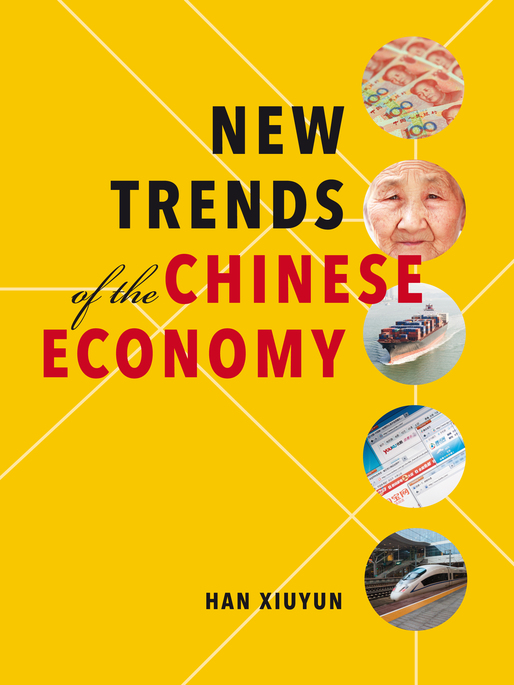
|
New Trends of the Chinese Economy is a must-read for government officials, policymakers, business professionals, and interested scholars or students who wish to get a clear idea and well-informed understanding of the new development trends, challenges, and opportunities facing China’s society and economy now and in the future.
Starting with the present significant historical moment when China is on its path toward wealth and power, the author carries out a comprehensive and in-depth analysis of the actual international and domestic circumstances facing China. More importantly, she presents an incisive and trenchant interpretation of all those major pressing and controversial issues about which China is most concerned in light of its unique social and economic conditions and the monumental and breathtaking changes that are taking place in the country. These issues cover both macro- and micro-economic aspects, ranging from GDP and national income to fiscal and monetary policies, from controlling inflation to spurring consumption, from reforming government and streamlining administration to creating a monopolyfree market, from improving the retirement and social welfare system to providing health-care support, from ensuring food safety to promoting resource conservation and environmental protection, and from pursuing industrial development and economic growth to protecting people’s livelihood and well-being.
In the author’s own words, “the purpose of this book is to increase knowledge and to leave a footprint of this generation’s thoughts and considerations at this particular point on the Chinese nation’s glorious road to civilization.” |
| |
|
| GC01-104 |
Understanding and Interpreting Chinese Economic Reform. |
| |
Wu, Jinglian/ 9789814624985/ Price:US$ 150.00
|
| |
|
|
The Chinese economic reform that started in 1978 has met with enormous success. Understanding and Interpreting Chinese Economic Reform (2e) attempts to provide a complete history of this reform and interpret it from the perspective of modern economics in the wider context of social justice and political reform.
This book is divided into three major parts. Part I touches upon the background of the reform and the evolution of its strategy-administrative decentralization during 1958-1978, incremental reform during 1979-1993, and overall advance from 1994 to the present. Part II discusses the reform strategies and their implementation in major sectors of the economy: the agricultural sector, the state-owned industrial sector, the private sector, the financial sector, government finance, and foreign trade and investment. Part III elaborates issues related to reform at the macroeconomic and social levels, including the social security system, macroeconomic policies, social relations, and government's functions.
KEY FEATURES
-Provides a complete history and in-depth analysis of Chinese economic reform that started in 1978.
-Touches upon the background of the reform and the evolution of its strategy during the different periods.
-Examines the reform strategies and their implementation in major sectors of the economy.
-Elaborates issues related to reform at the macroeconomic and social levels. |
| |
|
| |
Wages in China: An Economic Analysis, 3-vols/set. |
| |
Zhang Jun/ 9781623201166/ Price:US$ 279.00
|
| |
|
|
A major determinant of the primary distribution of national income, wages will have tremendous impacts on both social equity and economic efficiency in China. Wages in China: An Economic Analysis presents the latest research results on the transformation of China’s wages formation mechanism since the adoption of the Reform and Opening Up policy.
This 3-volume series looks at the impact from the institutional evolution of the wage system, social networks, and geographical factors on the determination of wages. After reviewing the history of China’s wage policies and systematic transformation, the author examines the collective negotiation system as an example of institutional changes to explore the impacts on employees’ wages, and does an empirical study on the shrinkage in labor’s share of national income by using industrial and provincial data. Based on the discussion of local policy-making decisions under fiscal federalism in China, the author also analyzes the regional wage differences with economic geographical and regional policy variances. The perspective of inter-industrial wage spillover is also followed to explain the wage differences and convergence paradox. |
| |
|
| |
Rural Development in China: The Rise of Innovative Institutions and Markets, 3-vols/set. |
| |
Lu Yilong/ 9781623200886/ Price:US$ 308.00
|
| |
|

|
Rural Development in China: The Rise of Innovative Institutions and Markets explores China’s rural development path from two angles: institutional innovations and the market. Looking at China’s pace of socio-economic development as a key factor in modernization, author Lu Yilong discusses institutional drawbacks and demands to determine the specific issues of China’s rural market. Using China‘s unique “Three rurals” concept (agriculture, rural areas and farmers) as its foundation, Rural Development in China: The Rise of Innovative Institutions and Markets offers suggestions on how to stimulate rural socio-economic growth and lead China down a path to future economic success. |
| |
|
| |
Transformation of China's Banking System: from the Late Qing Era to the 1930s, 2-vols/set. |
| |
Lan Rixu/ 9781623200923/ Price:US$ 234.00
|
| |
|
|
The product of more than 10 years of research, Transformation of China’s Modern Banking System provides a detailed study of the evolution of China’s banking system from the late Qing era (1840s) through the Republican era (1930s).
Transformation of China’s Modern Banking System offers a unique and comprehensive analysis of the financing structure, governance structure, incentive and restraint mechanisms, and structural changes of China’s modern banking system. Lan Rixu uses historical evidence to show how the transformation of China’s modern banking system reflected an acute awareness of the practical reality of modern Chinese bankers. The author details the systematic changes in China’s banking system during the chaotic period when traditional China met the West. |
| |
|
| VC01-75 |
World Trade Organization, The., 5-Vols/Set. |
| |
Steger, Debra/ 9780415364225/ Price:GBP 1100.00
|
| |
|

|
With a membership of 160 countries, the World Trade Organization (WTO) is the international organization with responsibility for the global rules of trade between nations. Its stated principal function is to ensure that trade flows as smoothly, predictably, and freely as possible. Established almost twenty years ago, the agreements negotiated under its auspices and, indeed, its very existence have been the source of tremendous controversy and debate.
Edited by a leading scholar in the field, and former Director of the Appellate Body Secretariat of the WTO, this new Routledge collection brings together in five volumes the very best scholarship on the WTO from economists, academics, lawyers, and other thinkers to examine its history (including its origins in the General Agreement on Tariffs and Trade). The set also makes available cutting-edge research about the fundamental principles on which the organization is based and explores the implications of the WTO’s policy and practice for domestic regulation and the sovereignty of individual states. The final two volumes examine the role of the WTO in dispute settlement and discuss the challenges for the future, including relating to the role of developing countries, preferential trade agreements as well as the legitimacy and governance of the organization.
With an introduction, newly written by the editor, providing her own unique perspective, World Trade Organization is an essential collection destined to be valued by scholars, students, government officials, and practitioners as a vital research resource.
|
| |
|
| VC01-124 |
Handbook of Research on Economic Growth and Technological Change in Latin America. |
| |
Christiansen, Bryan/ 9781466662247/ Price:US$ 295.00
|
| |
|

|
Investment in Latin America is continuously developing in complex patterns due to the region’s increasing role in the global economy.
The Handbook of Research on Economic Growth and Technological Change in Latin America helps readers to better understand the importance of Latin America in today’s global economy. The book discusses the developments of investments involving Latin American Multinational Corporations (“Multilatinas”) within the region. This investment is having profound influences on the state of business, government, and technological development in Latin America, which are all explored in this reference publication for use by researchers, scholar-practitioners, business executives, students, and academicians.
Topics Covered
•Economic Development of Latin America
•Financial Practices in Latin America
•Foreign Direct Investment (FDI)
•Global Investments
•Globalization and Latin America
•International Business
•The United States and Latin America
|
| |
|
| VC01-123 |
Geo-Regional Competitiveness in Central and Eastern Europe, the Baltic Countries, and Russia. |
| |
Zhuplev, Anatoly/ 9781466660540/ Price:US$ 205.00
|
| |
|
|
The changing dynamics in the European region and beyond, the unfolding political-economic challenges across the European Union, and the rising global power of emerging economic powers require knowledge, skills, and methodological platforms inducing strategies and operations in the new and ever-changing business landscape.
Geo-Regional Competitiveness in Central and Eastern Europe, the Baltic Countries, and Russia seeks to address East Central Europe's (ECE), the Baltics', and Russia's increasingly important roles as emerging markets and competitive economic players in the European region. This premier reference work is designated for scholars, professionals, government agencies, think tanks, and other individuals, organizations, and institutions interested in gaining a deeper understanding of the geo-regional strategic business dynamics and landscape involving ECE, the Baltics, and Russia.
Topics Covered
•Business Risk of Governmental Corruption
•Crisis and Competitiveness
•Foreign Direct Investment
•Innovation and International Competitiveness of Manufacturing Firms
•Manufacturing Back-Shoring and Near-Shoring
•National Innovation System Dynamics
•Regional Competitiveness and the Maritime Sector
•Socio-Economic Development and Competitiveness
•Technological Leadership and the Innovation-Driven Economy |
| |
|
| VC01-122 |
Post-Keynesian Empirical Research and the Debate on Financial Market Development. |
| |
Chaiechi, Taha/ 9781466660182/ Price:US$ 195.00
|
| |
|
|
Current research often highlights the importance of financial markets as well as financial system development. However, the current literature in this field still fails to adequately explain the relationship between financial market and macroeconomic development.
Post-Keynesian Empirical Research and the Debate on Financial Market Development integrates the concept of financial intermediaries with Post-Keynesian macroeconomic modeling to discuss the relationship between financial markets and systems and macroeconomic development. Discussing key macroeconomic variables such as investment, savings, and productivity growth, this timely resource is essential for students, academicians, as well as finance and economics professionals interested in uncovering the latest research in this field.
Topics Covered
•Economic Development
•Economic Modeling
•Financial Market Development
•Growth Theory
•Macroeconomics
•Post-Keynesian Economics
•Time series analysis
|
| |
|
| VC01-121 |
Bridging the Gap Between Growth Theory and Policy in Asia: An Extension of the Solow Growth Model. |
| |
Singh, Rup/ 9781466658486/ Price:US$ 195.00
|
| |
|
|
Although economic growth is amongst the oldest of debates in Economics, there has been little advancement in growth theory since the classic works of Solow. As such, clear-cut answers to the context-specific determinants of growth, especially for developing countries, are rare.
Bridging the Gap Between Growth Theory and Policy in Asia: An Extension of the Solow Growth Model adds to the works of Solow by showing how his original model can be extended and used for policy, discussing issues in growth econometrics, including the theoretical underpinnings of growth models, and some of the important challenges in empirical studies on economic growth. This simpler manual will be highly useful for applied economists, policy makers, and graduate students.
Topics Covered
•Convergence Debate
•Development Trends
•Empirical Growth Literature
•Estimates of Steady-State Growth Rates
•Impact of Trade Openness in China
•Major Theories of Economic Growth
•Model Specification
•Robustness Tests
•Sources of Economic Growth
|
| |
|
| VC01-120 |
Handbook of Research on Strategic Business Infrastructure Development and Contemporary Issues in Finance. |
| |
Ray, Nilanjan/ 9781466651548/ Price:US$ 325.00
|
| |
|
|
The dynamic economic climate invites participants who are grounded in strategic financial management and infrastructure development. Thus, a lack of sufficient infrastructure, in both quality and quantity, often disqualifies developing countries from being key players in the global economy and influences other socioeconomic problems like unemployment, quality of work life, and quality of life.
Handbook of Research on Strategic Business Infrastructure Development and Contemporary Issues in Finance discusses the efficiency of good infrastructure and its impact on socioeconomic growth and socioeconomic development in general and addresses contemporary aspects of the strategic financial management essential for accomplishing the objective of wealth maximization in today's challenging and competitive economy. This book is an essential research work for policy makers, government workers and NGO employees, as well as academicians and researchers in the fields of business, finance, marketing, management, accounting, MIS, public administration, economics, and law.
Topics Covered
•Contemporary Issues in Finance
•Economy and Sustainable Development Infrastructure
•Information and Communication Infrastructure
•Service Sector Infrastructure
•Strategic Business Infrastructure
•Strategic Framework for Infrastructure Finance
•Technology Management Infrastructure
|
| |
|
| VC01-119 |
Knowledge-Based Economic Policy Development in the Arab World. |
| |
Driouchi, Ahmed/ 9781466652101/ Price:US$ 215.00
|
| |
|

|
The Arab world is one of the fastest growing economies in the world. In order to keep up with the ever-progressing and expanding developments, advancements must be made with the current systems process and procedures.
Knowledge-Based Economic Policy Development in the Arab World focuses on knowledge economy as the most important engine for economic growth and development under the globalizing world economies. This publication analyzes the major issues that constrain further access to knowledge economy in the Arab countries with comparisons in Eastern and Central European economies. Researchers, business practitioners, and academics interested in new economic and development inclusive growth policies will benefit greatly from the wide variety of discussion in this publication.
Topics Covered
•Education and Feminization of Labor Markets
•Green Economy and Sustainability
•Imperfections in Knowledge Adoption
•Inclusive Growth Policies
•New Enterprise Creation
•New Knowledge Based Policies
•Oil-Based Economies
•Unemployment of Skilled Labor
•Urbanization and Local Development |
| |
|
| VC01-118 |
Economic Behavior, Game Theory, and Technology in Emerging Markets. |
| |
Christiansen, Bryan/ 9781466647459/ Price:US$ 185.00
|
| |
|
|
Game Theory has provided an extremely useful tool in enabling economists to venture into unknown areas. Its concepts of conflict and cooperation apply whenever the actions of several agents are interdependent; providing language to formulate as well as to structure, analyze, and understand strategic scenarios.
Economic Behavior, Game Theory, and Technology in Emerging Markets explores game theory and its deep impact in developmental economics, specifically the manner in which it provides a way of formalizing institutions. This is particularly important for emerging economies which have not yet received much attention in the academic world. This publication is useful for academics, professors, and researchers in this field, but it has also been compiled to meet the needs of non-specialists as well.
Topics Covered
•Business Ethics
•Corporate Lending at Banks in India
•Growth of Real GDP in Cuba
•Intelligent Business Decision-Making by Fuzzy Reasoning
•Interorganizational Information Systems
•Relevance of Science in Development |
| |
|
| VC01-112 |
Human Capital, 4-Vols/Set. |
| |
Teixeira, Pedro/ 9780415623575/ Price:GBP 1100.00
|
| |
|
|
|
In recent decades, human capital has become one of the most popular and influential research programmes in the academy. Its influence is not limited to economics, but has proved to be significant to many other social sciences; indeed, it has infused social and political debates about education and training. Moreover, human capital has become part of the jargon of many non-economists. Now, to help make sense of this critical concept, Routledge announces a new four-volume collection. It provides an extensive overview of the breadth and depth of human-capital research, highlighting not only the evolution of its theoretical and empirical development, but also the variety of topics that it has spawned. Edited and with a new introduction by a leading scholar, this collection gathers together the very best and most influential works.
Part I: Early Contributions on Human Capital
Part II: The Modern Foundations of Human-Capital Research
Part III: Debating the link between Education and Earnings
Part IV: Studying the Returns to Education
Part V: Human Capital and the Labour Market
Part VI: Macro Effects of Human Capital
Part VII: The Social Relevance of Human Capital |
| |
|
| VC01-101 |
Women's Economic Thought in the Eighteenth Century, 3-Vols/Set. |
| |
Kuiper, Edith/ 9780415495714/ Price:GBP 475.00
|
| |
|
|
|
In the history of economics, women writers were all but invisible until a few decades ago. Although much work has now been recuperated, the writings on economics of eighteenth-century women authors have yet to be brought fully to light.
This new three-volume collection from Routledge remedies that omission and makes key archival source material readily available to scholars, researchers, and students. This comprehensive compilation of eighteenth-century works by women writers includes several texts translated into English for the first time, such as an important critique on Adam Smith'sTheory of Moral Sentiments (1759) by Sophie de Grouchy Condorcet.
The collection is divided into three volumes. Volume I (‘The Economy of the Household’) addresses the following topics: moral and economic conduct; women's position in marriage; gender equality; and household production. The second volume (‘The Economy of the Market’), meanwhile, brings together texts that address education, work, wages, access to the professions, and issues of wealth and poverty more generally. Volume III assembles materials under the title ‘Women's Views on Institutions and Change’.
Women's Economic Thought in the Eighteenth Century is a treasure-trove for all serious scholars and students of economic history. The gathered works are reproduced in facsimile, giving users a strong sense of immediacy to the texts and permitting citation to the original pagination. And with a detailed and comprehensive introduction placing the materials fully in context, the collection is destined to be welcomed as a vital reference and research resource.
|
| |
|
| SC01-459 |
Capitalism for the People. |
| |
Zingales, Luigi/ 9780465085958/ Price:US$ 17.99
|
| |
|
|
|
|
| |
|
| SC01-450 |
Energy Security and Sustainable Economic Growth in China. |
| |
Yao, Shujie/ 9781137372048/ Price:GBP 75.00
|
| |
|
|
|
|
| |
|
| SC01-446 |
Formal and Informal Social Safety Nets. |
| |
Ashraf, Mohammad/ 9781137388957/ Price:GBP 70.00
|
| |
|
|
|
|
| |
|
| SC01-438 |
The Capital Market in China: A 60-Year Review, 3-Vols/Set. |
| |
Cao, Erjie/ 9781623200053/ Price:US$ 308.00
|
| |
|

|
• Presents an overview of the formation of capital and the development of financing methods in China
• Provides a comprehensive examination of China's capital market, covering state intervention, private funds, foreign capital, mergers, mutual funds, bonds, securities, and futures
• Covers related issues, such as the role of capital in a socialist society, human capital, and time-space compression in China
• Explores the opportunities and challenges of Renminbi internationalization |
| |
|
| GC01-99 |
Development and Reform of China's Employment System. |
| |
Zhang Xiaojian/ 9789814510103/ Price:US$ 150.00
|
| |
|
|
Development and Reform of China's Employment System reviews the evolution, reform, and achievements of China's employment system over a period of 30-plus years since 1978, predicts future trends, and puts forward feasible ways and suggestions for further development. Comprising seven parts, the book covers a wide range of meaningful topics such as the market-oriented reform of state-owned enterprises, reemployment of layoffs, transfer of surplus rural labor, the formation and development of China's public service system, the proactive government policy for job creation, and the laws and rules promulgated by the government in terms of employment and social security. For each major employment policy, the book presents the historical background against which it was proposed and then provides detailed description and analysis of this policy, its implementation, its achievements, and lessons learned. |
| |
|
| GC01-5-3 |
Encyclopedia of Business and Finance, 2-Vols/Set. |
| |
/ 9780028662640/ Price:US$ 621.00
|
| |
|

|
Designed for the non-specialist, the Encyclopedia Of Business And Finance is a two-volume complete reference covering five general areas: finance and banking; accounting; marketing; management; and information systems. Drawing on practical professional expertise as well as that of noted scholars, the contributors include academics and business scholars from leading business programs. The new completely revised second edition includes 315 signed essays. |
| |
|
| GC01-103 |
Market Solutions To Public Needs: Mainstreaming Poverty Alleviation Initiative in ASEAN. |
| |
Luz, Juan Miguel M./ 9789814510233/ Price:US$ 150.00
|
| |
|

|
The ASEAN Foundation, through the Japan–ASEAN Solidarity Fund, partnered with the Asian Institute of Management to conduct a series of case studies on mainstreaming poverty alleviation initiatives in ASEAN. This project, seamlessly linked with the Asian Development Bank Regional Technical Assistance (ADB RETA) on “Regional Knowledge and Partnerships Networks of Poverty Reduction and Inclusive Growth”, aims to contribute to the knowledge management process and structure of the RETA by including private sector participation in the ASEAN region.
As widespread poverty continues to be the most formidable development challenge in ASEAN, generating information and enabling knowledge products accessible is a strategic means toward increasing capacities among decision makers, development practitioners, and other stakeholders in poverty alleviation.
The eighteen case studies included in this book cover various countries in Southeast Asia and provide an insight into firms with corporate social responsibility strategies, and non-governmental organizations. Emphasis is placed on the incidental benefits that accrue to the poor from firms adopting a bottom of the pyramid approach and re-engineering products and services to make them affordable to the poor. Market Solutions to Public Needs seeks to bridge the development gap and establish a viable and dynamic hub of best practices and knowledge products that supports the building of the ASEAN community. |
| |
|
| GC01-102 |
Blue Book of China's Commercial Sector. (2014) |
| |
/ 9789814609647/ Price:US$ 150.00
|
| |
|
|
|
The year 2013 is seen as a year of change for China. The country's new leadership has announced a series of social and economic reforms that places greater emphasis than ever before on market forces. The reform programs are expected to have significant implications for commercial enterprises, domestic and foreign alike, when operating in China. In Blue Book of China's Commercial Sector (2014), the National Academy of Economic Strategy (NAES) of the Chinese Academy of Social Sciences (CASS) and the Fung Business Intelligence Centre jointly present a comprehensive account of the latest developments in the commercial sector of China. Starting with the macroeconomic background of domestic consumption in China and recent pricing trends, the Blue Book provides in-depth analyses of the different industries including retailing, wholesale and distribution, logistics, e-commerce, and catering. Popular topics such as online retailing, luxury market, department store and retail logistics in China are also covered.
KEY FEATURES
• Presents a comprehensive account of China's commercial sector in 2013 and forecasts the development trends of
2014.
• Provides in-depth analyses of different industries including retailing, wholesale and distribution, catering, and
commercial property.
• Popular topics such as online retailing, luxury market, department store and retail logistics in China are included.
|
| |
|
| GC01-101 |
The Japanese Economy: Then, Now, and Beyond. |
| |
Mitsuru Taniuchi/ 9789814568616/ Price:US$ 150.00
|
| |
|
|
The Japanese economy has undergone significant turbulence over the past quarter century and now seems poised to get back on track. From a long-term perspective, the unprecedented demographic shift—an aging population with a diminishing number of inhabitants—poses a tremendous challenge to the economy. The harm that the country's fiscal disarray will cause if left neglected is not yet palpable with investors who are seemingly content with holding large tranches of Japanese government bonds. Corporate Japan possesses clear advantages like cutting-edge technology and good labor relations, but issues such as low profitability and sagging entrepreneurship are its Achilles heel. Japan's corporate sector and labor market have long been known for unique traditional practices such as the keiretsu, cross-shareholdings, and life-time employment, but these Japanese practices are now experiencing a major transformation. New issues such as the growing dualism in the labor force are gnawing at the country.
The Japanese Economy—Then, Now, and Beyond provides an overview of the contemporary Japanese economy, explaining where Japan's economy stands at present, the changes in the economy's idiosyncratic features, and the challenges that lie ahead. A major feature of this book is the frequent references to the extent to which Japanese experiences and business practices differ from those in other major economies. This gives readers an international perspective when understanding the Japanese economy. While discussions in the book are based on standard economic theory and analyses, no formal economics training is presupposed. In fact, readers who routinely read economic and business news will find the whole text easy to comprehend without stumbling on technical analyses. |
| |
|
| GC01-100 |
Achieving Sustainability: Visions, Principles, and Practices, 2-Vols/Set. |
| |
Rowe, Debra/ 9780028662015/ Price:US$ 678.00
|
| |
|

|
Sustainable development is essential to a future of reduced human suffering, higher quality of life, and ongoing sustenance for the planet's ecosystems. Designed to increase understanding, inform actions, enrich academic assignments, and enhance research, Macmillan's Achieving Sustainability: Visions, Principles, And Practices is a reference work intended to meet the needs of students and educators in high schools, community colleges, and four-year colleges, as well as the interested layperson. Aimed at readers who are not experts in the field, the material is relevant to courses in natural sciences, social sciences, and the humanities; indeed, this title presents and analyzes the underpinnings of the multi-disciplinary concept of sustainability. A two-volume encyclopedia containing more than 130 signed entries, Achieving Sustainability covers economic and environmental ideas, as well as governance, demographic, and socio-cultural aspects of the concept. |
| |
|
| |
Structural Reform in China's Regional Governments, Volume 1. |
| |
Guo, Qingwang/ 9781623200015/ Price:US$ 118.00
|
| |
|
|
A must-read book for political scientists and economists, Structural Reform in China’s Regional Governments: Volume 1 uses the latest government data to offer an empirical study of the characteristic fiscal reforms, including the introduction of the tax assignment system in 1994 and the 2002 income tax reform, which determine the size and structure of China’s regional governments.
Volume 1 of this series also uses two econometric models (System GMM and 2SLS regression) to:
Outline the financial self-sufficiency of China’s low-level governments
Predict less dependency on low-level governments for public expenditure
Explain China’s unique direct provincial financial management system
|
| |
|
| |
The Small Farmer Can: Buyer-Led Approach Rescues Rural Bolivian Families from Poverty. |
| |
Pattie, Preston S./ 9780989916943/ Price:US$ 24.00
|
| |
|

|
This book tells the story of a successful development project through the eyes of a main participant. The author, Preston Pattie, developed a novel business approach to transform subsistence farmers into suppliers in formal value chains. Through the buyer-led, business approach, the USAID-funded Rural Competitiveness Activity (RCA project) reached 20 thousand Bolivian rural families. Half of these families—ten thousand—have or will overcome poverty in a short time. Rather than emphasizing project assistance, the RCA team facilitated efforts of rural families to carry out their own productive business activities. What appears a subtle difference in focus turned a corner that required the re-engineering of virtually every aspect of project implementation.
The need to reform so many varied aspects of project implementation was not foreseen, and the path to take in each case was not pre-determined. Instead each aspect of the RCA project became an endeavor for reform to solve problems as they were identified or to improve performance toward reaching targets. |
| |
|
| |
China's Economy 2012. |
| |
Institute of China s Economic Reform&Development/ 9781623200343/ Price:US$ 148.00
|
| |
|
|
This series is a new initiative published by the Institute of China’s Economic Reform & Development of the Renmin University of China. Economic slowdown is a major trend that emerged in recent years in China. To understand this trend, China's Economy 2012 conducts empirical and quantitative research on China’s economy in three aspects: international comparisons and measurement of potential growth rates, factors affecting China’s potential growth rate, and future trends and response strategies of China’s economic development. It also provides a series of policy recommendations for maintaining sustainable economic growth in China. |
| |
|
| |
Enrich Annual Economic Review: China's Economy, 4-vols/set. |
| |
/ 9781623200350/ Price:US$ 534.00
|
| |
|
|
This series is a new initiative published by the Renmin University of China. It reviews China’s annual economic figures in detail, monitors major economic trends in China, and identifies global trends which affect China from time to time. It includes the survey of the previous several years of China’s economy and an assessment of the current state of China's economy and the state of its development. |
| |
|
| |
China's Outward Foreign Direct Investment: Theories and Strategies. |
| |
Zhang Hong et al./ 9781623200367/ Price:US$ 148.00
|
| |
|

|
China has firmly implemented its “going out” strategy for more than 10 years. In this time Chinese enterprises’ outward FDI activities have boomed. However, behind this rosy picture, there are still lingering doubts as to whether China can continue to thrive on the international stage. What are the motives behind Chinese enterprises’ outward FDI activities? And in what way can Chinese transnational companies benefit under international vertical specialization? China’s Outward Foreign Direct Investment: Theories and Strategies attempts to answer these questions by:
Building theoretical models to explain how China benefits from the spillover effect and upgrades in global value chains (GVCs)
Explaining Chinese enterprises’ outward FDI motives supported by examples from China’s manufacturing, auto and IT industries
China has significant influence on international trade and global economic patterns. Having a clear perspective on China’s outward FDI strategies and motivations is vital for policymakers, economists as well as those doing business in China. China’s Outward Foreign Direct Investment: Theories and Strategies offers a thorough and timely look at China’s outward FDI and the pace of the country’s continued growth. |
| |
|
| |
Structural Reform in China's Regional Governments, 2-vols/set. |
| |
/ 9781623200435/ Price:US$ 224.00
|
| |
|
|
A must-read book for political scientists and economists, Structural Reform in China’s Regional Governments uses the latest government data to offer an empirical study of the characteristic fiscal reforms, including the introduction of the tax assignment system in 1994 and the 2002 income tax reform, which determine the size and structure of China’s regional governments.
Based on a thorough review of the current data, the theoretical framework of the authors provides for a meta-analysis of 30 years of data of 30 provinces and more than 1,000 counties using multiple econometric models. In light of the changes in fiscal decentralization after the 1994 introduction of the tax assignment system and the 2002 income tax reform, the authors analyze the substantial socioeconomic impact of the intricate intergovernmental fiscal relationships and the reform of the regional government administrative structure. |
| |
|
| |
Internationalization of the RMB: 2013 Annual Report. |
| |
International Monetary Institute (IMI)/ 9781623200961/ Price:US$ 148.00
|
| |
|
|
Drawing upon the latest government data, Internationalization of the RMB: 2013 Annual Report is a firsthand look at China’s current RMB policy and goals for full Renminbi (RMB) convertibility in the near-future.
The work of International Monetary Institute (IMI), this book provides a clear picture of the RMB Internationalization Index (RII), offers recommendations and insights into the direction of China’s currency reform, and explains the Triffin Dilemma and its connection to China’s path for full internationalization of the RMB. |
| |
|
| VC01-117 |
Socio-Cybernetic Study of God and the World-System. |
| |
Choudhury, Masudul Alam/ 9781466646438/ Price:US$ 165.00
|
| |
|

|
In any field—whether scientific, business, or social—ethics plays a critical role in determining what is acceptable in a particular community and what is considered taboo. The source of these preconditions is often a complex interweaving of tradition and rational thought.
Socio-Cybernetic Study of God and the World-System investigates morality in a socio-scientific worldview, examining the epistemology of existence in conjunction with Islamic monotheistic law to generate a world-system that governs action and reaction in the context of a variety of cognitive and social environments. Readers with backgrounds in finance and economics can utilize this book to construct a more thorough theoretical understanding of their societal and professional associations.
Topics Covered
•Banking Systems
•Epistemology
•Ethics in Science
•Islam
•Morality
•Multiverse
•Social Science
•Social systems
|
| |
|
| VC01-116 |
Econometric Methods for Analyzing Economic Development. |
| |
Schaeffer, Peter V./ 9781466643291/ Price:US$ 185.00
|
| |
|
|
Exploring and understanding the analysis of economic development is essential as global economies continue to experience extreme fluctuation. Econometrics brings together statistical methods for practical content and economic relations.
Econometric Methods for Analyzing Economic Development is a comprehensive collection that focuses on various regions and their economies at a pivotal time when the majority of nations are struggling with stabilizing their economies. Outlining areas such as employment rates, utilization of natural resources, and regional impacts, this collection of research is an excellent tool for scholars, academics, and professionals looking to expand their knowledge on today’s turbulent and changing economy.
Topics Covered
•Economic Equality
•Economic Growth
•Energy Consumption
•Inflation
•Natural Resource Management
•Population Density
|
| |
|
| VC01-115 |
Technology and Financial Crisis: Economical and Analytical Views. |
| |
Koyuncugil, Ali Serhan/ 9781466630062/ Price:US$ 185.00
|
| |
|
|
Rapid improvements and constant advancements in information technology have inevitably lead to significant changes for businesses across the globe. As a result, some of these large shifts have unfortunately ended in major financial crises.
Technology and Financial Crisis: Economical and Analytical Views investigates financial crises from unique points of view. Not only does this publication consider the broader economical implications that a financial crisis can have on one business or on a whole country, but it also thoroughly discusses the smaller areas which are affected or contribute to the downfall. This book is intended to be of use to the public sector, researchers, practitioners, and educators who are interested in the affects of a financial crises and possible ways to reduce such large scale problems in the future.
Topics Covered
•Business Intelligence
•Data mining and warehousing
•Economics & Quantitative Analysis
•Finance
•Global Business
•Global Marketing
•Sustainability Management |
| |
|
| VC01-113 |
e-Commerce Economics, 4-Vols/Set. |
| |
Vanhoose, David/ 9780415660822/ Price:GBP 1200.00
|
| |
|
|
|
The economic principles that underpin commercial transactions via electronic networks, and the many associated economic issues and controversies that e-commerce generates, are dizzying in their complexity. Now, to help advanced students and researchers make sense of an explosion of scholarship, Routledge announces e-Commerce Economics, a new title in its acclaimed Critical Concepts in Economics series. Edited by David VanHoose, a leading scholar in the field, e-Commerce Economics is a ‘mini library’ that brings together in four volumes the foundational and the very best cutting-edge research.
With a comprehensive introduction, newly written by the editor, which places the collected material in its historical and intellectual context, e-Commerce Economics is an essential collection destined to be valued as a vital one-stop resource.
Topics Covered
Volume 1: Infrastructure, Markets, and Pricing
Volume 2: Information, Search, and Finance
Volume 3: Auctions, Intellectual Property, and Trade
Volume 4: Regulatory and Policy Issues |
| |
|
| VC01-111 |
Islamic Economics, 4-Vols/Set. |
| |
Alvi, Shafiq/ 9780415519601/ Price:GBP 975.00
|
| |
|
|
|
Western economists define economics as the branch of knowledge or science which investigates how scarce resources are best allocated into competing claims upon them. These claims are socially and culturally determined. Islamic economics and its principles have also developed from a specific set of social and cultural circumstances, but the key to the whole subject is the guidance given in the Prophetic scriptures. The tenets laid down in the Qur’an provided the basis for a comprehensive, and continuous, system of social and cultural, and hence also economic, behaviour, for which there is no Western equivalent.
This collection analyses the rationale of Islamic values and Islamic laws in economic activities. It examines how Islam has contributed several alternative values to business and economic policies in Muslim countries. Consideration is also given to how Islam can be considered as a universal system that can be applied to various economic policies, business strategies and government regulations. |
| |
|
| VC01-110 |
Sustainable Technologies, Policies, and Constraints in the Green Economy. |
| |
Jean-Vasile, Andrei/ 9781466640986/ Price:US$ 180.00
|
| |
|
|
The development of a green and sustainable economy continues to grow in awareness and popularity due to its promotion of a more comprehensive way of achieving economic development through social and environmental efficiency.
Sustainable Technologies, Policies, and Constraints in the Green Economy carefully investigates the complex issues which surround the wide array of concepts, policies, and measures that come into play when promoting this somewhat new ideology. This publication covers over 50 years of research in the field in order to provide the best theoretical frameworks and empirical research to its readers. Professors, researchers, practitioners, and students will all benefit from the relevant discussions and diverse conclusions which are revealed in these chapters.
Topics Covered
•Environmental Challenges
•Environmental Technologies
•Green Economics
•Natural Capital
•Sustainable Environments
•Sustainable Production Systems
|
| |
|
| VC01-109 |
Encyclopedia of Energy, Natural Resource, and Environmental Economics, 3-Vols/Set. |
| |
Shogren, Jason/ 9780123750679/ Price:US$ 1900.00
|
| |
|
|
Every decision about energy involves its price and cost. The price of gasoline and the cost of buying from foreign producers; the price of nuclear and hydroelectricity and the costs to our ecosystems; the price of electricity from coal-fired plants and the cost to the atmosphere. Giving life to inventions, lifestyle changes, geopolitical shifts, and things in-between, energy economics is of high interest to Academia, Corporations and Governments.
For economists, energy economics is one of three subdisciplines which, taken together, compose an economic approach to the exploitation and preservation of natural resources:
•energy economics, which focuses on energy-related subjects such as renewable energy, hydropower, nuclear power, and the political economy of energy
•resource economics, which covers subjects in land and water use, such as mining, fisheries, agriculture, and forests
•environmental economics, which takes a broader view of natural resources through economic concepts such as risk, valuation, regulation, and distribution
Although the three are closely related, they are not often presented as an integrated whole. This Encyclopedia has done just that by unifying these fields into a high-quality and unique overview. |
| |
|
| VC01-104 |
Finance in Asia, 4-Vols/Set. |
| |
Liu, Qiao/ 9780415670890/ Price:GBP 240.00
|
| |
|
|
|
Edited by three leading scholars whose expertise spans finance, economics, and law, Finance in Asia is a new collection from Routledge’s Critical Concepts in Finance series. The foundational and cutting-edge scholarship assembled in this easy-to-use, one-stop resource enables users easily to access and make sense of an explosion of scholarly output on Asia’s distinctive financial institutions, markets, and systems. The collection will be especially welcomed by scholars and students seeking a full understanding of contemporary Asian finance, particularly those in search of a forward-looking view of the second generation of Asian finance. The collection will also appeal to researchers eager to engage with vital questions about law, institutions, and regulation, and their impact on transaction formation and performance, and on the behaviour of the financial sector in Asia. Indeed, in the current economic climate, with international financial systems still buffeted by extreme turbulence, such questions have never been more pertinent.
Finance in Asia is fully indexed. It also includes a comprehensive introduction, newly written by the editors, which places the material in its intellectual and historical context.
|
| |
|
| VC01-103 |
The Rise of Econometrics, 4-Vols/Set. |
| |
Qin, Duo/ 9780415616782/ Price:GBP 1260.00
|
| |
|
|
|
In the memorable words of Ragnar Frisch, econometrics is ‘a unification of the theoretical–quantitative and the empirical–quantitative approach to economic problems’. Beginning to take shape in the 1930s and 1940s, econometrics is now recognized as a vital subdiscipline supported by a vast—and still rapidly growing—body of literature.
Edited by a leading researcher in the history of econometrics, this new collection from Routledge’s Critical Concepts in Economics series brings together in one ‘mini library’ the best and most influential scholarship on the rise of econometrics. The set provides an authoritative one-stop resource to enable users to understand what has shaped econometrics into its current form. With a full index and comprehensive introductions to each volume, newly written by the editor, the collection also provides a synoptic view of many current key debates and issues.
|
| |
|
| SC01-528 |
L'economie est un jeu d'enfant |
| |
Tim Harford/ 9782130729938/ Price:EUR 27.00
|
| |
|

|
|
| |
|
| SC01-453 |
Labour Administration in Uncertain Times: Policy, Practice and Institutions Since the Crisis. |
| |
Heyes, Jason/ 9781782549420/ Price:GBP 123.00
|
| |
|
|
|
|
| |
|
| SC01-443 |
The Technological Role of Inward Foreign Direct Investment in Central East Europe. |
| |
Stephan, Johannes/ 9781137333759/ Price:GBP 70.00
|
| |
|
|
|
|
| |
|
| SC01-432 |
Smuggler Nation: How Illicit Trade Made America. |
| |
Andreas, Peter/ 9780199746880/ Price:US$ 29.95
|
| |
|
|
|
|
| |
|
| SC01-431 |
Boardroom Scandal: The Criminalization of Company Fraud in Nineteenth-Century Britain. |
| |
Taylor, James/ 9780199695799/ Price:GBP 83.00
|
| |
|
|
|
|
| |
|
| SC01-431 |
African Governance Report 2013: Elections and the Management of Diversity in Africa. |
| |
/ 9780199645053/ Price:GBP 16.99
|
| |
|
|
|
|
| |
|
| SC01-431 |
Money for Everyone: Why We Need a Citizen's Income. |
| |
Torry, Malcolm/ 9781447311256/ Price:GBP 29.99
|
| |
|

|
Due to government cuts, the benefits system is currently a hot topic. In this timely book, a Citizen’s Income (sometimes called a Basic Income) is defined as an unconditional, non-withdrawable income for every individual as a right of citizenship. This much-needed book, written by an experienced researcher and author, is the first for over a decade to analyse the social, economic and labour market advantages of a Citizen's Income in the UK. It demonstrates that it would be simple and cheap to administer, would reduce inequality, enhance individual freedom and would be good for the economy, social cohesion, families, and the employment market. It also contains international comparisons and links with broader issues around the meaning of poverty and inequality, making a valuable contribution to the debate around benefits. Accessibly written, this is essential reading for policy-makers, researchers, teachers, students, and anyone interested in the future of our society and our economy |
| |
|
| SC01-431 |
Solutions Manual to Accompany Intermediate Public Economics. |
| |
Hashimzade, Nigar/ 9780262518482/ Price:US$ 40.00
|
| |
|
|
|
|
| |
|
| SC01-419 |
Innovative Capability of Chinese Enterprises. |
| |
Yi, Zhihong/ 9789814298360/ Price:US$ 148.00
|
| |
|
|
|
In recent years, China has seen the advantages of building an innovation-oriented nation. Through research and case studies, this book provides a thorough analysis of the sustainable development model of independent innovation for Chinese enterprises. |
| |
|
| GC01-98 |
The Korean Economy: Six Decades of Growth and Development. |
| |
/ 9789814455718/ Price:US$ 150.00
|
| |
|
|
South Korea's economic success has often been called a “miracle.” There has been an ongoing debate about the factors behind its success, which has attracted the interest of not only academics but also policy practitioners. Korea's experience holds relevance for other developing countries that want to catch up with advanced economies in a short period of time, as Korea did. A careful study of Korea's economic history is also essential to chart its future path in the face of new challenges.Thus, in 2008, a project to compile the 60-year history of the Korean economy was started to contribute to the discussion. For this purpose, the issues were categorized into five areas:
• General economic policies (i.e., macroeconomic, financial market, fiscal, taxation, and competition policies)
• Industrial growth
• External economic relations
• Territorial development
• Social policies
Since then, many research institutions and researchers have worked on this project to highlight Korea's progress in
the five areas by examining the main issues and drawing lessons from them. The result was published in five volumes in Korean. This English edition is a condensed and revised version of the original Korean text. |
| |
|
| GC01-3-3 |
Encyclopedia of Major Marketing Strategies. |
| |
/ 9781414499215/ Price:US$ 784.00
|
| |
|

|
This completely new third volume of Encyclopedia Of Major Marketing Strategies (formerly Encyclopedia Of Major Marketing Campaigns) explores 100 major marketing strategies for some of the top global and emerging brands from 2011-2012. Entries will profile major product/service, mobile app, social media, brand development, packaging, and television strategies amongst other types. Each essay provides a situation analysis, information on the target market, marketing strategy & tactics, and the outcome. Essays are aligned to the strategic marketing framework ensuring that the marketing strategies can easily be utilized in an academic environment as case studies, or illustrative examples often times described as "war stories" by professors.
|
| |
|
| GC01-16-2 |
Encyclopedia of Global Brands, 2-Vols/Set. |
| |
/ 9781558622272/ Price:US$ 1208.00
|
| |
|

|
From Timex to Rolex and from Levi's to Liz Clairborne, brand names conjure up definite images in the minds of most Americans. While brand loyalty may be going the way of the Edsel, the importance of product brands can't be easily dismissed.
The 2-vol. Encyclopedia of Global Brands is the first reference of its kind to compile the origin, evolution and current market status of some of the world's most recognizable consumer brands. Its unrivaled comprehensive scope and generous article length make it a valuable reference for students, librarians, job seekers, advertising and business professionals and other researchers who want to learn about the historical and modern development of products that have impacted American culture.
The Encyclopedia contains 270 entries, written in case-study style, that highlight interesting details including how a product originated and was first marketed, how it developed commercially and how it fares today compared with its competitors and its own past history. Peppered throughout are fun facts and amusing anecdotes pertaining to the famous -- or infamous -- marketing strategies and advertising campaigns that managed to capture the sometimes jaded viewers' attention.
Special features throughout the Encyclopedia strengthen its usefulness. Helpful at-a-glance data boxes offer vital statistics including market share, major competitors, advertising agencies, parent company, address, phone and fax numbers. Researchers needing supplemental information can turn to the end of each entry for sources for further reading. Easy-to-use brand name, company and persons, advertising agency and category indexes allow users to quickly locate and cross-reference brand information.
|
| |
|
| |
A Theoretical Framework of China's Macroeconomic Analysis. |
| |
Zheng Chaoyu/ 9789814402330/ Price:US$ 128.00
|
| |
|
|
|
. Applies numerous data and economic models (the AD—AS Model, the Purchasing Power Parity Theory, and the CMAFM Model) to the analysis of China’s macro-economy
2. Analyzes China’s current macroeconomic situation (high savings, investment, and economic growth rates), and looks at other topics such as external demand-driven economic fluctuations, structural and cost-push inflation, and economic structural change
3. Examines the effects of China’s monetary policy and China’s experience in demand management |
| |
|
| |
Research Report on the Socialist Legal System with Chinese Characteristics, 5-vols/set. |
| |
Zhu, Jingwen/ 9789814339629/ Price:US$ 798.00
|
| |
|
|
Covers national research on the Socialist legal system which the Chinese government has aimed at perfecting
Studies the current situation and the characteristics of such a legal system, analyzes the problems of China’s legal system and the possible solutions, and explores the development trends of both Chinese and international legal systems
Provides an essential reference for understanding the structure of China’s socialist legal system. |
| |
|
| |
Renewable Energy in China: Towards a Green Economy, 3-vols/set. |
| |
Liu, Manhong M./ 9781623200206/ Price:US$ 355.00
|
| |
|
|
Renewable Energy in China: Towards a Green Economy presents a complete look at China’s efforts to become a “green” nation. This three-volume series uses an overview of contemporary issues of sustainable development, as well as a set of 25 case studies (from leading companies and industry experts in China and the West), to highlight China’s unique “green” role. The key concepts of sustainable development, including the rising use of solar and wind power, present complex challenges for China and shape the nation’s geopolitical role. With a preface from renowned statesman Cheng Siwei and an introduction from Nobel Peace Prize winner Mohan Munasinghe, Renewable Energy in China: Towards a Green Economy offers an authoritative review of all aspects of China’s progress as a green economy including the nation’s current efforts to promote a culture of sustainable development. |
| |
|
| |
Enrich Series on China's Economic Issues: Volume 1-9 Set. |
| |
Feng, Shao/ 9781623200398/ Price:US$ 1151.00
|
| |
|
|
|
Addresses a wide range of economic issues facing China today, including monetary policy, fiscal policy, regional economies, and industrial and banking development
Covers some rare but valuable topics such as the development of Yangtze River Delta, and rural-urban coordination.
Provides essential and comprehensive series for understanding the current state and future prospect of China’s economy |
| |
|
| |
Private Equity Funds in China: A 20-Year Overview, 2-vols/set. |
| |
Xia, Bin/ 9781623200084/ Price:US$ 224.00
|
| |
|

|
With contribution from over 20 financial experts in the industry, Private Equity Funds in China: A 20-Year Overview, in 2 volumes, is a must-read book for anyone interested in China’s private funds market. With comprehensive data and statistics, as well as inside information, the 2 volumes of this set explain the ups-and-downs of China’s private funds market, and present policy recommendations which could potentially change China's equity funds sector, and even the asset management market. |
| |
|
| |
Strategic Priorities: China's Reforms and the Reshaping of the Global Order. |
| |
Hu, Yifan/ 9781623200374/ Price:US$ 38.00
|
| |
|
|
|
| |
|
| |
Chinapedia: The First Authoritative Reference to Understanding China. |
| |
Jun, Feng/ 9789814332545/ Price:US$ 198.00
|
| |
|
|
|
A comprehensive and authoritative guide to everything you need to know about China, written and compiled for seven years by the most knowledgeable scholars in their respective field of expertise
With nine broad sections and nearly 1000 entries, this encyclopedia provides a panoramic account of China’s geography, history, politics, economy, law and legal system, foreign affairs, science and technology, education, culture, art and religion
Scholars, policy-makers, investors, as well as others who wish to learn more about China will find the rich, accurate content and highly-readable style of this encyclopedia very interesting and informative
|
| |
|
| |
The Political and Economic History of China 1949-1976, 3-Vols/Set. |
| |
Hu, Angang/ 9789814332729/ Price:US$ 365.00
|
| |
|

|
Traces the prolonged transformation of modern China from 1949–1976, including the foundation of the People’s Republic of China up to the end of the Cultural Revolution
Provides rich details on China’s economic growth pattern, processes of industrialization, and China's unique five-year plan system, and elaborates on China’s political life with penetrating analysis of profound historical events
Delivers a detailed overview of the historywhich lead to China’s current unprecedented upsurge |
| |
|
| VC01-108 |
China and Globalization, 4-Vols/Set. |
| |
Yueh, Linda/ 9780415697866/ Price:GBP 1300.00
|
| |
|
|
|
How China continues its integration with the global economy is one of today’s crucial questions, both for China’s own growth prospects and for the rest of the world contending with the still numerous developmental challenges of the world’s second-largest economy. In the first thirty years after it emerged from central planning, gradual opening to the world economy formed an integral part of China’s market-orientated reforms. Understanding the effect of trade and investment integration on China’s growth is essential for assessing the sustained development of China.
This subject is of growing interest because understanding the international impact of globalization on China, and the effect of China in turn on the world economy, is crucial for any analysis of the changing global system of the twenty-first century. There are already signs that the analysis of China is as important for assessing the health of the global economy, as the analysis of the United States. This timely collection examines China’s global integration, encompassing trade, investment, exchange rates, capital-account liberalization, global impact, and the linkages to growth and transition in China.
|
| |
|
| VC01-107 |
Industrial Dynamics, Innovation Policy, and Economic Growth through Technological Advancements. |
| |
Yetkiner, I. Hakan/ 9781466619784/ Price:US$ 195.00
|
| |
|
|
By harnessing technological progress, good innovation policies can help enhance economic growth. New research offers additional insights into the design and application of such innovative policies.
Industrial Dynamics, Innovation Policy, and Economic
Growth through Technological Advancements examines the nature of the process of technological change in different sectors of an array of countries, analyzing the impact of innovation as well as research and development activities on different outcomes in different fields and assessing the design and impact of policies aimed at enhancing innovativeness of firms. The analyses and findings of the studies in this book contribute to the advancement of knowledge in the field of industrial dynamics, innovation policies, and economic growth.
Topics Covered
• Academic Patenting
• Development Strategies
• Economics
• Foreign Direct Investment
• Innovation Cluster Development Potential
• Manufacturing Industry
• Multinational Enterprises
• Research and Development
• Small and Media Enterprises (SME)
• Technology Gap
|
| |
|
| VC01-106 |
Simulation in Computational Finance and Economics: Tools and Emerging Applications. |
| |
Biliana Alexandrova-Kabadjova/ 9781466620117/ Price:US$ 185.00
|
| |
|
|
Simulation has become a tool difficult to substitute in many scientific areas like manufacturing, medicine, telecommunications, games, etc. Finance is one of such areas where simulation is a commonly used tool; for example, we can find Monte Carlo simulation in many financial applications like market risk analysis, portfolio optimization, credit risk related applications, etc.
Simulation in Computational Finance and Economics: Tools and Emerging Applications presents a thorough collection of works, covering several rich and highly productive areas of research including Risk Management, Agent-Based Simulation, and Payment Methods and Systems, topics that have found new motivations after the strong recession experienced in the last few years. Despite the fact that simulation is widely accepted as a prominent tool, dealing with a simulation-based project requires specific management abilities of the researchers. Economic researchers will find an excellent reference to introduce them to the computational simulation models. The works presented in this book can be used as an inspiration for economic researchers interested in creating their own computational models in their respective fields.
Topics Covered
• Agent Based Simulations in Economics and Finance
• Computational risk analysis and modeling
• Financial Markets
• Game theory
• High frequency trading
• Simulations payment systems and methods
• Systemic risk models |
| |
|
| VC01-105 |
International Encyclopedia of Housing and Home, 7-Vols/Set. |
| |
Smith, Susan J./ 9780080471631/ Price:GBP 1335.00
|
| |
|

|
Over 500 articles on subjects as diverse as:
.Climate Change
.Comparative Housing Research: International
.Economic Development of Housing Markets over Time
.Homeless People: Characteristics - An International Review
.House Price Indexes
.Housing and the Macro-Economy
.Housing and Wellbeing
.Material Cultures of Home
.Meanings of Home
.Mortgage Pricing
.Quantitative and Qualitative Methods for Housing Research
.The Rental Market and Rental Policies in Developed Countries
.The Rental Market and Rental Policies in Less Developed Countries
.Research for Policy Making
.Risk in Housing Markets
.Shelter, Rights and Citizenship
.Supported Housing
.Sustainable Communities |
| |
|
| SC01-507 |
Poor Economics: A Radical Rethinking of the Way to Fight Global Poverty |
| |
Abhijit V. Banerjee/ 9781610390934/ Price:US$ 17.99
|
| |
|
|
|
| |
|
| SC01-504 |
The Instant Economist: Everything You Need to Know About How the Economy Works |
| |
Timothy Taylor/ 9780452297524/ Price:US$ 17.00
|
| |
|
|
|
| |
|
| SC01-465 |
Fair Trade from the Ground Up: New Markets for Social Justice. |
| |
Linton, April/ 9780295991726/ Price:GBP 20.99
|
| |
|
|
|
|
| |
|
| SC01-428 |
Economic Policy 71. |
| |
/ 9781444350982/ Price:US$ 39.95
|
| |
|
|
|
|
| |
|
| SC01-428 |
Economic Policy 70. |
| |
/ 9781444350975/ Price:US$ 39.95
|
| |
|
|
|
|
| |
|
| SC01-428 |
Economic Policy 69. |
| |
/ 9781444350968/ Price:US$ 39.95
|
| |
|
|
|
|
| |
|
| SC01-427 |
Sustainability Analysis: An Interdisciplinary Approach. |
| |
Shmelev, Stanislav/ 9780230355248/ Price:GBP 75.00
|
| |
|
|
|
|
| |
|
| SC01-427 |
Unlocking Markets to Smallholders: Lessons from South Africa. |
| |
Herman D. van Schalkwyk/ 9789086861347/ Price:EUR 43.00
|
| |
|
|
|
This book assesses the institutional, technical and market constraints as well as opportunities for smallholders, notably, emerging farmers in disadvantaged areas such as the former homelands of South Africa. Emerging farmers are formerly disadvantaged black people who started or will start their business with the support of special government programs. Public support programs have been developed which are part of the Black Economic Empowerment strategy of the South African government. These programs aim to improve the performance of emerging farmers. This requires, first and foremost, upgrading the emerging farmers skills by providing access to knowledge about agricultural and entrepreneurial practices. To become or to remain good farmers they also need access to suitable agricultural land and sufficient water for irrigation and for feeding their cattle. Finally, for emerging farmers to be engaged in viable farming operations, various factors need to be in place such as marketing and service institutions giving credit for agricultural inputs and investments; input markets for farm machinery, farm implements, fertilizers and quality seeds; as well as accessible output markets for the end products. This book develops a policy framework and potential institutional responses to unlock the relevant markets for smallholders. |
| |
|
| SC01-418 |
Financial Crises: Socio-Economic Causes and Institutional Context. |
| |
Visano, Brenda S./ 9780415632379/ Price:GBP 55.99
|
| |
|
|
|
|
| |
|
| SC01-414 |
Capitalist Enterprise and Social Progress. |
| |
Dobb, Maurice/ 9780415526357/ Price:GBP 210.00
|
| |
|
|
|
|
| |
|
| SC01-414 |
Structural Economics in China: A Three-Dimensional Framework for Balanced Growth. |
| |
Xiang, Junbo/ 9789814298384/ Price:US$ 138.00
|
| |
|
|
|
This book examines and combines theories of developmental economics, institutional economics and sustainable developmental economics, to establish a theoretical framework for structural economics in China. Analysis shows that the imbalance of China’s economic structure intensified and became more severe between 1992 and 2007. China is at great risk from its imbalanced growth which is a challenge to future economic development.
To correct the economic imbalance, the author suggests structural adjustments to five aspects of China’s economy: low-carbon economy, consumer-oriented economy, market-oriented finance, coordinated development- oriented regional economy and managed balance of payments. |
| |
|
| PC01-64 |
The Economies of Latin America: New Cliometric Data. |
| |
Carreras, Albert/ 9781848933231/ Price:GBP 187.99
|
| |
|

|
The economic backwardness of Latin America and the Caribbean has long been discussed, but seldom been the subject of such a wide-ranging quantitative study. The twelve essays in this collection present a twenty-first-century analysis of a long-term issue, providing extensive geographical coverage and allowing reinterpretations of the past.
|
| |
|
| GC01-97 |
Market Share Reporter: Trends Over Time. |
| |
/ 9781414496207/ Price:US$ 1362.00
|
| |
|

|
Market Share Reporter: Trends Over Time covers 50 key industries (and the companies and products therein) throughout the world (including but not limited to the US, Canada, Mexico, Europe and Asia) that have been culled from the past editions of Gale's Market Share Reporter series.
Each entry will include (1) an introductory overview essay about the industry; (2) a thorough timeline of events important to that industry over the last 30 to 50 years; and (3) a selection of between 15 and 30 of the most representative market shares for that industry that have appeared in Market Share Reporter, one of Gale's key reference series, since its first inception.
|
| |
|
| |
Enrich Annual Economic Review Series: China's Economy 2011. |
| |
/ 9789814339421/ Price:US$ 148.00
|
| |
|
|
|
The Institute of Economic Research of Renmin University of China is an academic institution engaged in research on China’s macroeconomic dynamics and major economic issues. It leverages the outstanding research capabilities of the School of Economics of Renmin University of China and commissions a number of macroeconomists to study China’s macroeconomic trends and cutting-edge economic issues. |
| |
|
| |
China's External Economic Relations. |
| |
Saili, Liu/ 9789814332132/ Price:US$ 158.00
|
| |
|
|
|
Provides a comprehensive and systematic examination of China’s external economic relations, offers an up-to-date and well-informed account of its history and development, characteristics, problems, and prospects, and focuses on aspects such as China’s openness, external trade and Foreign Direct Investment
Analyzes in detail China’s economic relations with different countries and regions of the world are also analyzed in detail |
| |
|
| |
Thinking the Inevitable: China's Economic Superpower Inspiration in the New Paradigm. |
| |
Lo, Chi/ 9789814298995/ Price:US$ 78.00
|
| |
|
|
|
Discusses a popular topic around the world—whether China could become a global economic superpower in the new paradigm after the U.S. subprime crisis
Analyzes the impact and implications of the subprime crisis on China’s macro-economy and policy, risks and obstacles China is facing during economic reform and expansion, reviews the internationalization of Renminbi, and assesses China’s aspirations and future
|
| |
|
| |
The Development of Rural Finance in China: Decoding China's Rural Finance. |
| |
Chen, Yulu/ 9789814332088/ Price:US$ 148.00
|
| |
|
|
|
Provides an in-depth analysis on peasants’ financing behaviors and demands, as well as the structures and policies of rural financial systems based on results and materials acquired through extensive field study |
| |
|
| |
Reform and Development of China's Economy, 3-vols/set. |
| |
Siwei, Cheng/ 9789814332477/ Price:US$ 450.00
|
| |
|
|
|
This book, in three volumes, presents the thoughts and reflections of the highly regarded Chinese scholar and statesman, Cheng Siwei. The author outlines his theories for bringing economic reform to China in the context of a global economy. Using the principles of complexity science and finance, the author also elaborates on the characteristics and laws of fictitious economy in China. The book has been highly regarded by top-ranked Chinese politicians and distinguished scholars and is essential reading for anyone wishing to understand the economic complexities of the development of China. |
| |
|
| |
China's Exchange Rate Variation: Impact of Structural Changes on Industry. |
| |
Gu, Kejian/ 9789814298346/ Price:US$ 118.00
|
| |
|
|
|
This book analyses China’s current industrial restructuring as part of its economic development and globalization, and argues that the momentum of China’s industrial restructuring has its roots in the external sector. It explores the external effects of industrial structural changes in an open economic condition, especially the RMB exchange rate variation and its effects on China’s economy. |
| |
|
| VC01-98 |
Transport Economics, 4-Vols/Set. |
| |
Hensher, David/ 9780415599702/ Price:GBP 1350.00
|
| |
|
|
|
An effective transport infrastructure-and its associated services-are widely regarded as key components of an efficient, equitable, and sustainable society. But the link between transport provision (especially car ownership) and growing global levels of, for example, social exclusion, congestion, pollution, and road deaths is also increasingly recognized. The need to understand how to satisfy a seemingly insatiable appetite for mobility while minimizing its harmful impacts grows ever more crucial.
The subdiscipline of transport economics has made a substantial contribution towards a more sophisticated understanding of such dilemmas, and how detailed strategy and policy might be better developed and implemented. Indeed, especially in the last thirty years or so, there has been a veritable explosion in research output, and this new four-volume collection from Routledge's Critical Concepts in Economics series meets the need for an authoritative reference work to help make sense of a rapidly expanding and ever more complex corpus of scholarly and practical literature.
Volume I includes an overview of the subdiscipline, and then focuses on choice and demand; and transport networks. Volume II, meanwhile, is organized around the themes of willingness to pay and the valuation of: travel time; reliability and trip-time variability; crowding; life and injury; noise; and emissions. Volume III emphasizes institutional reform, costs, and performance. The final volume in the collection includes the best and most influential work on: infrastructure; pricing, subsidy, and funding; congestion charging; subsidies; case studies in passenger transport economics, and analyses of freight and logistics economics.
|
| |
|
| VC01-97 |
Political Economy, 4-Vols/Set. |
| |
Schofield, Norman/ 9780415576130/ Price:GBP 1100.00
|
| |
|
|
|
Until about two hundred years ago, almost everyone faced the prospect of a life that was poor, nasty, brutish, and short, with few if any prospects for betterment. For example, in today's money, annual average per-capita income during the first millennium was constant at about $500. And most of the next century saw little in the way of expanded opportunities. Indeed, until the early nineteenth century, annual average per-capita income was only a couple of hundred dollars higher, and the average per-capita growth rate barely increased above zero.
Why have societies so consistently failed to generate high standards of living and why, even today, do so many societies live far from the frontier of the developed world's economic possibilities?
Political Economy is a new title in the Routledge Major Works series, Critical Concepts in the Social Sciences. Bringing together canonical and the best cutting-edge scholarship from economics, political science, law, and other disciplines, this four-volume collection meets the need for an authoritative reference work to address these and other fundamental questions in political economy.
As serious research in and around the application of economic techniques to political issues flourishes as never before, the work assembled in the first two volumes in the collection ('Theory: Social Choice and Elections' and 'Elections and Institutions') allows users to understand the fundamental constraints that political processes impose on legal frameworks. Volume III ('Politics, Law, and Economic Performance') gathers the vital scholarship on important contributions to theories of economic growth and fluctuations, as well as key work on how those macroeconomic outcomes relate to politico-legal foundations. Finally, Volume IV ('Governance') takes a 'micro-governance' approach, exploring how, for example, corporate law and intra-firm politics influence the macroeconomic aggregates by which social welfare is often measured.
|
| |
|
| VC01-94 |
Housing Economics, 5-Vols/Set. |
| |
Marsh, Alex/ 9781849200189/ Price:GBP 897.00
|
| |
|
|
Housing Economics focuses upon contemporary developments and the cutting edge of research in the field, although some reference to classic studies is also made.
Part One: Understanding Housing Markets considers core topics in the microeconomics of housing markets, such as the determinants of housing demand, tenure choice and housing market search behaviour.
Part Two: Housing Finance looks at the mechanisms of financing housing consumption in terms of the regulation and reform of the mortgage market, issues of default and the subprime mortgage crisis, and the link between housing finance and the broader macroeconomy.
Part Three: House Price Dynamics and Methodological Questions encompasses two distinct topics. Firstly, it examines house price dynamics: in particular, it explores attempts to understand housing market bubbles. Secondly, it includes a selection of papers that reflect on how housing economists approach market analysis and illustrate the diversity of approaches deployed in the economic analysis of housing.
Part Four: Housing in Context recognizes that housing markets need to be understood in context and examines some of the many ways in which housing markets are connected with other aspects of society and the economy.
Part Five: Government and Policy considers the varying roles of government in the housing market: tax and subsidy; direct provision; and regulation.
|
| |
|
| VC01-90 |
Urban and Regional Economics, 4-Vols/Set. |
| |
McCann, Philip/ 9780415487740/ Price:GBP 1250.00
|
| |
|
|
|
Urban and regional economics encompasses both the economics of geography and spatial economics to focus on the growth, behaviour, and economic performance of cities and regions. Over the last two decades, urban and regional economics has grown dramatically-both as a taught subject and as an active research area-and as work in the subdiscipline flourishes as never before, this new four-volume collection from Routledge meets the need for an authoritative reference work to make sense of the subject's vast literature and the continuing explosion in research output.
The collection, part of Routledge's Critical Concepts in Economics series, is edited by Philip McCann, author of the leading textbook in the field. He has carefully organized the collection to give users not only a thorough understanding of current ideas, but also a detailed exploration of the origin and development of these critical concepts to situate them within a number of rich analytical research traditions.
Urban and Regional Economics is fully indexed and includes a comprehensive introduction, newly written by the editor. It is an essential collection destined to be valued by urban and regional economists-and those working in cognate areas-as a vital research resource.
|
| |
|
| VC01-87 |
Economic Reform in Modern China, 4-Vols/Set. |
| |
Zhang, Wei/ 9780415560689/ Price:GBP 1000.00
|
| |
|
|
|
It is more than three decades since China initiated its economic reform and open-door policies. During that period, China has successfully transformed itself from an inefficient centrally-planned economy to a fast-growing market-orientated economy. To the rest of the world, China has emerged from the condition of a poor and completely isolated nation to become the most powerful engine of global economic growth. China's dynamic economic transition and development, especially its performance in the current world financial crisis, have attracted considerable worldwide interest.
This new Routledge collection answers the need for a reference work to allow researchers and students to gain a better understanding of the history and development of Chinese economic reform. The gathered classic and cutting-edge scholarship covers a wide range of critical issues in the modern Chinese economy, with the particular focus on the period after 1978 when China embarked on economic reform and integration into the global economy.
Economic Reform in Modern China is supplemented with a full index and includes a comprehensive introduction, newly written by the editor, which places the collected material in its historical and intellectual context. It is destined to be valued by scholars, students, and researchers as a vital research resource.
Volume I: Macroeconomic Reform and Growth
Volume II: Microeconomic Reform
Volume III: External Economic Relations
Volume IV: Political Economy |
| |
|
| SC01-428 |
Economic Policy 68. |
| |
/ 9781444338720/ Price:US$ 39.95
|
| |
|
|
|
|
| |
|
| SC01-428 |
Economic Policy 67. |
| |
/ 9781444338713/ Price:US$ 39.95
|
| |
|
|
|
|
| |
|
| SC01-428 |
Economic Policy 66. |
| |
/ 9781444338706/ Price:US$ 39.95
|
| |
|
|
|
|
| |
|
| SC01-428 |
Economic Policy 65. |
| |
/ 9781444338690/ Price:US$ 39.95
|
| |
|
|
|
|
| |
|
| SC01-427 |
Statistical Yearbook: Fifty-Fourth Issue. |
| |
United Nations/ 9789210612845/ Price:US$ 162.89
|
| |
|
|
|
|
| |
|
| SC01-407 |
Asia 2050. |
| |
Kohli, Harinder S./ 9788132107569/ Price:GBP 120.00
|
| |
|
|
|
|
| |
|
| SC01-405 |
The Green Economy and Its Implementation in China. |
| |
Liu, Manhong M./ 9789814298957/ Price:US$ 148.00
|
| |
|
|
|
China’s enormous economic growth has come at an economic cost to its environment of approximately US$69 billion every year. In response to these challenges, the Ecological Development Union International (EDUI) hosted a series of conferences on China’s ecological development issues (particularly the Green Economy) at the China-Europe Forum held in Zhenjiang, Chengdu and Hong Kong in 2010.
This book is a collection of the essays and papers presented by over 30 internationally regarded experts from China, Canada, U.S.A., Europe and Australia. It offers an in-depth review and unique insight into China’s green economy. |
| |
|
| SC01-405 |
Evolution and Growth of China's Wholesale Industry since 1978. |
| |
Ma, Longlong/ 9789814298407/ Price:US$ 168.00
|
| |
|
|
|
This book reviews the history of China’s wholesale industry reform since 1978. It offers a comprehensive examination of the growth of the wholesale industry, its structural evolution, market development and emergence of logistics operations. It concludes with a well-grounded projection of the future prospects for China’s wholesale industry. |
| |
|
| SC01-403 |
The Phenomenon of Chinese Culture at the Turn of the 21st Century. |
| |
Fanhua, Meng/ 9789814332354/ Price:US$ 188.00
|
| |
|
|
|
With keen observation, deep reflection and genuine passion, the author conducts a multi-directional scan of contemporary China’s cultural conflict, revealing that the carnival under globalization is only a false characterization of this era. Modernity fractures the history of experience, tradition still continues, and cultural conflict will inevitably follow. |
| |
|
| SC01-403 |
China's Economy 2009. |
| |
Institute of Economic Research/ 9789814298674/ Price:US$ 118.00
|
| |
|
|
|
This series reviews China’s annual economic figures in details. It
monitors major economic trends in China and identifies global
trends which affect China from time to time. It includes a survey of
the previous years of China’s economic development, and looks to the
challenges of the coming year – as well as assessing the current state of
China’s economy and some of its key sectors and industries. This series
will take its intended place as a comprehensive survey of the China’s
economy and the state of its development.
The Volume 1 reviews China's 2009 economic figures in detail and suggests that China’s economy has entered into a transitional period from a policy-driven rebound to a market-demand-driven rebound. It explores various core economic policies and proposes a series of specific macro-economic regulation and control policy recommendations. |
| |
|
| SC01-399 |
Enrich Series on China's Economic Reform, 5-Vols/Set. |
| |
Tieying, Li/ 9789814298087/ Price:US$ 684.00
|
| |
|
|
|
Vol. 1 Reforming China: Theoretical Framework
Vol. 2 Reforming China: Experiences and Lessons
Vol. 3 & 4 Reforming China: Major Events (1978–1991)/(1992–2004)
Vol. 5 Reforming China: International Comparisons and Reference |
| |
|
| |
The Tax System of China. |
| |
Xudong, Wu/ 9789814298704/ Price:US$ 128.00
|
| |
|
|
|
This excellent introductory book, tailor-made for executives, practitioners and professionals who want to understand China’s Taxation system, aims to provide a comprehensive explanation and analysis covering the latest
changes in China’s taxation system. |
| |
|
| |
China's Economy 2010. |
| |
/ 9789814339339/ Price:US$ 148.00
|
| |
|
|
|
Under the influences of 2009’s stimulus policies, the spread of economic bubble and implementation of the “12th Five-Year Plan”, China was at a key stage of steering the economic recovery to stable growth. While prices increased steadily, China’s GDP went back to the high-level growth rate and its economic structure gradually became market-oriented. This book adopts the China Macroeconomic Analysis and Forecast Model (CMAFM) developed by the Renmin University of China and concludes that China’s economy in 2010 performed much better than in 2009, far from stagflation. It also provides a series of policy recommendations for macro-economic regulation and control. |
| |
|
| |
WE DO KNOW HOW: A Buyer-Led Approach to Creating Jobs for the Poor. |
| |
Riordan, James T./ 9780983245117/ Price:US$ 30.00
|
| |
|
|
|
|
| |
|
| |
Enrich Series on Chinese Currency Reform, 3-vols/set. |
| |
Jie, Zhang/ 9789814339063/ Price:US$ 374.00
|
| |
|
|
|
Analyzes the currency reform that China will undertake under the current global economic situations
Explores the relationship between Chinese banking system reform, regionalization and internationalization of the Renminbi as well as the possible cooperation between the Renminbi, the Yen and other Asian currencies
Provides the first comprehensive study of Renminbi internationalization by experts in Mainland China |
| |
|
| VC14-91 |
Business Intelligence in Economic Forecasting: Technologies and Techniques. |
| |
Wang, Jue/ 9781615206292/ Price:US$ 180.00
|
| |
|
|
|
With the rapid development of economic globalization and information technology, the field of economic forecasting continues its expeditious advancement, providing business and government with applicable technologies.
Business Intelligence in Economic Forecasting: Technologies and Techniques discusses various Business Intelligence techniques including neural networks, support vector machine, genetic programming, clustering analysis, TEI@I, fuzzy systems, text mining, and many more. This publication serves as a valuable reference for professionals and researchers interested in BI technologies and their practical applications in economic forecasting, as well as policy makers in business organizations and governments.
|
| |
|
| VC01-96 |
Great Depression, The., 5-Vols/Set. |
| |
Wood, Geoffrey E/ 9780415573511/ Price:GBP 925.00
|
| |
|
|
|
The Great Depression had a devastating effect on much of the world's developed economies. (For example, at its nadir, around one-quarter of the US workforce was unemployed. And, in Britain, exports virtually halved by 1933 as international trade collapsed.) The political and cultural consequences of the Great Depression were equally far-reaching.
The ongoing search fully to comprehend the worldwide economic collapse in the 1930s remains a dizzying intellectual challenge ('the Holy Grail of macroeconomics' according to Ben Bernanke). Moreover, the current global economic and financial tumult has prompted many economists-as well as scholars from related disciplines-to explore the Great Depression anew in the hope of gaining knowledge on how best to survive the latest desperately serious and sustained global economic slump.
As research in and around the Great Depression flourishes as never before this new addition to Routledge's Critical Concepts in Economics series meets the need for an authoritative reference work to make sense of the subject's vast literature and the continuing explosion in scholarly output. Edited by two leading scholars in the field, this new Routledge Major Work is a five-volume collection of classic and cutting-edge contributions.
With a comprehensive introduction, newly written by the editors, which places the collected material in its historical and intellectual context, The Great Depression is an essential work of reference and is destined to be valued as a vital research tool.
|
| |
|
| VC01-93 |
21st Century Economics, 2-Vols/set. |
| |
Free, Rhona C/ 9781412961424/ Price:GBP 360.00
|
| |
|
|
|
Interest in economics is at an all-time high. Among the challenges facing the nation is an economy with rapidly rising unemployment, failures of major businesses and industries, and continued dependence on oil with its wildly fluctuating price. Americans are debating the proper role of the government in company bailouts, the effectiveness of tax cuts versus increased government spending to stimulate the economy, and potential effects of deflation. Economists have dealt with such questions for generations, but they have taken on new meaning and significance.
Tackling these questions and encompassing analysis of traditional economic theory and topics as well as those that economists have only more recently addressed, 21st Century Economics: A Reference Handbook is intended to meet the needs of several types of readers. Undergraduate students preparing for exams will find summaries of theory and models in key areas of micro and macroeconomics. Readers interested in learning about economic analysis of an issue as well students embarking on research projects will find introductions to relevant theory and empirical evidence. And economists seeking to learn about extensions of analysis into new areas or about new approaches will benefit from chapters that introduce cutting-edge topics. To make the book accessible to undergraduate students, models have been presented only in graphical format (minimal calculus) and empirical evidence has been summarized in ways that do not require much background in statistics or econometrics. It is thereby hoped that chapters will provide both crucial information and inspiration in a non-threatening, highly readable format.
|
| |
|
| VC01-89 |
Twentieth-Century Economic History, 4-Vols/Set. |
| |
Magnusson, Lars/ 9780415496070/ Price:GBP 700.00
|
| |
|
|
|
The study of economic phenomena over time is a well-established and flourishing area of research and study, and this new four-volume collection in the Routledge Major Works series, Critical Concepts in Economics, meets the need for an authoritative, up-to-date, and comprehensive reference work synthesizing the voluminous literature from twentieth-century economic historians. Indeed, the sheer scale of the research output-and the breadth of the field-makes this collection especially welcome. It answers the need for a comprehensive collection of classic and contemporary contributions to facilitate ready access to the most influential and important scholarship from a wide range of theoretical and practical perspectives.
The collection is organized into ten principal parts. Part 1 explores theory and methodology and the role of economic history as either an alternative to mainstream economics, or as a 'help discipline'. Part 2 gathers the key research on growth in economic history. The third and fourth parts cover the causes and social consequences of the Industrial Revolution, while Part 5 brings together the best and most influential work on the feudal and early modern economy. Part 6 deals with free trade, mercantilism, and imperialism. Part 7 focuses on the Great Depression, while Part 8 collects research on world economic history and the slave economy. The final part collects a fascinating miscellany of crucial issues, including taxation and gender.
Twentieth-Century Economic History is edited by Lars Magnusson, a leading scholar in the field. The collection is fully indexed and has a comprehensive introduction, newly written by the editor, which places the material in its intellectual context. It is an essential work of reference and is destined to be valued by scholars and students as a vital one-stop research resource.
|
| |
|
| SC01-432 |
Luxury Fever: Weighing the Cost of Excess. |
| |
Frank, Robert H./ 9780691146935/ Price:US$ 18.95
|
| |
|
|
|
|
| |
|
| SC01-419 |
Unemployment Insurance Statistics. |
| |
United States. Bureau of Employment Security/ B0041Q4DIO/ Price:US$ 13.99
|
| |
|
|
|
|
| |
|
| SC01-397 |
Ferraris for All: In Defence of Economic Progress. |
| |
Ben-Ami, Daniel/ 9781847423467/ Price:GBP 50.00
|
| |
|
|
|
The growth of the economy and the spread of prosperity are increasingly seen as problematic rather than positive - a trend Daniel Ben-Ami has termed 'growth scepticism'. Prosperity is accused of encouraging greed, damaging the environment, causing unhappiness and widening social inequalities.Ferraris for all is a rejoinder to the growth sceptics. Using examples from a range of countries, including the US, the author argues that society as a whole benefits from greater affluence. Action is needed - but to increase prosperity and spread it worldwide, not to limit prosperity, as the sceptics would have it.Lively and provocative, this timely book will trigger debate and dissent in equal measure and will be essential reading for everyone who cares about the impact of western policy on developing countries. |
| |
|
| SC01-394 |
Handbook of the Economics of Innovation, Vol. 2. |
| |
Hall, Bronwyn H./ 9780444536099/ Price:US$ 175.00
|
| |
|
|
|
|
| |
|
| |
Efficiency Assessment of Transition and Advanced European Economies: Empirical results for the years 1995-1998. |
| |
FILIMON, NELA/ 9783836459884/ Price:EUR 79.00
|
| |
|
|
|
|
| |
|
| |
Discourses on Asianisation: The Asian Financial Crisis and Rediscovering Asianness. |
| |
OGA, Toru/ 9783639092943/ Price:EUR 79.00
|
| |
|
|
|
|
| |
|
| |
TECHNICAL, ECONOMICAL AND ENVIRONMENTAL: COMPARATIVE ANALYSIS OF FUEL OIL WITH COAL AS ENERGY SOURCE IN THE CEMENT INDUSTRY. |
| |
Maru, Biniam T./ 9783639160482/ Price:EUR 68.00
|
| |
|
|
|
|
| |
|
| |
Railways Regulation in Countries of the Former USSR: Reforms, Efficiency Estimation and Governance Choice. |
| |
Nadezda, Negovelova/ 9783639211542/ Price:EUR 49.00
|
| |
|
|
|
|
| |
|
| |
GLOBAL TRADE IN HERBAL MEDICINES: AN INDIAN PERSPECTIVE. |
| |
Saurabh, Singh/ 9783639215717/ Price:EUR 59.00
|
| |
|
|
|
|
| |
|
| |
Land and the Ruling Class in Hong Kong. |
| |
Poon, Alice/ 9789814339100/ Price:US$ 78.00
|
| |
|
|
|
The main theme of this book centers on an acute concentration
of economic power and wealth in the hands of a few economic
powerhouses. This can be linked to Hong Kong’s land system and
the lack of competition in key sectors. The author discusses how the
land system, inherited from the British, has helped to create unrivalled
wealth for the ruling class and how the lack of competition law has
encouraged industrial and economic concentration in the same
entities. The land system, industrial concentration and phenomenal
wealth imbalance have given rise to a host of social and economic ills.
The author concludes the book with some suggested solutions to heal
Hong Kong of those ills. This second edition has been thoroughly
updated using the most current economic data from 2010. It also
features the addition of a new prologue. |
| |
|
| |
FREE PEOPLE, FREE MARKETS: Their Evolutionary Origin. |
| |
Bayrer, Ralph L./ 9780982386743/ Price:US$ 30.00
|
| |
|
|
|
|
| |
|
| VC01-91 |
Palgrave Encyclopedia of World Economic History, The. |
| |
Bannock, Graham/ 9780230223929/ Price:GBP 220.00
|
| |
|
|
|
It is generally agreed that in order to understand the world's economy today, you need to understand its history. The Palgrave Encyclopedia of World Economic History is an easy-to-use resource that provides a useful reference for students and academics alike. Covering topics as diverse as accounting, the Great Depression, electronics, beer, gold and classical and neo-classical economics, the Encyclopedia includes in-depth entries on key events, themes and people that have shaped the modern world and economic thinking.
The detailed indexes, comprehensive cross referencing system and glossary of terms make this a must have resource for all those interested in economics and economic history.
Graham Bannock is Visiting Professor at London Westminster University Business School, UK, and a member of the Academic Advisory Council of the Institute of Economic Affairs. He is author or co-author of some 30 books on economics and business.
R.E. Baxter is an author with extensive experience as an economic advisor to the UK government and the private sector, and as a consultant to international institutions. Together with Graham Bannock and Evan Davies, he is co-author of the Penguin Dictionary of Economics.
|
| |
|
| VC01-88 |
Adam Smith, 5-Vols/Set. |
| |
/ 9780415561945/ Price:GBP 686.99
|
| |
|
|
|
This five volume Routledge Library Editions set is dedicated to the life and work of Adam Smith, the founding father of modern economics and pioneer of free markets. With individual volumes originally published between 1974 and 1988, this five volume collection looks to determine Smith's impact and significance by placing his work within the context of the historical development of economic thought. These volumes also consider Smith's scientific approach to the study of morality and the sociological foundation of his economic theory, whilst offering pioneering insights into his life and the context of the society in which he lived. |
| |
|
| VC01-86 |
Public Sector Economics, 4-Vols/Set. |
| |
Tresch, Richard W/ 9780415448369/ Price:GBP 750.00
|
| |
|
|
|
Volume I (‘Public Expenditures’) assembles the key work on the responses of governments to markets for desired goods and services that operate inefficiently or not at all. The main questions addressed include: what markets should a government become involved in to restore efficiency to the economy? How should it proceed in each instance to promote efficiency? And what are the factors that impede its efforts to restore efficiency?
Volume II (‘Taxation’) collects the most important research on taxation and the principal normative issue of how best to design good taxes from an economic perspective (i.e. taxes that are simple, equitable, and do the least harm to a government’s pursuit of efficiency). Issues explored here include the two main positive economic questions associated with taxation: how do the main taxes that governments use affect economic behaviour, primarily the supply of labour, saving and investment, and the incentives to evade paying these taxes; and tax incidence—who bears the burden of these taxes?
Volume III (‘Distribution’) brings together the best work on the pursuit of equity by governments through its taxes and transfer payments. Fundamental questions tackled include the optimal amount of redistribution a government should undertake through taxes and transfers, and how it should best design its transfer programmes to meet distributional goals.
The scholarship assembled in the final volume (‘Federalism’) explores the special problems that arise from having a tiered system of (supra-)national, state or provincial, and local governments. |
| |
|
| VC01-81 |
Feminist Economics, 4-Vols/Set. |
| |
Drucilla Barker/ 9780415439169/ Price:GBP 1150.00
|
| |
|
|
|
Edited by a leading scholar in the field, this is a new title in the Routledge Major Works series, Critical Concepts in Economics. It is a four-volume collection of historical and contemporary work in the flourishing field of feminist economics, an innovative and dynamic area of scholarship that broadens the scope of economic inquiry and allows a richer and more complex view of the ways in which economies function. The first two volumes of the collection consist of work done before the founding of the International Association for Feminist Economics in 1991 and are organized historically. The final two volumes consist of cutting-edge contemporary work in feminist economics and are organized thematically. |
| |
|
| VC01-79 |
Ecological Economics, 4-Vols/Set. |
| |
Spash, Clive L./ 9780415431453/ Price:GBP 750.00
|
| |
|
|
|
Edited by a leading scholar in the field, this new four-volume Routledge Major Work brings together canonical and cutting-edge research in ecological economics. In tracing both the development of thought in the field, as well as exploring the most recent scholarship, diverse elements of the rapidly expanding literature are brought together for the first time, providing an overview of—and vision for—ecological economics.
While the roots of ecological economics can be traced back to the late 1800s the modern movement developed from diverse writings in the following century. The field became fully established and institutionalized in the late 1980s. This collection shows how research questioning the basis of mainstream economics combined with a concern for environmental degradation and limits to growth to produce ecological economics. There are also many academics who, while not calling themselves ecological economists, have ideas which are directly of relevance. The common interest, as shown especially in Parts 1–3 of the collection, has been to move beyond standard economic approaches and towards a new political economy which takes note of learning in other sciences.
Besides identifying and collecting seminal works, the editor has also chosen pieces for their ability cogently to summarize and explain developments and ongoing thinking. Ecological economics is now a vibrant and dynamic field, but it has to date lacked a coherent guide to its rapidly expanding literature. Aided by the collection’s thematic organization and the editor’s newly written general and volume introductions, this Routledge Major Work will enable users to make sense of the wide range of approaches, theories, and concepts that have informed research in ecological economics to date. It is an essential collection destined to be valued as a vital research resource by all scholars and students of the subject. |
| |
|
| SC01-417 |
Economic Reforms in India and China: Emerging Issues and Challenges. |
| |
Reddy, B. S./ 9788178298382/ Price:GBP 47.99
|
| |
|
|
|
|
| |
|
| SC01-397 |
Reclaiming Development in the World Trading System. |
| |
Lee, Yong-Shik/ 9780521136082/ Price:US$ 45.99
|
| |
|
|
|
|
| |
|
| SC01-379 |
Informal Work in Developed Nations. |
| |
Marcelli, Enrico/ 9780415777797/ Price:GBP 171.99
|
| |
|
|
|
|
| |
|
| SC01-379 |
The Marginal Productivity Theory of Distribution: A Critical History. |
| |
Pullen, John/ 9780415487122/ Price:GBP 171.99
|
| |
|
|
|
|
| |
|
| VC01-82 |
Economics of Innovation, The., 4-Vols/Set. |
| |
Cristiano, Antonelli/ 9780415426770/ Price:GBP 650.00
|
| |
|
|
|
Many would argue that the economics of innovation is founded on the work of Joseph Schumpeter (1883–1950), though its origins can also be traced to the writings of Adam Smith (1723–90) and Karl Marx (1818–83). In modern, knowledge-based economies, characterized by rapid innovation, interest in the area has exploded in recent decades and innovation economics is increasingly the object of professional and highly specialized research. The resultant body of scholarly literature is characterized by its multiplicity of perspectives from within economics, and, indeed, across the social sciences as a whole. Furthermore, methodologies borrowed from the natural sciences, such as epidemiology, life-cycle analysis and Darwinian evolution, have also contributed to recent advances. The sheer scale of the growth in the research corpus—and the breadth of the field—makes this collection especially timely and welcome. |
| |
|
| VC01-80 |
Global Economic Institutions, 4-Vols/Set. |
| |
Molle, Willem/ 9780415426107/ Price:GBP 1100.00
|
| |
|
|
|
|
| |
|
| SC01-418 |
Multinational Enterprises and the Global Economy. |
| |
Dunning, John H./ 9781847201225/ Price:GBP 58.95
|
| |
|
|
|
|
| |
|
| SC01-400 |
Poverty, Livelihoods, and Governance in Africa: Fulfilling the Development Promise. |
| |
Hope, Kempe R./ 9780230608344/ Price:GBP 63.00
|
| |
|
|
|
|
| |
|
| SC01-398 |
Achieving the Millennium Development Goals. |
| |
McGillivray, Mark/ 9780230217232/ Price:GBP 77.00
|
| |
|
|
|
|
| |
|
| SC01-398 |
Economics of the Caspian Oil and Gas Wealth: Companies, Governments, Policies. |
| |
Kalyuzhnova, Yelena/ 9781403987570/ Price:GBP 90.00
|
| |
|
|
|
|
| |
|
| SC01-395 |
Principles of Econometrics. |
| |
Hill, R. C./ 9780471723608/ Price:US$ 203.95
|
| |
|
|
|
|
| |
|
| SC01-386 |
Macroeconomic Linkages Between Hong Kong and Mainland China. |
| |
Genberg, Hans/ 9789629371616/ Price:NT$ 1020.00
|
| |
|
|
|
|
| |
|
| SC01-378 |
Solving the Riddle of Globalization and Development. |
| |
Agosin, Manuel R./ 9780415770323/ Price:GBP 50.99
|
| |
|
|
|
|
| |
|
| SC01-374 |
Regulatory Capitalism: How it Works, Ideas for Making it Work Better. |
| |
Braithwaite, John/ 9781847200020/ Price:GBP 109.00
|
| |
|
|
|
|
| |
|
| SC01-374 |
Critical Political Economy: Complexity, Rationality, and the Logic of Post-Orthodox Pluralism. |
| |
Arnsperger, Christian/ 9780415446303/ Price:GBP 160.00
|
| |
|
|
|
|
| |
|
| SC01-369 |
Hedonic Methods in Housing Markets: Pricing Environmental Amenities and Segregation. |
| |
Baranzini, Andrea/ 9780387768144/ Price:EUR 149.99
|
| |
|
|
|
|
| |
|
| SC01-368 |
Statistics for Business and Economics.(With CD-ROM) |
| |
McClave, James T./ 9780132409353/ Price:US$ 166.67
|
| |
|
|
|
|
| |
|
| SC01-367 |
Uncertain Demographics and Fiscal Sustainability. |
| |
Alho, Juha M./ 9780521877404/ Price:GBP 87.00
|
| |
|
|
|
|
| |
|
| SC01-366 |
Integrative Economic Ethics: Foundations of a Civilized Market Economy. |
| |
Ulrich, Peter/ 9780521877961/ Price:GBP 97.99
|
| |
|
|
|
|
| |
|
| SC01-366 |
The Economics of Karl Marx: Analysis and Application. |
| |
Hollander, Samuel/ 9780521790789/ Price:GBP 113.00
|
| |
|
|
|
|
| |
|
| SC01-365 |
Analysing Social Opposition to Reforms: The Electricity Sector in India. |
| |
Santhakumar, V./ 9788178298580/ Price:GBP 32.99
|
| |
|
|
|
|
| |
|
| SC01-364 |
Financialization at Work: Key Texts and Commentary. |
| |
Erturk, Ismail/ 9780415417310/ Price:GBP 70.99
|
| |
|
|
|
|
| |
|
| SC01-359 |
The Soulful Science. |
| |
Coyle, Diane/ 9780691136233/ Price:US$ 21.95
|
| |
|
|
|
|
| |
|
| PC01-38-4 |
Battles Over Free Trade, Volume 4: The Emergence of Multilateral Trade, 1940-2006 |
| |
Mark Duckenfield/ 9781138750357/ Price:GBP 83.99
|
| |
|

|
|
| |
|
| PC01-38-3 |
Battles Over Free Trade, Volume 3: The Challenge of Economic Nationalism, 1879-1939 |
| |
Anthony Howe/ 9781138750340/ Price:GBP 171.99
|
| |
|

|
|
| |
|
| PC01-38-2 |
Battles Over Free Trade, Volume 2: The Consolidation of Free Trade, 1847-1878 |
| |
Gordon Bannerman/ 9781138750333/ Price:GBP 83.99
|
| |
|

|
|
| |
|
| VC01-77 |
International Political Economy, 5-Vols/Set. |
| |
Cameron, Angus/ 9781412936026/ Price:GBP 920.00
|
| |
|
|
|
International Political Economy (IPE) has become one of the most innovative and productive areas of International Relations in recent years. With origins in classical political economy, heterodox economics, political science, human geography, sociology and other social sciences, IPE has gained in academic weight and political relevance during the past thirty years and has come to embrace a diverse range of disciplinary perspectives.
This four-volume set draws together the key foundational materials from a range of disciplinary sources, allowing students at all levels to have access to the complex origins of this growing body of historical and contemporary scholarship. Consisting of entries drawn from academic journals, books and other appropriate sources and representing both the historical origins of IPE as well as some of the foremost contemporary voices, this set is introduced by an essay outlining the development of IPE since the 1980s and explaining the key themes represented by the entries chosen.
|
| |
|
| VC01-72 |
Development Economics, 4-Vols/Set. |
| |
Barrett, Christopher B./ 9780415422130/ Price:GBP 1150.00
|
| |
|
|
|
Development economics is in many senses the most fundamental field within the discipline of economics, focused on understanding how resource allocation, human behaviour, institutional arrangements, and private and public policy jointly influence the evolution of the human condition. As the opening sentence of T.W. Schultz’s 1979 Nobel Prize lecture declared, ‘Most of the people in the world are poor, so if we knew the economics of being poor, we would know much of the economics that really matters.’
Development economics research ultimately explores why some countries, communities, and people are rich and others poor. Rapid economic growth is, in historical terms, a recent phenomenon confined to the past 300 years for less than one-quarter of the world’s population. Growing and seemingly persistent gaps in prosperity between rich and poor peoples - within and between countries - contributes to sociopolitical tensions, affects patterns of human pressure on the natural environment, and generally touches all facets of human existence. Understanding the process of economic development is thus central to most research in economics and the social sciences more broadly. Development economics nonetheless emerged as a distinct field of analytical, empirical, and institutional research only in the past half century or so, with especially rapid progress in the past generation. |
| |
|
| VC01-71 |
Pensions and Pension Funding, 4-Vols/Set. |
| |
Sullivan, Martin/ 9780415384322/ Price:GBP 650.00
|
| |
|
|
|
For more than fifty years, pensions have been the subject of academic enquiry and controversy. Debates have raged over, amongst other things, the need for pensions, the means by which they might be delivered, their implications for the public finances, their impact on an individual's employment motivations and their significance for national and global capital markets. These debates, and others, have spawned a vast and disparate literature.
Currently, the issue that most often exercises the minds of academics and policy-makers is that of pension reform. It is widely recognized that decades of social and economic change have rendered obsolete the pension arrangements in many developed and developing countries. The question of what now constitutes an appropriate set of pension arrangements is, however, far from settled. Opinions are divided over whether existing national pension systems can be modified to make them fit contemporary needs and circumstances, or whether they should be jettisoned in favour of something entirely different.
Central to the analysis of many issues in pension provision is the universal phenomenon of population ageing. Around the world, falling birth rates and rising life expectancy are raising the ratio of elderly to working-age people. For several decades the literature on pensions and population ageing has been extremely negative. Recently, though, a series of books and papers have appeared which argue for a more benign, less pessimistic, interpretation of population ageing.
The papers and articles included in each volume of this new Routledge Major Work have been selected so as to reflect the multi-dimensional nature of the subject and the interest it has aroused internationally. With a full index and an introduction newly written by the editor, this four-volume collection is a unique and valuable research resource for both student and scholar alike. |
| |
|
| VC01-57 |
Globalization and Economy, 4-Vols/Set. |
| |
James, Paul/ 9781412919524/ Price:GBP 675.00
|
| |
|
|
|
Volume 1 - Global Markets and Capitalism
(with Barry Gills, University of Newcastle, UK) examines the relationship between global trade, commodity relations and economic development and covers mainstream takes on economic globalization as well as the two major radical approaches to global markets, world systems theory and dependency theory.
Volume 2 - Global Finance and the New Global Economy
(with Heikki Patomaki, Helsinki University, Finland) focuses on globalization and money, finance and taxation, linking it to the new form of knowledge-based economies.
Volume 3 - Global Economic Institutions
(with Ronen Palan, University of Sussex, UK) examines the global institutions and forums of economic governance-the WTO, the World Bank, the IMF, and the World Economic Forum.
Volume 4 - Globalizing Labour and Global Class
(with Robert O'Brien, McMaster University, Canada) considers the changing nature of class and labour from the nineteenth century to the present, including the rise of a global labour movement.
Each volume is introduced by a contextualizing essay written by Paul James and the co-editor.
|
| |
|
| VC01-56 |
Asia-Pacific Economic Co-operation, 5-Vols/Set. |
| |
Drysdale, Peter/ 9780415310987/ Price:GBP 1250.00
|
| |
|
|
|
The Asia Pacific Economic Co-operation (APEC) forum was established as a regional grouping in 1989 to deal with the issues arising from growing regional interdependence. Its stated aim is to build 'a prosperous Asia-Pacific through free and open trade and investment' and it now has twenty-one member economies, including China, Hong Kong, Japan, South Korea, Chinese Taipei, Thailand, Malaysia, Singapore, Brunei, Philippines, Indonesia, Vietnam, Australia, New Zealand, Papua New Guinea, Russia, Canada, the USA, Mexico, Peru and Chile. The APEC Summit of Leaders and Ministers from around the region is the major dialogue on economic and political affairs across the Pacific each year. But APEC continues to evolve in a bid to keep pace with the rise of East Asian economic and political power, first around the emergence of Japan as a great industrial nation, later with the rise of the other East Asian economies, the remarkable growth of China and, more recently, the emergence of India.
This new Major Work from Routledge is a five-volume collection which covers in depth the origins and history of APEC, its achievements and the impact it has had-and continues to have-on international relations and economic cooperation in general. It provides the information, analysis and interpretation that are essential to thinking about the economic and political framework within which these unprecedented changes in the structure of the world economy might be managed more or less successfully. |
| |
|
| VC01-51 |
Economic Geography, 5-Vols/Set. |
| |
Martin, Ronald/ 9780415338417/ Price:GBP 1250.00
|
| |
|
|
|
The term 'Economic Geography' was used as far back as the late-19th century, and during the post-war period between the 1950s and the 1970s, economic geography led the field in human geography, in terms of both theoretical advance and empirical research. Since the 1980s it has undergone a major resurgence, and has once again become the arena of fervent theoretical and empirical development and debate. This resurgence has in part been a response to the dramatic upheavals and transformations that have taken place, and which are still occurring, in the world economy, especially globalisation and the shift from industrial capitalism to a new, information-based, knowledge-driven, post-industrial capitalism. |
| |
|
| SC01-456 |
Chindia: How China and India Are Revolutionizing Global Business. |
| |
Engardio, Peter/ 9780071476577/ Price:US$ 32.00
|
| |
|
|
|
|
| |
|
| SC01-419 |
China in Focus: Economic, Political and Educational Issues. |
| |
Nolan, Ernest P./ 9781600215438/ Price:US$ 185.00
|
| |
|
|
|
|
| |
|
| SC01-413 |
The Real Price of Everything: Rediscovering the Six Classics of Economics. |
| |
Lewis, Michael/ 9781402747908/ Price:US$ 29.95
|
| |
|
|
|
|
| |
|
| SC01-404 |
Estimating Market Power and Strategies. |
| |
Perloff, Jeffrey M./ 9780521011143/ Price:GBP 35.99
|
| |
|
|
|
|
| |
|
| SC01-395 |
Eradication of Forced Labour - General Survey concerning the Forced Labour Convention, 1930 (No. 29), and the Abolition of Forced Labour Convention, 1957 (No. 105). |
| |
International Labour Office/ 9789221181347/ Price:SFR 25.00
|
| |
|
|
|
|
| |
|
| SC01-394 |
Selling the Economic Miracle: Economic Reconstruction and Politics in West Germany, 1949-1957. |
| |
Spicka, Mark E./ 9781845452230/ Price:US$ 135.00
|
| |
|
|
|
|
| |
|
| SC01-388 |
Global Development Finance 2007 (Vol I. Analysis and Outlook): The Globalization of Corporate Finance in Developing Countries. |
| |
World Bank Publications/ 9780821369777/ Price:US$ 55.00
|
| |
|
|
|
|
| |
|
| SC01-382 |
Challenges to Globalization: Analyzing the Economics. |
| |
Baldwin, Robert E./ 9780226036168/ Price:US$ 46.00
|
| |
|
|
|
|
| |
|
| SC01-379 |
Research in the History of Economic Thought and Methodology, Vol. 25-A: A Research Annual. |
| |
Samuels, Warren J./ 9780762314225/ Price:GBP 79.99
|
| |
|
|
|
|
| |
|
| SC01-378 |
Geographies of the New Economy. |
| |
Daniels, Peter/ 9780415357838/ Price:GBP 99.99
|
| |
|
|
|
|
| |
|
| SC01-372 |
Taxes, Spending, and the U.S. Governments March Towards Bankruptcy. |
| |
Shaviro, Daniel N./ 9780521869331/ Price:GBP 48.99
|
| |
|
|
|
|
| |
|
| SC01-367 |
Incentives, Regulations and Plans: The Role of States and Nation-States in Smart Growth Planning. |
| |
Knaap, Gerrit-Jan/ 9781845426446/ Price:GBP 123.00
|
| |
|
|
|
|
| |
|
| SC01-366 |
Frontiers in Ecological Economic Theory and Application. |
| |
Erickson, Jon D./ 9781843768883/ Price:GBP 140.00
|
| |
|
|
|
|
| |
|
| SC01-350 |
A Primer for Trade Finance in Transition Economies. |
| |
Economic Commission for Europe/ 9789211169409/ Price:US$ 10.00
|
| |
|
|
|
|
| |
|
| SC01-350 |
Investment Policy Review: Zambia. |
| |
United Nations Conference on Trade and Development/ 9789211127119/ Price:US$ 10.00
|
| |
|
|
|
|
| |
|
| SC01-350 |
UNECE Standard: Chicken Meat - Carcases and Parts. |
| |
Economic Commission for Europe/ 9789211169140/ Price:US$ 15.00
|
| |
|
|
|
|
| |
|
| SC01-342 |
Making Aid Work. |
| |
Banerjee, Abhijit V./ 9780262026154/ Price:US$ 16.95
|
| |
|
|
|
|
| |
|
| GC01-8-17 |
Telecommunications Directory, 2-Vols/Set. |
| |
/ 9780787680978/ Price:US$ 750.00
|
| |
|
|
|
|
| |
|
| GC01-23-22 |
Encyclopedia of Business Information Sources. |
| |
/ 9780787683078/ Price:US$ 480.00
|
| |
|
|
|
|
| |
|
| VD05-37 |
Handbook of Research on Nature Inspired Computing for Economics and Management, 2-Vols/Set. |
| |
Rennard, Jean-Philippe/ 9781591409847/ Price:US$ 350.00
|
| |
|
|
|
The Handbook of Research on Nature-Inspired Computing for Economics and Management is the original, comprehensive reference work on research and applications of nature inspired computing to economics and management. It is an authoritative source, providing global coverage of this new and exciting field. Gathering the work of over 100 internationally known contributors, this two-volume set explores how complexities found in nature can be modeled to simulate and optimize business situations. It provides practitioners a global view of the current and future applications of this ground-breaking technology, and also includes more than 1,900 references to existing literature in the field. |
| |
|
| VC02-69 |
Handbook of Global Supply Chain Management. |
| |
Mentzer, John T./ 9781412918053/ Price:GBP 155.00
|
| |
|
|
|
This state-of-the-art Handbook provides a comprehensive understanding and assessment of the field of global supply chain management (GSCM). Editors John T. Mentzer, Matthew B. Myers, and Theodore P. Stank bring together a distinguished group of contributors to describe and critically examine the key perspectives guiding GSCM, taking stock of what we know (and do not know) about them.
Key Features:
* Identifies emerging developments and delineates their significance to the practice of GSCM
* Examines many methods and perspectives on GSCM that have emerged from logistics, operations, marketing, management, economics, sociology, personnel, information systems, and international relations
* Employs top flight international contributors from both academia and practice who share their unique perspectives and insights within the broad parameters of this volume
Intended Audience: The Handbook is a valuable resource for graduate students, researchers, and parishioners alike, bringing clarity and comprehensive insight to the phenomenon of global supply chains and to their management. |
| |
|
| VC01-68 |
Handbook of Economic Forecasting. |
| |
Elliott, G./ 9780444513953/ Price:US$ 180.00
|
| |
|
|
|
Research on forecasting methods has made important progress over recent years and these developments are brought together in the Handbook of Economic Forecasting. The handbook covers developments in how forecasts are constructed based on multivariate time-series models, dynamic factor models, nonlinear models and combination methods. The handbook also includes chapters on forecast evaluation, including evaluation of point forecasts and probability forecasts and contains chapters on survey forecasts and volatility forecasts. Areas of applications of forecasts covered in the handbook include economics, finance and marketing. |
| |
|
| VC01-66 |
Amartya Sen, 5-Vols/Set. |
| |
Wood, John C./ 9780415367028/ Price:GBP 1200.00
|
| |
|
|
|
This new Major Work from Routledge is a five-volume collection of the key critical assessments of Amartya Sen (b. 1933), probably best known for his work on famine, human development and welfare economics. Sen is one of the few modern academics who has commanded much respect and recognition from across the intellectual spectrum. His work—for which he was awarded the Nobel Prize in 1998—simultaneously embraces social choice theory and economic development, thus breaking the barrier between mathematized 'high theory' and 'real world' economics.
With an introduction newly written by the editor that places the collected work in its intellectual and historical context, this collection is destined to be welcomed as an invaluable resource for both reference purposes and as a contribution to the study of Amartya Sen. |
| |
|
| VC01-65 |
Health Economics, 4-Vols/Set. |
| |
Culyer, Anthony/ 9780415352352/ Price:GBP 1050.00
|
| |
|
|
|
Health economics is one of the fastest growing sub-disciplines of economics and is probably the one that has most engaged with neighbouring disciplines, such as epidemiology and bio-statistics, to solve some of the more intractable problems confronting health care systems around the world. The impact of health economics outside the economics profession has been immense, and it has introduced the common currency of economists (opportunity cost, elasticity, the margin, production functions) into medical parlance. However, the very size of the literature spawned by health economists poses a challenge to both students and to those seeking to know more about what economists have had to say on key issues. These volumes are designed to help readers to overcome these difficulties. Presenting a comprehensive ‘library’ of the most important contributions made by health economists, each of the four volumes covers two significant areas of health economics, with each of these eight areas then including an introduction and an article-by-article commentary by the editor. There is also a general introduction, which outlines the scope and content of health economics, to help orientate the reader.
The selection of articles made by Dr Culyer has been based on a survey of the principal teachers of health economics in universities in North America, Europe and elsewhere. Each chosen item is of current relevance and collectively the articles provide a comprehensive review of the most important contributions made by health economists over the past thirty years or so. |
| |
|
| VC01-55 |
Sir John Hicks, 2-Vols/Set. |
| |
Wood, John Cunningham/ 9780415367073/ Price:GBP 550.00
|
| |
|
|
|
Sir John Hicks is one of the most important and influential economists of the twentieth century. Awarded the Nobel Prize for economics in 1972, he has made contributions across a wide range of economic theory, writing some twenty books. Arguably the most important of these, Value and Capital, is seen as the roots of modern microeconomics and general equilibrium theory.
Hicks possessed an unusual ability to synthesise the ideas of other economists - something that is evident in his invention of the 'IS-LM' diagram to expound Keynes’ General Theory, and is perhaps what he is best known to present day economists for.
This two volume set is the second collection on Hicks in this series and includes new assessments of his contributions, covering the last fifteen years. With a new introduction by the editor, this comprehensive and scholarly collection provides students and scholars immediate access to Sir John Hicks' contributions. |
| |
|
| VC01-54 |
Economy Theory, 2-Vols/Set. |
| |
Levine, David P./ 9780415382939/ Price:GBP 260.00
|
| |
|
|
|
In these two volumes, David P. Levine undertakes the systematic clarification and further development of the theoretical contributions of classical political economy. It focuses on such central issues in economic theory as:
* need, value and exchange
* capital and its production
* the concept of labour
* growth
* the firm
* price determination.
Throughout the treatment is at a high level of abstraction. |
| |
|
| VC01-52 |
Irving Fisher, 3-Vols/Set. |
| |
Dimand, Robert W./ 9780415367233/ Price:GBP 600.00
|
| |
|
|
|
Irving Fisher was one of America's greatest mathematical economists and certainly one of the most colourful. During his career, he made numerous contributions to mathematical economics, capital theory, monetary theory, and statistics. The now familiar distinction between stocks and flows is almost entirely due to Fisher's The Nature of Capital and Income, and similarly, his theory of money and prices is the foundation of much contemporary monetary economics.
An influential and controversial figure during his lifetime, Fisher's work remains accessible and useful to students of economics today. This impressive collection brings together key contemporary responses to Fisher's work, along with later assessments of his main contributions. Also including a new introduction to the collection and individual volume introductions by the editor, this unique set is undoubtedly a valuable research resource for both student and scholar. |
| |
|
| VB02-146 |
Conflict Resolution, 5-Vols/Set. |
| |
Druckman, D./ 9781412921879/ Price:GBP 920.00
|
| |
|
|
|
How international conflict might be managed or resolved is a major focal point of a very large and growing body of scholarly research. This four volume set provides an intellectual history to the fields of conflict management and resolution as well as some of the best contemporary research on the subject. Incorporating over 80 articles, the volumes also include a number of classic works that have been critical in setting the conceptual and theoretical underpinnings of research today.
The result is a wide-ranging collection encompassing many topics and streams of research over several decades from a number of disciplinary heritages including political science, social psychology and economics. Topical coverage includes but is not limited to theories of conflict, evaluation methods, crisis management, negotiation, mediation, peacekeeping, intervention as well as articles on implementation and long term resolution
Part I: Theory and Concepts
Part II: Methods and Evaluation
Part III: Techniques/Approaches
Part IV: Long Term Resolution |
| |
|
| VB02-130 |
Statesman's Yearbook 2007: The Politics, Cultures and Economies of the World. |
| |
Turner, Barry/ 9781403992765/ Price:GBP 205.00
|
| |
|
|
|
Now in a brand new, enlarged format, the 2007 edition of The Statesman's Yearbook is fully updated and contains more information and analysis than ever before. With 20% extra content, new material includes:
· Biographical Profiles of Current Leaders
· Government Histories
· Extended Economic Overviews and Historical Economic Statistics
· Half-page Line Maps
· In-depth Topical Essays: in this edition Democracy and Military Expenditure, plus an essay on the World Economy by William Keegan, Economics Editor, The Observer
The book also includes a foldout colour section providing a political world map and flags for the 192 countries of the world.
What's more, all print purchases now receive online access at no extra cost. Every copy of The Statesman's Yearbook 2007 comes with a single-user licence giving access to the full text online, updated regularly and fully searchable. Unlimited-user upgrades are also available for libraries who want to network the online version for wider use. |
| |
|
| SC01-435 |
Market-Based Approaches to Environmental Regulation. |
| |
Gayer, Ted/ 9781933019376/ Price:GBP 46.50
|
| |
|
|
|
|
| |
|
| SC01-430 |
Modern Linear and Nonlinear Econometrics. |
| |
Plasmans, Joseph/ 9780387257600/ Price:EUR 179.99
|
| |
|
|
|
|
| |
|
| SC01-370 |
Globalisation, State and Labour. |
| |
Fairbrother, Peter/ 9780415375511/ Price:GBP 171.99
|
| |
|
|
|
|
| |
|
| SC01-369 |
Government Managing Risk: Income Contingent Loans for Social and Economic Progress. |
| |
Chapman, Bruce/ 9780415287784/ Price:GBP 170.00
|
| |
|
|
|
|
| |
|
| SC01-339 |
The Future of U.S. Capitalism. |
| |
Pryor, Frederic L./ 9780521023962/ Price:GBP 34.99
|
| |
|
|
|
|
| |
|
| SC01-335 |
Decentralization in Asia and Latin America. |
| |
Smoke, Paul/ 9781845420307/ Price:GBP 146.00
|
| |
|
|
|
|
| |
|
| SC01-334 |
Japanese Telecommunications: Market and Policy in Transition. |
| |
Taplin, Ruth/ 9780415368032/ Price:GBP 124.99
|
| |
|
|
|
|
| |
|
| SC01-334 |
The Elgar Companion to Development Studies. |
| |
Clark, David A./ 9781843764755/ Price:GBP 257.00
|
| |
|
|
|
|
| |
|
| SC01-332 |
Institutional Economics and Fisheries Management: The Case of Pacific Tuna. |
| |
Petersen, Elizabeth H./ 9781843767824/ Price:GBP 101.00
|
| |
|
|
|
|
| |
|
| SC01-331 |
The Hidden Enterprise Culture: Entrepreneurship in the Underground Economy. |
| |
Williams, Colin C./ 9781845425203/ Price:GBP 113.00
|
| |
|
|
|
|
| |
|
| SC01-329 |
Economics Confronts the Economy. |
| |
Klein, Philip A./ 9781840646504/ Price:GBP 139.00
|
| |
|
|
|
|
| |
|
| SC01-328 |
Fifty Major Economists. |
| |
Pressman, Steven/ 9780415366489/ Price:GBP 75.00
|
| |
|
|
|
|
| |
|
| SC01-323 |
Rural Economic Development Japan: From the Nineteenth Century to the Pacific War. |
| |
Francks, Penelope/ 9780415368070/ Price:GBP 171.99
|
| |
|
|
|
|
| |
|
| GC01-25-21 |
Small Business Sourcebook, 2-Vols/Set. |
| |
/ 9780787688530/ Price:US$ 470.00
|
| |
|
|
|
|
| |
|
| GC01-24-3 |
Encyclopedia of Small Business, 2-Vols/Set. |
| |
/ 9780787691127/ Price:US$ 631.00
|
| |
|
|
|
This convenient and exhaustive print reference source is designed to provide entrepreneurs with how-to information that they can apply to their own business. The Encyclopedia contains detailed articles and overviews of all the key information needs of small business users, including financing; financial planning; business plan creation; market analysis; sales strategy; tax planning and more. |
| |
|
| VC01-67-2 |
Handbook of Economic Growth, Vol. 1B. |
| |
Aghion, Philippe/ 9780444520432/ Price:US$ 185.00
|
| |
|
|
|
|
| |
|
| VC01-67-1 |
Handbook of Economic Growth, Vol. 1A. |
| |
Aghion, Philippe/ 9780444520418/ Price:US$ 185.00
|
| |
|
|
|
|
| |
|
| VC01-59 |
Encyclopedia of the Global Economy: A Guide for Students and Researchers, 2-Vols/Set. |
| |
O'Connor, David/ 9780313335846/ Price:GBP 181.95
|
| |
|
|
|
Volume 1 features over 150 entries, organized alphabetically, with definitions and descriptions, examples, photographic illustrations, references, and exhibits featuring the most current data. Topical coverage includes international trade, foreign investment, transnational corporations, and economic and human development, highlighting such contemporary issues as offshore outsourcing, corporate social responsibility, child labor, sustainable consumption, and the digital divide. This volume also includes profiles of prominent economists, business leaders, and policymakers who have contributed to our understanding of globalization, as well as organizations, such as the World Bank and International Monetary Fund, that work to promote it. A timeline of major events and a glossary of key concepts and institutions complement the narrative entries. Volume 2 includes a wide array of primary documents, a "data bank" of world statistics on demographic and economic trends, and print and Internet resources for further research. Each document is introduced with an explanation of its context and linked to related articles in Volume 1. Examples include the text of the North American Free Trade Agreement (NAFTA), reports on environmental degradation and poverty reduction from the United Nations, and dozens of tables and graphs reflecting international investment, business activity, productivity, labor, and socioeconomic conditions around the world. Cross-referenced throughout, featuring a comprehensive index, and cutting across such disciplines as politics, sociology, and business, this unique reference will be an indispensable resource for students, teachers, businesspeople, and general readers interested in the dynamics of the global economy and its profound impact on nations, businesses, communities, and individuals. |
| |
|
| VC01-45 |
Documents in International Economic Law. |
| |
Botchway, Francis/ 9781857432091/ Price:GBP 495.00
|
| |
|
|
|
Presents the full texts of over 100 international treaties and agreements to provide an essential understanding of the global economy and trade.
Appearing chronologically, the treaties encompass a period of world history theat includes the Treaty of Westphalia (1648) and the Marrakesh Agreement Establishing the World Trade Organization (1994), to provide both an up-to-date record and an indispensable background in the study of international economic law.
The following information is given for each treaty and agreement:
* Date of first signing, ratification and entry into force
* Dates and texts of subsequent treaty revisions
* Tables giving membership lists of treaties, along with dates of signing. |
| |
|
| VA05-155 |
Political Geography, 4-Vols/Set. |
| |
Cox, Kevin/ 9780415332101/ Price:GBP 1250.00
|
| |
|
|
|
Political geography concerns small-scale intrastate, regional and individual activities, as well as large far-reaching processes of global or international relationships. The field has developed from late nineteenth and early twentieth century concerns with geopolitics - the relationships between state power and territory - to a diverse range of topics engendered by new world systems and globalisation.
There has been a tremendous growth in study of political geography since the 1970s. This growth has been signalled among other things by the emergence of three serials explicitly devoted to political geography (Political Geography, Space and Polity and geopolitics) and by other journals containing strong political geography content. This collection charts the historical growth of the discipline and the major themes of post 1970s developments. |
| |
|
| VA03-103-3 |
China's Economic System. |
| |
Donnithorne, Audrey/ 9780415361477/ Price:GBP 160.00
|
| |
|
|
|
Based on original Chinese sources, including the press and government documents, this book describes the operation of the Chinese economy in the twentieth century. Certain trends become apparent, notably the extent to which China's economic life is decentralized and the tendency towards self-sufficiency within provinces and smaller administrative units.
Among the topics covered are: Agriculture, the organization of large and small scale industry, mining and transport, management and labour in state enterprises.
The fiscal system, together with the operation of the banks and the control of currency, credit and prices, and economic planning are also discussed. |
| |
|
| VA03-103-1 |
Chinese Economy. |
| |
Adler, Solomon/ 9780415361453/ Price:GBP 250.00
|
| |
|
|
|
This volume provides a broad survey of economic progress in China from 1949 to 1952 and covers the historical background, China's economic system, industralisation and planning, the first Five Year Plan in industry, agriculture, transport, commerce and finance, education and health and foreign trade. The work is supplemented with an extensive bibliography, maps and statistical tables. |
| |
|
| SC01-442 |
OECD Trade Policy Studies Trade that Benefits the Environment and Development: Opening Markets for Environmental Goods and Services. |
| |
OECD Publishing/ 9789264035775/ Price:US$ 70.00
|
| |
|
|
|
|
| |
|
| SC01-424 |
The Essential Gunnar Myrdal. |
| |
Appelqvist, Orjan/ 9781565846005/ Price:US$ 19.95
|
| |
|
|
|
|
| |
|
| SC01-404 |
Strategic Trading in Illiquid Markets. |
| |
Monch, Burkart/ 9783540250395/ Price:EUR 74.99
|
| |
|
|
|
|
| |
|
| SC01-392 |
The Economicss of European Integration: Limits and Prospects. |
| |
Jovanovic, Miroslav/ 9781843766919/ Price:GBP 170.00
|
| |
|
|
|
|
| |
|
| SC01-346 |
Implications of the Euro: A Critical Perspective from the Left. |
| |
Whyman, Philip/ 9780415349529/ Price:GBP 187.99
|
| |
|
|
|
|
| |
|
| SC01-346 |
Implications of the Euro: A Critical Perspective from the Left. |
| |
Whyman, Philip/ 9780415380713/ Price:GBP 62.99
|
| |
|
|
|
|
| |
|
| SC01-337 |
Trading Up: Why Consumers Want New Luxury Goods- and How Companiescreate Them. |
| |
Silverstein, Michael J./ 9781591840800/ Price:US$ 26.95
|
| |
|
|
|
|
| |
|
| SC01-332 |
Freakonomics: A Rogue Economist Explores the Hidden Side of Everything. |
| |
Levitt, Steven D./ 9780060731328/ Price:US$ 25.95
|
| |
|
|
|
|
| |
|
| SC01-323 |
A History of Russian Economic Thought. |
| |
Barnett, Vincent/ 9780415352642/ Price:GBP 171.99
|
| |
|
|
|
|
| |
|
| SC01-323 |
Economics Uncut: A Complete Guide to Life, Death and Misadventure. |
| |
Bowmaker, Simon W./ 9781843763628/ Price:GBP 164.00
|
| |
|
|
|
|
| |
|
| SC01-322 |
Understanding Capitalism: Competition, Command, and Change. |
| |
Bowles, Samuel/ 9780195138641/ Price:US$ 134.95
|
| |
|
|
|
|
| |
|
| SC01-321 |
The Future of Social Security Policy: Women, Work and a Citizens' Basic Income. |
| |
Mckay, Ailsa/ 9780415344364/ Price:GBP 171.99
|
| |
|
|
|
|
| |
|
| SC01-321 |
Poverty Targeting in Asia. |
| |
Weiss, John/ 9781845421236/ Price:GBP 123.00
|
| |
|
|
|
|
| |
|
| SC01-321 |
Managers and Mandarins in Contemporary China. |
| |
Tang, Jie/ 9780415363631/ Price:GBP 65.00
|
| |
|
|
|
|
| |
|
| SC01-314 |
Explorations in Pragmatic Economics. |
| |
Akerlof, George/ 9780199253906/ Price:GBP 60.00
|
| |
|
|
|
|
| |
|
| |
The Global Economic System Since 1945. |
| |
Allen, Larry/ 9781861892423/ Price:GBP 14.95
|
| |
|
|
|
The Global Economic System Since 1945 offers a fresh synthesis of economic history and theory. It will prove instructive to the specialist, who will find it a useful reminder that all sides of the economy cannot be seen from a single angle. It will also interest the general reader looking for an impartial description of the current state of the global economy, as well as hints and clues about what to look for when scanning the economic horizon for signs of inclement weather. |
| |
|
| VC01-50 |
International Economic Association Papers, 6-Vols/Set. |
| |
The International Economic Association/ 9781403937001/ Price:GBP 1100.00
|
| |
|
|
|
Between 1950 and 1967 the International Economic Association undertook a major task - to select, translate and publish important articles by leading economists of the first half of the Twentieth-Century which had appeared only in non-English-language journals and which had not therefore had the wider circulation and impact on the discipline which they deserved. The twelve collections reprinted here as six volumes include the best-known European economists writing in the following areas: general economics and methodology; prices and allocation theory; macro-economics, monetary theory and distribution; international economics; public finance, monetary and fiscal policy, social accounting; communist and Marxist economics; welfare economics and public utility pricing; history of economic thought and biography; and economic development and growth. |
| |
|
| VC01-48 |
Economic Development of the British Overseas Empire, The. 3-Vols/Set. |
| |
Knowles, L. C. A./ 9780415350457/ Price:GBP 825.00
|
| |
|
|
|
First published by George Routledge & Sons Ltd. in 1924, 1930 and 1936.
When first published in 1924, Knowles' first volume on the economic history of the British Empire offered a ground-breaking comparative study, ranging from slavery to Factory Acts, from cold storage to ticks and mosquitoes, from rural cultures to plantation products, and from bush paths to railways. Following her untimely death in 1926, the manuscripts for her second and third volumes were completed and published by her husband, C.M. Knowles, in 1930 and 1936.
Volume I deals with economic and development issues relating to the Empire as a whole and also specifically with India, Malaya, Nigeria, Kenya and Uganda, while Volume II focuses more closely on Canada. Volume III covers the economic history of Australasia and South Africa. |
| |
|
| VC01-47 |
Collected Papers of James Meade, The. 4-Vols/Set. |
| |
Howson, Susan/ 9780415350495/ Price:GBP 659.99
|
| |
|
|
|
First published by Unwin Hyman 1988-1990.
James Meade wrote and published on theoretical and applied problems in most fields of economics. He was always as concerned with problems of economics policy as with purely theoretical issues, and was one of the early British economists to serve in government.
Volume I: (0415-35050-6)
Contains his most important work on theoretical and applied aspects of employment and inflation from 1933-1985. Contributions range from pre-war papers on Keynesian economics to his proposals for tackling 'stagflation' in the 1970s and 1980s.
Volume II: (0415-35051-4)
Draws together Meade's work on Price Theory and Policy; Distribution; and Growth and Development.
Volume III: (0415-35052-2)
Covers papers on international economics, the field in which Meade received his Nobel Prize in 1977. This includes his important 1942 proposal for a post-war 'Commercial Union', which led ultimately to the Agreement on Tariffs and Trade in 1947, along with essays on the improvement of the world economic order from the 1930s to 1990.
Volume IV: (0415-35053-0)
Reprints the diary of Meade's involvement in the Economic Section of the Cabinet Office from November 1944 to October 1946. This work gives a fascinating and accessible insight into the workings of government during this crucial period in British economic history. |
| |
|
| VC01-46 |
Middle East and Central Asia Economic Databook. |
| |
/ 9781857432022/ Price:GBP 425.00
|
| |
|
|
|
This new title provides invaluable economic background on an important new region emerging in the heart of the Eurasian continent.
Detailed articles are included, covering regional issues such as The Emerging Economic Zone in the Middle East and Central Asia and The Impact of the Euro in the Middle East, and an extensive series of statistical tables presenting comparative figures for all the countries and political entities covered. The statistical tables cover: population, life expectancy, economically active population, gross domestic product, exchange rates, banking, stock markets, oil and natural gas, imports and exports, manufacturing, electricity, water, investment, air transport, tourism, telecommunications, education, development and gender, broadcasting and media, health, land use and environment. Each table allows comparisons to be made between countries in the region.
Countries covered include: Afghanistan; Armenia; Azerbaijan; Bahrain; Egypt; Georgia; Iran; Iraq; Israel; Jordan; Kazakhstan; Kyrgyzstan; Kuwait; Lebanon; Oman; Pakistan; Palestinian territories; Qatar; Saudi Arabia; Syria; Tajikistan; Turkmenistan; Turkey; United Arab Emirates; Uzbekistan; Yemen. |
| |
|
| VC01-43 |
Paul Anthony Samuelson: Critical Assessments of Contemporary Economists, 2nd Series, 3-Vols/Set. |
| |
Wood, John Cunningham/ 9780415310604/ Price:GBP 825.00
|
| |
|
|
|
Very much 'the economists' economist', Samuelson published rigorous statements of fundamental concepts and theories in just about every branch of economics, including international trade, consumer theory and welfare economics, production theory, financial analysis, growth theory, macroeconomics, and the history of economic thought. Samuelson is a key figure in economic thinking and there are few graduate students of economics who have not read and re-read his classical essays. This collection gathers the essential assessments of this important economist, and provides an unparalleled insight into his lasting impact on economics throughout the last century to the present day. |
| |
|
| VC01-40 |
Friedrich A. von Hayek: Critical Assessments of Contemporary Economists, 4-Vols/Set. |
| |
Wood, John Cunningham/ 9780415310550/ Price:GBP 1300.00
|
| |
|
|
|
Hayek's reputation has gone through a remarkable cycle. An eminent exponent of the Austrian theory of business cycles in the 1930s, he was worsted in the controversy over Keynes' Treatise on Money (1930). Following this defeat, Hayek retreated into capital theory, an esoteric branch of economics in which few economists then took an active interest. He gave up economics altogether after the war and turned to psychology, political philosophy, philosophy of law and the history of ideas. However, in 1974 he won the Nobel Prize and returned to mainstream economics as a leading critic of Keynesianism and an advocate of free banking as the answer to inflation. Today Hayek reigns supreme as the kind of moral philosopher and political economist that economics has not seen since Adam Smith. |
| |
|
| VC01-36 |
Early Mathematical Economics, 1871-1915, 4-Vols/Set. |
| |
Marchionatti, Roberto/ 9780415276030/ Price:GBP 1560.00
|
| |
|
|
|
These volumes chart the fundamental - methodological and analytical - change in economics that arose in the second half of the nineteenth century. The main characteristics of this change included an increasing reliance on mathematical methods, a revolution in the theory of value, and the rise of general equilibrium theory. This collection traces this long revolution over a fifty-year period for the first time, from William Stanley Jevons' The Theory of Political Economy (1871), to Eugen Slutsky's On the Theory of the Budget of the Consumer (1915).
Volume One: The Emergence of the Mathematical Revolution in Economics
Volume Two: The Diffusion of Mathematical Method in Economics
Volume Three: The Establishment of the Mathmatical Method in Economics I
Volume Four: The Establishment of the Mathematical Method in Economics II |
| |
|
| VB02-70 |
Encyclopedia of International Development. |
| |
Forsyth, Tim/ 9780415253420/ Price:GBP 255.00
|
| |
|
|
|
The Encyclopedia of International Development is a large-scale work that concentrates on presenting explanations of thematic concepts and debates associated with 'development', both as an academic field of study and an activity engaged in by governments and aid agencies around the world, thus providing theoretical context and organizational background for the subject.
Since the 1960s, most industrialized countries of Europe and North America have identified international development as a routine part of government policy. Today, the practise international development is still growing and also becoming more complex as more and more countries engage in development, and international development addresses further, an ever-larger range of activities. Furthermore, many non-governmental and private sector agencies are now also emerging to undertake development work in addition to government bureaux. This growth has been matched by an increase in academic research into the subject, and a mounting number of universities offer degree courses in International Development.
This title will be an essential purchase for public and academic libraries, international organizations, charities, government departments as well as students and academics in the field of international development. |
| |
|
| VA05-119 |
Encyclopedia of Social Welfare History in North America. |
| |
Herrick, John/ 9780761925842/ Price:GBP 185.00
|
| |
|
|
|
unique reference book that will provide users with basic information about the history of social welfare in North America, including Canada, Mexico, and the United States. Since many themes and issues are similar in the three nations, entries will provide comparative information about common as well as distinctive concerns and developments. Significant events, influential persons, legislation, social problems, and societal responses are described in detail.
Editors include specialists in the social welfare history of each nation, and they have collaborated with scholars from a variety of academic disciplines to prepare entries of varying length addressing these issues.
Included in each entry are suggestions for further reading that will guide readers to the rich resources available for learning about the history of North American social welfare. The encyclopedia also provides cross-references for important topics. This volume will be a unique reference tool for students at all levels, for teachers, and for libraries serving anyone with an interest in the history of North American social welfare. |
| |
|
| SC01-489 |
Strong Medicine: Creating Incentives for Pharmaceutical Research on Neglected Diseases. |
| |
Michael Kremer/ 9780691171166/ Price:US$ 22.95
|
| |
|
|
|
|
| |
|
| SC01-436 |
How Labor Migrants Fare. |
| |
Zimmermann, Klaus F./ 9783540006657/ Price:EUR 129.99
|
| |
|
|
|
|
| |
|
| SC01-407 |
Current Issues in Globalization. |
| |
Westerfield, Robert E./ 9781590338117/ Price:US$ 95.00
|
| |
|
|
|
|
| |
|
| SC01-394 |
Recent Developments in Environmental Economics, 2-Vols/Set. |
| |
Hoel, Michael/ 9781843762508/ Price:GBP 531.00
|
| |
|
|
|
|
| |
|
| SC01-348 |
Introduction to the Mathematical and Statistical Foundations of Econometrics. |
| |
Bierens, Herman J./ 9780521834315/ Price:GBP 76.99
|
| |
|
|
|
|
| |
|
| SC01-335 |
Service Worlds: People, Organizations and Technologies. |
| |
Bryson, John R./ 9780415247870/ Price:GBP 54.99
|
| |
|
|
|
|
| |
|
| SC01-326 |
The Elgar Dictionary of Economic Quotations. |
| |
McCann, Charles R./ 9781840648201/ Price:GBP 176.00
|
| |
|
|
|
|
| |
|
| SC01-321 |
Contemporary Post Keynesian Analysis. |
| |
Wray, L. R./ 9781843764601/ Price:GBP 138.00
|
| |
|
|
|
|
| |
|
| SC01-321 |
Reflections of Eminent Economists. |
| |
Szenberg, Michael/ 9781843766285/ Price:GBP 158.00
|
| |
|
|
|
|
| |
|
| SC01-321 |
Regional Economies as Knowledge Laboratories. |
| |
Cooke, Philip/ 9781843768210/ Price:GBP 116.00
|
| |
|
|
|
|
| |
|
| SC01-321 |
The Rise of Unemployment in Europe: A Keynesian Approach. |
| |
Stockhammer, Engelbert/ 9781843764106/ Price:GBP 107.00
|
| |
|
|
|
|
| |
|
| SC01-321 |
Neo-Liberal Economic Policy: Critical Essays. |
| |
Arestis, Philip/ 9781843767947/ Price:GBP 111.00
|
| |
|
|
|
|
| |
|
| SC01-321 |
The New Value Controversy and the Foundations of Economics. |
| |
Freeman, Alan/ 9781840645606/ Price:GBP 135.00
|
| |
|
|
|
|
| |
|
| SC01-321 |
The Past and Future of America's Economy: Waves of Innovation That Power Cycles of Growth. |
| |
Atkinson, Robert D./ 9781843769552/ Price:GBP 135.00
|
| |
|
|
|
|
| |
|
| SC01-315 |
Globalization in the Asian Region. |
| |
Nyland, Chris/ 9781843766278/ Price:GBP 111.00
|
| |
|
|
|
|
| |
|
| SC01-313 |
Weighing Lives. |
| |
Broome, John/ 9780199243761/ Price:GBP 71.00
|
| |
|
|
|
|
| |
|
| SC01-310 |
The Right use of money. |
| |
Darton, David/ 9781861346162/ Price:GBP 18.99
|
| |
|
|
|
This book is about money. Not about how to make money, but how to use it and use it well. A range of stimulating articles from leading international thinkers and writers forms a thought-provoking collection on how we can all use money to achieve positive social change.
The range of topics discussed is broad, from questions of economics and government policy, corporate and individual responsibility to how voluntary organisations can ensure that their money is used wisely.
Issues raised include:
· Does the way we use money betray the next generation?
Is dishonesty within our financial systems making it too difficult for consumers to make informed decisions?
Are we wasting money on good intentions that do not match real need?
How can individuals, foundations and others with social concerns ensure that all their assets are used effectively?
The book concludes with suggested actions for government, business, financial institutions, voluntary organisations and individuals. Anyone concerned with issues of finance and social justice will want to read this book. |
| |
|
| VC10-3 |
Tourism: Critical Concepts in the Social Sciences, 4-Vols/Set. |
| |
Williams, Stephen/ 9780415243643/ Price:GBP 775.00
|
| |
|
|
|
This collection of articles examines what social scientists mean by the term tourism, and what it means to be a tourist. The volumes chart the sociological changes that have occurred in tourism, and the change from the upper-class grand tours of the late nineteenth-century to the mass tourism of the present day. The collection also assesses the economic impacts of tourism on local economies, environmental considerations and whether this growth is sustainable in a post-September 11th world.
Tourism: Critical Concepts in the Social Sciences is an accessible and comprehensive resource which is invaluable for academics and scholars researching in tourism, globalization and human geography. |
| |
|
| VC01-37 |
Harrod Writings on Economics, 7-Vols/Set. |
| |
Harrod, Roy/ 9781403917430/ Price:GBP 1325.00
|
| |
|
|
|
Sir Roy Harrod was much praised by Keynes for his early theoretical work and was one of the small group of young economists who worked with Keynes in the 1930s, helping him to develop the new theories that led to the General Theory of Employment, Interest and Money. Harrod's principal contribution to economics was the development of his theory of dynamic growth, articulated in several of the volumes in this collection. Beyond growth theory, Sir Roy worked on the theory of the firm and on international monetary theory, pursuing the development of international institutions such as an International Monetary Fund and a World Bank that would pervent the kind of breakdown of international monetary relations that had occurred in the 1930s.
Palgrave Macmillan is proud to bring back into print this substantial collection of Sir Roy Harrod's main book-length works in eoncomic theory and to provide a resource that will be invaluable for economists and economic historians. |
| |
|
| VC01-32 |
John Atkinson Hobson: Critical Assessment of Leading Economists, 3-Vols/Set. |
| |
Wood, John Cunningham/ 9780415310659/ Price:GBP 1150.00
|
| |
|
|
|
John Atkinson Hobson was a controversial figure in the history of economic thought. His first book (The Physiology of Industry ) lost him two university lecturing posts, which Hobson later describes as due to 'an Economics Professor who had read my book and considered it as equivalent to an attempt to prove the flatness of the earth'.
Hobson received a similar reception from the rest of his peers. As an advocate of an apparently fallacious theory of over-saving, a critic of the orthodox theory of distribution, and a proponent of a theory of imperialism which was later taken up by Lenin, Hobson was generally condemned as a heretic by the rest of the economic establishment.
His fortunes changed, rather belatedly, in 1936, when Keynes paid tribute to Hobson's work in The General Theory as anticipating his own theory that society can, under some circumstances, save too large a proportion of its income - thrift then being a vice, not a virtue.
Hobson's influence was international and the impact of his writings was widespread. This collection will provide scholars with an invaluable resource in their ongoing evaluation of Hobson's contribution to economic, social and political thought. |
| |
|
| VC01-26 |
Irish Political Economy, 4-Vols/Set. |
| |
Boylan, Tom/ 9780415147361/ Price:GBP 1480.00
|
| |
|
|
|
This set collects together the most significant economic writings produced in nineteenth-century Ireland. It includes material by leading writers such as Cairnes, Whately and Torrens and also by more obscure figures who nonetheless made original contributions of great interest. Whilst much of this material lies within the mainstream of British political economy, other material represents a critique of this orthodoxy.
The volumes are organized thematically and feature material from virtually all major fields of economics including monetary economics, labour economics and international trade. Drawing on a wide range of sources, this set will be the standard reference on this subject.
Volume 1: Scope and Methodology
Volume 2: Value and Distribution
Section A: Value Theory
Section B: Distribution Theory
Volume 3: Public Finance, Money and Banking, International Trade
Section A: Public Finance
Section B: Money and Banking
Section C: International Trade
Volume 4: Policy & Special Topics
Section A: Laissez-Faire
Section B: Population
Section C: Emigration and Colonization
Section D: Poor Law
Section E: Absenteeism
Section F: Slavery
Section G: Gender
Section H: Education |
| |
|
| VC01-20 |
David Ricardo: Critical Responses, 4-Vols/Set. |
| |
Peach, Terry/ 9780415181792/ Price:GBP 1300.00
|
| |
|
|
|
This four-volume set in the Critical Responses series brings together for the first time 19th Century responses to, and appreciations of, the work of David Ricardo. The collection covers the period from 1817, the year of publication of Ricardo's major work, The Principles of Political Economy and Taxation, to 1848, and represents the first and probably the liveliest period of Ricardo-criticism. The publication of John Stuart Mill's own Principles in 1848 marks an end to this period with the first great 'rehabilitation' of Ricardo following decades of searching criticism. |
| |
|
| VB02-41 |
Great Game, The: Britain and Russia in Central Asia, 8-Vols/Set. |
| |
Ewans, Martin/ 9780415316385/ Price:GBP 1200.00
|
| |
|
|
|
The Great Game: Britain and Russia in Central Asia is a collection of key works written in the course of the nineteenth century, when Central Asia was the focus of a political and diplomatic confrontation between Britain and Russia.
While the confrontation lasted, commentators on both sides wrote voluminously about their perceptions of the opposing threat. Soldiers and other adventurers also traversed the region, to gather intelligence and engage with local rulers, and their accounts of their travels are an important part of the picture. Official documents are also a vital source of insights into the private perceptions of both governments. In selecting items for this collection, the aim has been to include those that are both important in themselves and representative of others of a similar type. There were, for example, a large number of British writers who expatiated at length on the Russian threat, and it would be superfluous to include other than those whose works were of a seminal nature.
The era of the 'Great Game' divides itself conveniently into three parts. The first stretched from the early years of the century to the disastrous intervention in Afghanistan which is known as the First Anglo-Afghan War, 1939-42. The second spanned the period between that conflict and the Second Anglo-Afghan War, 1878-80, while the third terminated with the Anglo-Russian Convention of 1907, which effectively marked the end of the confrontation. |
| |
|
| VB02-19 |
Socialism: Critical Concepts in Political Science, 4-Vols/Set. |
| |
Jenings, Jeremy/ 9780415249041/ Price:GBP 1480.00
|
| |
|
|
|
This four-volume collection combines the historical with the conceptual, providing a guide to the main themes that have structured socialist thought and practice over the last 200 years. The set also examines contemporary socialism. A detailed index and new introduction makes this set an invaluable reference tool for students and researchers of politics.
Volume I: Jeremy Jennings, 'Socialism: An Introduction'
I. The Origins of Socialism
II. Utopian Socialism
III. The Origins of Marxism
Volume II
IV. Karl Marx and the Science of History
V. Marxism and the State
VI. Karl Marx and Friedrich Engels
VII. The Crisis of Marxism
VIII. Marxism-Leninism
IX. The Revolution Betrayed
Volume III
X. Socialism and Feminism
XI. Socialism and Democracy
XII. Socialism and Violence
XIII. Socialism and Economics
XIV. Socialism and Nationalism
Volume IV
XV. Socialism and Ethics
XVI. Socialism and Social Democracy
XVII. Socialism in America
XVIII. Socialism Outside Europe and America
XIX. New Directions |
| |
|
| SC01-455 |
Assisting Russia's Transition: An Unprecedented Challenge. |
| |
Zanini, Gianni/ 9780821353820/ Price:US$ 22.00
|
| |
|
|
|
|
| |
|
| SC01-359 |
NBER Macroeconomics Annual 2002. |
| |
Gertler, Mark/ 9780262072465/ Price:US$ 65.00
|
| |
|
|
|
|
| |
|
| SC01-358 |
Basic Mathematics for Economists. |
| |
Rosser, Mike/ 9780415267830/ Price:GBP 135.00
|
| |
|
|
|
|
| |
|
| SC01-337 |
Winning in Asia, U.S. Style: Market and Nonmarket Strategies for Success. |
| |
Aggarwal, Vinod K./ 9780312239114/ Price:GBP 51.00
|
| |
|
|
|
|
| |
|
| SC01-330 |
Introductory Econometrics: A Modern Approach. |
| |
Wooldridge, Jeffrey/ 9780324113648/ Price:US$ 131.95
|
| |
|
|
|
|
| |
|
| SC01-330 |
Our Modern Times: The New Nature of Capitalism in the Information Age. |
| |
Cohen, Daniel/ 9780262532631/ Price:US$ 16.95
|
| |
|
|
|
|
| |
|
| SC01-327 |
The Elgar Dictionary of Economic Quotations. |
| |
McCann, Charles R./ 9781845427764/ Price:GBP 52.95
|
| |
|
|
|
|
| |
|
| SC01-322 |
Economic Feasibility of Projects: Managerial and Engineering Practice. |
| |
Tang, S. L./ 9789629961152/ Price:US$ 20.00
|
| |
|
|
|
This is a textbook for engineering and management/business undergraduates and postgraduate students and a reference for practicing engineers or managers who are familiar with their projects but less familiar with financial/economic analysis methods. The book is divided into two parts. Part 1 covers all the basic concepts and theories and provides the readers with a good understanding of the financial and economic analysis on the feasibility of projects. Plenty of examples are used to illustrate the theories, arguments and calculations. Part 2 consists of case studies on both financial and economic feasibility studies. Readers should be able to conduct their own financial and economic analyses by following the procedures and methodo-logy of the examples given.
In this new edition, the chapters have been revised and expanded with the latest theories and data added, especially the most up-dated information on the development of the theories of internal rate of return and net present worth. |
| |
|
| VC02-20 |
Strategy: Critical Perspectives on Business and Management. 4-Vols/Set. |
| |
Faulkner, David/ 9780415251501/ Price:GBP 875.00
|
| |
|
|
|
Whilst there are a wide number of competing definitions of strategy there is a consensus about its importance and about its ability to determine whether a company succeeds or fails.
This is the most comprehensive collection to date on all aspects of strategy.
The collection:
* explores different conceptions of strategy, from the classical, rational models of Porter, through the empirical, emergent emphasis of Mintzberg to the competence based models of Grant and others
* considers the relationship between strategy and other subjects including economics and organisational studies
* covers key new developments including scenario planning, networks and strategic groups and knowledge
* looks at the implications of globalization and international management
* examines key strategic decisions including diversification and mergers and acquisitions.
With a new introduction by the editor and an extensive index, this collection is an invaluable reference tool and teaching aid. |
| |
|
| VC01-29 |
W. S. Jevons: Critical Responses, 4-Vols/Set. |
| |
Peart, Sandra/ 9780415143325/ Price:GBP 1100.00
|
| |
|
|
|
William Stanley Jevons was a self-proclaimed revolutionary, whose struggle under what he called the 'Noxious authority' of John Stuart Mill in economic circles is well-known. He was highly critical of the labour theory of value and the wages fund theory attributed to David Ricardo, and offered his own theory of exchange value which he contrasted to the 'mazy and preposterous' notions of English Classical economists. |
| |
|
| VC01-28 |
Taxation: Critical Perspectives on the World Economy, 4-Vols/Set. |
| |
James, Simon/ 9780415188005/ Price:GBP 1380.00
|
| |
|
|
|
Taxation, of one sort or another, can be traced back to the beginnings of civilization, indeed, it might be argued that taxes are the price of civilization. This set reprints classic articles on taxation such as Adam Smith's Canons of Taxation, alongside more contemporary articles on modern developments. Taking into account the strong revisionist trend emergent in the study of economic issues, a new introduction by the editor puts the collected articles into context.
Volume I
Part I: The Development of Taxation
Part II: Tax Theory and Principles
The Nature of a 'Good' Tax
Efficiency
Equity
Optimal Taxation
Part III: Taxation and the Political Process
Central Government
Fiscal Federalism
Volume II
Part IV: Tax Policy and Reform
Tax Harmonisation
Tax and the Environment
Tax Hypothecation or 'Earmarking'
Part V: Legal and Accounting Aspects
Tax Simplification
Taxpayer Rights
Tax and Judicial Review
Accounting Aspects
Volume III
Part VI: Tax Administration
Compliance
Evasion
E-Commerce
Volume IV
Part VII: Types of Taxation
Income Taxation
Consumption Taxes
Corporate and Business Taxation
Taxation of Land
Poll Taxes
Part VIII: Taxation as an Academic Subject
Tax Research
Tax Education |
| |
|
| VB01-14 |
New Palgrave Dictionary of Economics & Law, 3-Vols/Set. |
| |
Newman, Peter/ 9780333997567/ Price:GBP 300.00
|
| |
|
|
|
A great deal of economics is about law - the functioning of markets, property rights and their enforcement, financial obligations, and so forth - yet these legal aspects are almost never addressed in the academic study of economics. Conversely, the study and practice of law entails a significant understanding of economics, yet the drafting and administration of laws often ignore economic principle.
The New Palgrave Dictionary of Economics and the Law is uniquely placed by the quality, breadth and depth of its coverage to address this need for building bridges. Drawn from the ranks of academics, professional lawyers, and economists in eight countries, the 340 contributors include world experts in their fields. Among them are Nobel laureates in economics and eminent legal scholars.
First published in 1998 and now available in paperback for the first time, The New Palgrave Dictionary of Economics and the Law has established itself as a classic reference work in this important field. |
| |
|
| SC01-417 |
Globalization/Anti-globalization. |
| |
Held, David/ 9780745629896/ Price:GBP 12.99
|
| |
|
|
|
|
| |
|
| SC01-374 |
Nickel and Dimed: On (Not) Getting By in America. |
| |
Ehrenreich, Barbara/ 9780805063899/ Price:US$ 13.00
|
| |
|
|
|
|
| |
|
| SC01-370 |
Work in the New Economy: Flexible Labor Markets in Silicon Valley. |
| |
Benner, Chris/ 9780631232506/ Price:US$ 64.50
|
| |
|
|
|
|
| |
|
| SC01-344 |
Dancing with the Tiger: Learning Sustainability Step by Natural Step. |
| |
Nattrass, Brian/ 9780865714557/ Price:US$ 29.95
|
| |
|
|
|
|
| |
|
| SC01-335 |
Economic Efficiency in Law and Economics. |
| |
Zerbe, Richard O./ 9781840646115/ Price:GBP 43.95
|
| |
|
|
|
|
| |
|
| SC01-320 |
Markets and Moralities: Ethnographies of Postsocialism. |
| |
Humphrey, Caroline/ 9781859735770/ Price:GBP 36.99
|
| |
|
|
|
This book explores the new market and its resulting contradictions in a rapidly developing Eastern Europe and Russia. Will Western fast-food industries irrevocably alter local culinary practices? What effect has the privatization of land had upon ownership and exchange? What role do new commodities play within the household? Based on original, first-hand ethnography, this book is a long-awaited addition to existing literature on post-socialist societies. It will be essential reading for students of anthropology, sociology, European and cultural studies, as well as professional groups working in Eastern Europe and Russia, including NGOs, development organizations and businesses |
| |
|
| SC01-316 |
Computational Methods for Electric Power Systems. |
| |
Crow, Mariesa/ 9780849313523/ Price:GBP 66.99
|
| |
|
|
|
|
| |
|
| |
Selling the Free Market: The Rhetoric of Economic Correctness. |
| |
Aune, James Arnt/ 9781572307575/ Price:US$ 35.00
|
| |
|
|
While accusations of "political correctness" are frequently raised against liberals, there has been surprisingly little discussion of how conservatives foment the use of their own "economically correct" language. In this engaging book, James Arnt Aune examines how the rhetoric of the free market has become the everyday language of political debate in America and around the world. He illuminates the inner logic of free-market ideas, using rhetorical theory as an analytical tool. In the process, Aune confronts head on what he sees as the most serious flaw of economic correctness—its destructive impact on the lives of millions of working people and families. |
| |
|
| VC14-3 |
Consumer Behaviour Analysis: Critical Perspectives on Business and Management, 3-Vols/Set. |
| |
Foxall, Gordon/ 9780415196420/ Price:GBP 975.00
|
| |
|
|
|
This set reprints key writings on different aspects of consumer psychology, through theoretical to empirical work. New introductions and a detailed index are included to guide the reader through the material. The areas covered include:
ullet foundations
ullet theories and models of consumer behaviour
ullet interpretive approaches
ullet economic psychology of consumer behaviour
ullet individual processes
ullet beliefs, attitudes and decision processes
ullet consumer choice, personality and cognitive style
ullet the consumer environment; adoption and diffusion of innovations
ullet socio-cultural influences and the physical environment.
Volume I: The Behavioural Basis of Consumer Choice
Volume II: The Behavioural Economics of Consumption
Volume III: Marketing In Behavioural Perspective |
| |
|
| VC01-25 |
Wassily Leontief: Critical Assessments of Leading Economists, 3-Vols/Set. |
| |
Wood, John Cunningham/ 9780415074971/ Price:GBP 750.00
|
| |
|
|
|
Like all great intellectual pioneers, Wassily Leontief has inspired a new generation of researchers. This collection contains key articles that critically assess Leontief's contribution to economics, as well as a number of articles that build on his economic theories.
The set is designed to enable historians of economic thought to discern Leontief's specific contribution to the discipline, without losing sight of the interdependence between the various aspects of his work. To facilitate this, articles have been reproduced on a thematic basis.
Articles have been selected by their importance for historians of economic thought, contemporary economists and policy makers, providing a comprehensive overview of the English language assessment of Leontief's legacy to economic science. |
| |
|
| VC01-24 |
Joan Robinson: Critical Assessments of Leading Economists, 5-Vols/Set. |
| |
Kerr, Prue/ 9780415217422/ Price:GBP 875.00
|
| |
|
|
|
A passionate theorist and socialist, Joan Robinson made major contributions to the field of economics during her lifetime.
Active in the profession for fifty years, she worked through a number of major upheavals to the received orthodoxy of economics and, in many cases, was at the forefront of the controversies. Her style was provocative and challenged the leaders in the field.
This collection gathers together outstanding material which not only illustrates Robinson's intellectual path but, in doing so, documents the major debates in economic theory. |
| |
|
| VC01-23-9 |
I. Labor Economics, 2-Vols/Set. |
| |
/ 9780415269384/ Price:GBP 250.00
|
| |
|
|
|
This text provides an essential introduction to the ideas and skills of creative problem solving. It shows how and why people are blocked in their thinking, how this impairs the creative problem solving process, and how creative problem solving techniques can help overcome these difficulties. Theories of creative thinking are critically examined and used to justify the variety of techniques which can be used to find insights into difficult management problems.
Contents include:
* paradigm shift and the need for creative thinking in management
* blocks to creativity and how to overcome them
* defining and redefining problems
* Extensive explanations and illustrations of the methods and techniques of the creative problem solving process - Lateral Thinking, Morphological Analysis and Synectics
* evaluating ideas - qualitative and quantitative approaches
* implementing and managing ideas.
Using case-studies and case histories, together with extensive diagrams, examples and thought-provoking questions, this textbook provides the most up-to-date and extensive approach to this important topic. |
| |
|
| VC01-23-8 |
H. Economic Modelling, 2-Vols/Set. |
| |
/ 9780415269353/ Price:GBP 240.00
|
| |
|
|
|
The ability to construct, test and explore models is one of the key tasks for the economist and underpins most work in contemporary economics.
Contents:
T. Palfrey and S. Srivastava Bayesian Implementation
A. Dixit The Art of Smooth Pasting |
| |
|
| VC01-23-7 |
G. Economics of Technological Change II, 2-Vols/Set. |
| |
/ 9780415269322/ Price:GBP 270.00
|
| |
|
|
|
The impact of technological change on the wider economy, especially its impact on economic growth, has been one of the key themes in the transition from the industrial age to the information age.
Contents:
W. Baldwin and J. Scott Market Structure and Technological Change
C. Thirtle and V. Ruttan The Role of Demand and Supply in the Generation and Diffusion of Technical Change |
| |
|
| VC01-23-6 |
F. Economics of Technological Change I, 3-Vols/Set. |
| |
/ 9780415269285/ Price:GBP 185.00
|
| |
|
|
|
The impact of technological change on the wider economy, especially its impact on economic growth, has been one of the key themes in the transition from the industrial age to the information age.
Contents:
A. Link Technological Change and Productivity Growth
E. Kaufer The Economics of the Patent System
J. Mokyr Twenty-five centuries of Technological Change |
| |
|
| VC01-23-5 |
E. Macroeconomics, 3-Vols/Set. |
| |
/ 9780415269230/ Price:GBP 165.00
|
| |
|
|
|
The study of the economy in the aggregate remains a central concern of the economist, as this set highlights.
Contents:
R. Cooper Wage and Employment Patterns in Labor Contracts
T. Persson and G. Tabellini Macroeconomic Policy, Credibility and Politics
L. Broze, C. Gourieroux and A. Szafarz Reduced Forms of Rational Expectations |
| |
|
| VC01-23-4 |
D. Industrial Economics II, 2-Vols/Set. |
| |
/ 9780415269209/ Price:GBP 135.00
|
| |
|
|
|
This section covers a wide range of new approaches to a crucial area of economics. It addresses the impact of game theory, the new institutional economics and the interaction of economics and business strategy.
Contents:
P. Geroski, R. Gilbert and A. Jacquemin Barriers to Entry and Strategic Competition
W. Comanor, K. George, A. Jacquemin, F. Jenny, E. Kantzenbach, J. Ordover and L. Waverman Competition Policy in Europe and North America |
| |
|
| VC01-23-3 |
C. Industrial Economics I, 3-Vols/Set. |
| |
/ 9780415269162/ Price:GBP 300.00
|
| |
|
|
|
This section covers a wide range of new approaches to a crucial area of economics. It addresses the impact of game theory, the new institutional economics and the interaction of economics and business strategy.
Contents:
D. Fudenberg and J. Tirole Dynamic Models of Oligopoly
D. Mueller The Corporation: Growth, Diversification and Mergers
J. Cubbin Market Structure and Performance |
| |
|
| VC01-23-22 |
V. Marxian Economics II, 3-Vols/Set. |
| |
/ 9780415269872/ Price:GBP 230.00
|
| |
|
|
|
A. Nove Marxism and 'Really Existing Socialism'
A. Richards Development and Modes of Production in Marxian Economics
A. Przeworski The State and the Economy under Capitalism |
| |
|
| VC01-23-21 |
U. Marxian Economics I, 3-Vols/Set. |
| |
/ 9780415269834/ Price:GBP 76.99
|
| |
|
|
|
D. Foley Money, Accumulation and Crisis
J. Roemer Value, Exploitation and Class
K. Willoughby Capitalist Imperialism, Crisis and the State |
| |
|
| VC01-23-20 |
T. Economic History, 2-Vols/Set. |
| |
/ 9780415269803/ Price:GBP 175.00
|
| |
|
|
|
These two titles look at long-term processes that have had a major impact on the modern world economy.
Contents:
S. Pollard Typology of Industrialization Processes in the Nineteenth Century
R. Tedlow The Rise of the American Business Corporation |
| |
|
| VC01-23-2 |
B. International Economics II, 3-Vols/Set. |
| |
/ 9780415269124/ Price:GBP 175.00
|
| |
|
|
|
Most economic activity involves cross-border transactions at some point in the supply chain. The volumes reprinted here offer a wide range of perspectives on one of the most important areas of economics.
Contents:
R. Hodrick The Empirical Evidence on the Efficiency of Forward and Futures Foreign Exchange Markets
A. Hillman The Political Economy of Protection
M. Kemp and H. Wan The Welfare Economics of International Trade |
| |
|
| VC01-23-19 |
S. Development Economics, 2-Vols/Set. |
| |
/ 9780415269773/ Price:GBP 240.00
|
| |
|
|
|
L. Taylor Stabilization and Growth in Developing Countries
K. Basu Agrarian Structure and Economic Underdevelopment |
| |
|
| VC01-23-18 |
R. Regional and Urban Economics II, 4-Vol/Set. |
| |
/ 9780415269728/ Price:GBP 260.00
|
| |
|
|
|
These volumes combine to provide a comprehensive overview of this key area of applied economics.
Contents:
A. Anas Modelling in Urban and Regional Economics
R. Muth and A. Goodman The Economics of Housing Markets
M. Edel Urban and Regional Economics
K. Small Urban Transportation Economics |
| |
|
| VC01-23-17 |
Q. Regional and Urban Economics I, 4-Vols/Set. |
| |
/ 9780415269674/ Price:GBP 260.00
|
| |
|
|
|
These volumes combine to provide a comprehensive overview of this key area of applied economics.
Contents:
J. Gabszewicz Location Theory
D. Wildasin Urban Public Finance
T. Miyao and Y. Kanemoto Urban Development and Externalities
P. Hansen, M. Labbe, J. Peeters, J. Thisse and J. Henderson Systems of Cities and Facility Location |
| |
|
| VC01-23-16 |
P. Economic Systems & Comparative Economics II, 3-Vols/Set. |
| |
/ 9780415269636/ Price:GBP 185.00
|
| |
|
|
|
T. Wolf Foreign Trade in the Centrally Planned Economy
P. Hare Central Planning
J. Montias, A. Ben-Ner and E. Neuberger Comparative Economics |
| |
|
| VC01-23-15 |
O. Economic Systems and Comparative Economics I, 3-Vols/Set. |
| |
/ 9780415269599/ Price:GBP 260.00
|
| |
|
|
|
E. James and S. Rose-Ackerman The Nonprofit Enterprise in Market Economics
J. Bonin and L. Putterman Economics of Cooperation and the Labor-Managed Economy
P. Hanson and K. Pavitt The Comparative Economics of Research Development and Innovation in East and West |
| |
|
| VC01-23-14 |
N. Economic Policy, 3-Vols/Set. |
| |
/ 9780415269551/ Price:GBP 230.00
|
| |
|
|
|
These volumes are concerned with the economic impact of governments as regulators, designers of economic policy and as economic agents in their own right.
Contents:
D. Besanko and D. Sappington Designing Regulatory Policy with Limited Information
R. Hahn A Primer on Environmental Policy Design
I. Vogelsang Public Enterprise in Monopolistic and Oligopolistic Industries |
| |
|
| VC01-23-13 |
M. Environmental and Natural Resource Economics, 3-Vols/Set. |
| |
/ 9780415269513/ Price:GBP 84.99
|
| |
|
|
|
Concerns about sustainability have brought environmental economics to the foreground. These volumes are particularly concerned with issues relating to the long-term depletion of non-renewable resources.
Contents:
J. Hartwick Non-renewable Resources Extraction Programs and Markets
J. Cremer and D. Salehi-Isfahani Models of the Oil Market
P. Lasserre Long Term Control of Exhaustible Resources |
| |
|
| VC01-23-12 |
L. Income Distribution, 2-Vols/Set. |
| |
/ 9780415269483/ Price:GBP 165.00
|
| |
|
|
|
Increasing disparities in income distribution, both national and international, keep this issue at the forefront of debates on economic policy.
Contents:
A. Atkinson, F. Bourguignon and C. Morris Empirical Studies of Earnings Mobility
M. Ravallion Poverty Comparisons |
| |
|
| VC01-23-11 |
K. Positive Political Economy II, 3-Vols/Set. |
| |
/ 9780415269445/ Price:GBP 250.00
|
| |
|
|
|
The emergence of 'positive' political economy has been one of the most dramatic developments in contemporary economics and these volumes include some of the foundational works in this area.
Contents:
K. Shepsle Models of Multiparty Electoral Competition
J. Banks Signaling Games in Political Science
N. Miller Committees, Agendas, and Voting |
| |
|
| VC01-23-10 |
J. Positive Political Economy I, 2-Vols/Set. |
| |
/ 9780415269414/ Price:GBP 220.00
|
| |
|
|
|
The emergence of 'positive' political economy has been one of the most dramatic developments in contemporary economics and these volumes include some of the foundational works in this area.
Contents:
R. Calvert Models of Imperfect Information in Politics
P. Fishburn Interprofile Conditions and Impossibility |
| |
|
| VC01-23-1 |
A. International Economics I, 3-Vols/Set. |
| |
/ 9780415269087/ Price:GBP 230.00
|
| |
|
|
|
Most economic activity involves cross-border transactions at some point in the supply chain. The volumes reprinted here offer a wide range of perspectives on one of the most important areas of economics.
Contents:
J. McMilan Game Theory in International Economics
E. Grinols Uncertainty and the Theory of International Trade
M.Itoh and T. Negishi Disequilibrium Trade Theories |
| |
|
| VC01-19 |
Chicago Tradition in Economics 1892-1945, The. 8-Vols/Set. |
| |
Ross Emmett/ 9780415254229/ Price:GBP 1100.00
|
| |
|
|
|
The home of more Nobel Laureates than any other institution, the University of Chicago has a unique place in the development of economics, fostering the work of some of the most influential and controversial economists of the twentieth century, including Frank Knight, Milton Friedman and Gary Becker.
This collection traces the development of Chicago Economics to the end of the Second World War. Each volume focuses on an individual, or group of individuals who made distinctive contributions. |
| |
|
| VA05-26 |
Game Theory, 4-Vols/Set. |
| |
Varoufakis, Yanis/ 9780415222402/ Price:GBP 1300.00
|
| |
|
|
|
Game theory is rapidly becoming one of the cornerstones of the social sciences. The articles gathered here chart the intellectual history of game theory from its place in the Enlightenment tradition, through the explosion of literature in the late 1970s, to issues of current and emerging debates.
This extensively indexed set will be a valuable reference tool to researchers in sociology and politics, as well as economics.
Volume I: Foundations
Part A: Precursors
Part B: Pioneers of Game Theory
Part C: Pioneers of Modern Bargaining Theory
Volume II: Refinements
Part A: Nash's Project Embellished with (Bayesian) Uncertainty
Part B: Dynamic Games
Part C: Dynamic Bargaining
Part D: Evolutionary Games
Part E: Psychological Games
Volume III
Part I: Economic Applications
Part A: Oligopolistic Games
Part B: Auctions
Part C: Macroeconomic Games
Part D: General Equilibrium and Arrow's Impossibility Theorem
Part II: Game Theory and the Social Sciences
Part A: Political Science
Part B: Analytical Marxism
Part C: Sociology and Anthropology
Volume IV: Discontents
Part A: The Trouble with Consistently Aligned Beliefs
Part B: The Problem With Backward Induction
Part C: The Problem with Bargaining Solutions
Part D: Philosophical Queries |
| |
|
| SC01-474 |
Hayek's Liberalism and Its Origins: His Idea of Spontaneous Order and the Scottish Enlightenment |
| |
Christina Petsoulas/ 9780415862622/ Price:GBP 55.99
|
| |
|
|
|
|
| |
|
| SC01-447 |
Measuring the Competitive Fitness of Global Firms 2001. |
| |
Larreche, Jean-Claude/ 9780273654346/ Price:US$ 197.50
|
| |
|
|
|
|
| |
|
| SC01-407 |
The Parisian Regulation School. |
| |
Jessop, Bob/ 9781840646511/ Price:GBP 150.00
|
| |
|
|
|
|
| |
|
| SC01-367 |
Dynamic Competition and Public Policy: Technology, Innovation, and Antitrust Issues. |
| |
Ellig, Jerry/ 9780521782500/ Price:GBP 88.99
|
| |
|
|
|
|
| |
|
| SC01-330 |
Microeconomics: An Integrated Approach. |
| |
Besanko, David/ 9780471170648/ Price:US$ 119.95
|
| |
|
|
|
|
| |
|
| GC01-82 |
Infrastructure Industries USA. |
| |
DARNAY/ 9780787650575/ Price:US$ 270.00
|
| |
|
|
|
|
| |
|
| GC01-25-15 |
Small Business Sourcebook, 2-Vols/Set. |
| |
/ 9780787634582/ Price:US$ 350.00
|
| |
|
|
|
|
| |
|
| VC01-27 |
Jean-baptiste Say: Critical Assessments of Leading Economists, 5-Vols/Set. |
| |
John Cunningham Wood/ 9780415193405/ Price:GBP 1525.00
|
| |
|
|
|
Jean-Baptiste Say (1767-1832) is remembered primarily for Say's Law, one of the cornerstones of classical economics. The success of his Traite d'economie Politique made Say the best-known expositor of Adam Smith in Europe and America, and he became France's first professor of political economy.
The set covers the following themes:
* Say in the history of economics
* classical statements on Say's Law
* later statements on Say's Law (the prelude to the General Theory)
* the Keynesian Revolution and the attack on Say's Law
* Lange, Say's Law and the demand for money
* modern reconstructions of Say's Law
* commentaries on classical views relating to Say's Law
* Retrieving the classical understanding of Say's Law. |
| |
|
| VC01-15 |
Small Business, 4-Vols/Set. |
| |
Storey, D. J./ 9780415184687/ Price:GBP 1200.00
|
| |
|
|
|
In developed economies more than ninety-nine percent of enterprises are small. In the EU there are as many people employed in businesses with more than 500 workers. Small firms are therefore highly important in terms of employment and in many countries are becoming more important in terms of job creation.
Students, politicians, bankers and potential entrepreneurs need to know more about this vitally important sector. This collection synthesises knowledge about small businesses by bringing together key seminal articles on the topic. It enables the reader to better understand why new firms are established and what makes some of them survive and grow. It is particularly concerned with issues influencing the financing of small firms. The material derived is from a variety of different countries in Europe, the United States and Asia. |
| |
|
| VC01-13 |
Organisational Studies: Critical Perspectives on Business and Management, 4-Vols/Set. |
| |
University of Warwick's Organizational Behaviour/ 9780415215534/ Price:GBP 925.00
|
| |
|
|
|
Edited by ten academics at the University of Warwick Business School, this collection represents some of the best work within organization studies:
Volume 1: Modes of Management seeks to invert conventional approaches to managing
Volume 2: Objectivity and Others focuses upon issues of epistemology
Volume 3: Selves and Subjects investigates areas hidden from orthodox organization studies
Volume 4: Evil Empires? Looks at the damaging effects of large organizations upon the lives of people.
Together, the collection represents around eighty articles, drawn from the social sciences generally as well as from organization studies specifically. There is a thorough index to assist the reader in navigation of the material. |
| |
|
| SC01-329 |
Global and Transnational Business: Strategy and Management. |
| |
Stonehouse, George/ 9780471988199/ Price:US$ 45.00
|
| |
|
|
|
|
| |
|
| SC01-315 |
Runaway World: How Globalization is Reshaping Our Lives. |
| |
Giddens, Anthony/ 9780415927192/ Price:GBP 100.00
|
| |
|
|
|
|
| |
|
| GC01-91 |
Financial Times Business Global Oil & Gas Directory 2001. |
| |
/ 9781840833881/ Price:US$ 355.00
|
| |
|
|
|
|
| |
|
| GC01-61 |
Consumer Eastern Europe 2000/2001. |
| |
/ 9780863389658/ Price:US$ 1090.00
|
| |
|
|
|
|
| |
|
| GC01-19 |
Business Rankings Annual Edition 2000. (Including Cumulative Index 1989-2000) |
| |
/ 9780787640279/ Price:US$ 410.00
|
| |
|
|
|
Librarians answer an estimated 175,000 reference questions each year, many of them requests for business rankings information. The "Top 10" of each of these rankings appears in this volume, grouped under standardized subject headings for easy browsing. We have culled thousands of items from periodicals, newspapers, financial services, directories, statistical annuals and other printed material to provide the more than 4,800 entries included in each edition. Each edition includes a cumulative index, published separately.
Typical entries provide the following:
* Sequential entry number
* Rankings title: A descriptive phrase, identifying the contents of the list cited
* Ranked by: Indicates the criteria that establish the hierarchy
* Remarks: Provides additional details relating to the list from the source material
* Number listed: Notes the number of listees in the ranking source
* Top 10 items on the list
* Source: Gives complete bibliographic details
Readers can quickly locate all rankings in which a given company, person or product appears by consulting the reference's comprehensive index. In addition, a complete listing of more than 300 sources used to compile Business Rankings Annual is provided in the bibliography. |
| |
|
| |
Manufacturing Time: Global Competition in the Watch Industry, 1795-2000. |
| |
Glasmeier, Amy K./ 9781572305892/ Price:US$ 59.00
|
| |
|

|
Since the large-scale manufacture of personal timepieces began, industry leadership has shifted among widely disparate locations, production systems, and cultures. This book recounts the story of the quest for supremacy in the manufacture of watches--from the cottage industries of Britain; to the preeminence of Switzerland and, later, the United States; to the high-tech plants of Japan and the sweatshops of Hong Kong. Glasmeier examines both the strategies adopted by specific firms and the interplay of such varying influences as technological change, cyclical economic downturns, war, and national trade policies. In so doing, she delineates a cohesive framework within which to address such broader questions as how sustained regional economic development takes place (or starts and then stops); how decisions made by corporations are structured by internal and external forces; and the ways industrial cultures with different strategic learning capabilities facilitate or thwart the pursit of technological change. |
| |
|
| SC01-510 |
Mythes et paradoxes de l'histoire economique |
| |
Paul Bairoch/ 9782707148407/ Price:EUR 12.00
|
| |
|

|
|
| |
|
| SC01-203 |
Direct From Dell: Strategies that Revelutionized an Industry. |
| |
Dell, Michael/ 9780887309144/ Price:US$ 26.00
|
| |
|
|
|
|
| |
|
| SC01-346 |
Investment Intelligence from Insider Trading. |
| |
Seyhun, H. N./ 9780262194112/ Price:US$ 50.00
|
| |
|
|
|
|
| |
|
| SC01-414 |
No Sweat: Fashion, Free Trade and the Rights of Workers. |
| |
Ross, Andrew/ 9781859841723/ Price:GBP 23.99
|
| |
|
|
|
|
| |
|
| SC01-302 |
Environmental and Social Impact Assessment: An Introduction. |
| |
Barrow, C. J./ 9780340662717/ Price:GBP 19.99
|
| |
|
|
|
|
| |
|
| |
The Regional World: Territorial Development in a Global Economy. |
| |
Storper, Michael/ 9781572303157/ Price:US$ 46.00
|
| |
|
|
|
This pioneering volume proposes a compelling new theory of how regions have sustained their economic viability in the era of multinational corporations. Unlike traditional approaches, which analyze economic systems in terms of their mechanics (inputs, outputs, prices, technology, etc.), this work views them as systems for coordinating human actions and relationships. Reconceptualizing the role of learning, technology, and local institutions in development, Storper illuminates the key role of regional economies as building blocks of the increasingly connected world. |
| |
|
| SC01-403 |
Migration and the Labour Market in Asia: Prospects to the Year 2000. |
| |
OECD/ 9789264147751/ Price:GBP 26.00
|
| |
|
|
|
|
| |
|
| VC01-5 |
Collected Works of Robert Giffen, The., 6-Vols/Set |
| |
/ 9781855063761/ Price:GBP 675.00
|
| |
|
|
|
Sir Robert Giffen (1837-1910) was a prolific writer on economic, financial and statistical subjects. His main contributions lie in his accurate measurement and prediction of such indicators as wage rates, economic growth, and national product. Primarily a statistician, his keen eye for the pitfalls of prediction enhanced the reputation and encouraged the study of statistics in this country.
Although he tried to avoid political partisanship he delivered a 'most powerful and damaging indictment' of the finances of Gladstone's Home Rule proposals. A strong individualist, Giffen viewed any infraction of the rule of laissez-faire with suspicion, but conceded that a slightr preference to colonial imports might be justified politically. He remains one of the true pioneers of applied economics in its modern sense. |
| |
|
| VC01-3 |
Collected Works of J. R. McCulloch, The., 8-Vols/Set. |
| |
O'Brien, Denis/ 9780415113526/ Price:GBP 760.00
|
| |
|
|
|
Volume 1:An essay on the Question of Reducing the Interest of the National Debt:The principles of Political Economy
Volume 2:A Discourse on the Rise, Progress, Peculiar Objects, and Importance, of Political
Volume 3:A Treatise on the Principles and Practical Influences of Taxation
Volume 4:Treatises and Essays on Subjects Connected with Economical Policy
Volume 5:A Catalogue of Books, the Property of a Political Economist
Volume 6:Syllabus of a Course of Lectures on Political Economy
Volume 7:Articles from Encyclopedia Britannica
Volume 8:Articles in Journal and Bibliography |
| |
|
| SC01-379 |
The Canadian Auto Workers: The Birth and Transformation of a Union. |
| |
Gindin, Sam/ 9781550284997/ Price:US$ 34.95
|
| |
|
|
|
|
| |
|
| VC01-10-2 |
Karl Marx's Economics: Critical Assessments II, 4Vols/Set |
| |
Wood, John Cunningham/ 9780415087131/ Price:GBP 1100.00
|
| |
|
|
|
This work completes the project of the earlier assessments by making available more than 100 additional titles. Primarily these are articles which have appeared since the earlier volumes were published, plus some newer controversies of Marx |
| |
|
| SC01-391 |
Volkswirtschaftslehre im Uberblick, Band I: Grundlagen der Volkswirtschaftslehre. |
| |
Luckenbach, Helga/ 9783800617975/ Price:EUR 16.50
|
| |
|
|
|
|
| |
|
| SC01-384 |
Korean Dynasty: Hyundai and Chung Ju Yung. |
| |
Kirk, Donald/ 9781563244254/ Price:US$ 210.00
|
| |
|
|
|
|
| |
|
| SC01-335 |
United States Technology Export Control: An Assessment. |
| |
McDaniel, Douglas E./ 9780275941642/ Price:GBP 67.00
|
| |
|
|
|
|
| |
|
| SC01-341 |
Flying off Course: The Economics of International Airlines. |
| |
Doganis, Rigas/ 9780415084390/ Price:GBP 36.99
|
| |
|
|
|
|
| |
|
| SC01-331 |
Telecommunications Pricing: Theory and Practice. |
| |
Mitchell, Bridger M./ 9780521416672/ Price:GBP 80.99
|
| |
|
|
|
|
| |
|
| SC01-100 |
The Age of the Economist. |
| |
Fusfeld, Daniel R./ 9780673388384/ Price:GBP 13.950
|
| |
|
|
|
|
| |
|
| VC01-10-1 |
Karl Marx's Economics: Critical Assessments I, 4Vols/Set |
| |
Wood, John Cunningham/ 9780415065580/ Price:GBP 1200.00
|
| |
|
|
|
The first 4 volumes of an 8 volume re-issue of Karl Marx's key essays in the economics arena, these titles also cover newer controversies in Marxian economics, such as reinterpretations by Sraffa and Roemer. |
| |
|
| SC01-384 |
Import Substitution, Trade, and Development. |
| |
Ahmad, Jaleel/ 9780892320554/ Price:US$ 73.25
|
| |
|
|
|
|
| |
|
| SC01-331 |
A Compendious History of the Cotton Manufacture. |
| |
Guest, Richard/ 9780714613963/ Price:GBP 171.99
|
| |
|
|
|
|
| |
|